
India May Extend Duty-Free Cotton Imports, Raising Concerns Over Farmers’ Interests and Self-Reliance
India may extend the duty-free cotton import window until December 2026 to meet the textile industry’s raw material needs and contain costs. However, the move has raised concerns among cotton farmers, who fear that cheaper imports could put pressure on domestic prices during the new crop’s arrival.

 Join the RuralVoice whatsapp group
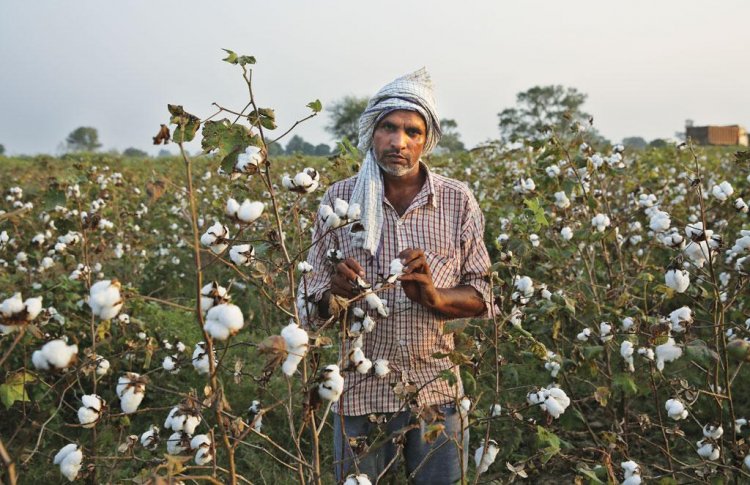
The Government of India may extend the duty-free import window for cotton until the end of December 2026, beyond the current deadline of 31 October, as the textile industry pushes for continued access to cheaper raw material. However, the proposed extension has raised concerns among domestic cotton farmers, who fear that increased import availability during the arrival of the new crop could put pressure on market prices.
Inter-ministerial discussions are reportedly under way on extending the customs duty exemption, and an official order could be issued soon. The textile industry has argued that continued duty-free imports would improve raw material availability, reduce production costs and help contain domestic cotton prices. Farmers, however, fear that the move could weaken prices at a time when the new crop is being harvested across major cotton-growing regions.
Ranjeet Singh Raju, a farmer from Sri Ganganagar district in Rajasthan and president of the Gramin Kisan Mazdoor Samiti (GKS), told Rural Voice that cotton production has been affected by adverse weather and fertiliser shortages this year. With output under pressure, farmers are receiving around Rs. 9,000 per quintal, a better price than last year. However, cotton prices had reached as high as Rs. 12,000 per quintal three years ago.
Raju said the government tends to facilitate imports when farmers begin receiving better prices in the domestic market. He added that farmers growing pulses and oilseeds are also facing pressure from cheaper imports.
Widening Gap Between Production and Demand
Rising dependence on cotton imports also raises questions about the government’s efforts to strengthen self-reliance in agricultural commodities. Domestic cotton production has declined significantly from its peak in recent years.
India’s cotton output reached 398 lakh bales, each weighing 170 kg, in 2013-14. Production subsequently fell to 297 lakh bales in 2024-25, nearly 100 lakh bales below that peak. Output declined further to around 290 lakh bales in 2025-26. Production could fall again in the current season because of drought conditions in several cotton-growing regions.
The textile industry estimates domestic cotton demand at around 350 lakh bales. If the gap between production and consumption persists, imports could become increasingly important for meeting the industry’s raw material requirements.
Cotton acreage had fallen to around 115 lakh hectares over the past two years. In the current season, the area under cotton is estimated at approximately 111 lakh hectares. Lower acreage, drought in cotton-growing regions of Maharashtra, Rajasthan and Gujarat, and unseasonal rainfall in several areas have added to concerns over production.
Adverse Weather Threatens Cotton Output
Anil Ghanwat, a Maharashtra-based farmer leader and former president of the Shetkari Sanghatana, said the influence of El Niño and drought conditions in cotton-growing areas had adversely affected domestic production.
Ghanwat believes the government could continue duty-free cotton imports for another year. While such a move could hurt farmers, he said the textile industry’s demand for raw material might persuade the government to maintain the exemption.
The Centre had exempted cotton imports from the existing 11% customs duty from 1 June to 31 October 2026, citing the needs of the textile industry. The government is now considering extending the exemption by another two months.
Duty-Free Imports Could Put Pressure on Prices
Cotton arrivals generally increase in mandis across several major producing regions of northern and central India between October and December. The arrival of a new crop can normally moderate domestic prices. However, prices have remained relatively high this year amid concerns over lower production.
Cotton prices in major domestic markets are currently around Rs. 9,000 per quintal. For the 2026-27 season, the Centre has fixed the minimum support price (MSP) at Rs. 8,267 per quintal for medium-staple cotton and Rs. 8,667 per quintal for long-staple cotton. Market prices above these levels have provided farmers with returns higher than the MSP.
If the duty-free import window is extended and supplies of imported cotton increase, domestic prices could face additional downward pressure, potentially reducing farmers’ returns.
Cotton Imports More Than Triple in Two Years
As domestic production has weakened, India’s dependence on imported cotton has increased. According to trade data, the value of cotton imports rose from around US$579.2 million in 2023-24 to US$1.2 billion in 2024-25 and US$1.86 billion in 2025-26.
During April-September 2026, cotton imports increased by 63% year-on-year to approximately US$1.1 billion. If this pace continues, imports could reach a record level in the current financial year.
Extending the duty exemption could have longer-term implications for domestic cotton production. Lower prices could reduce farmers’ incentive to grow cotton in the next season, potentially leading to a further decline in output and greater reliance on imports.
The government faces the challenge of ensuring adequate raw material supplies for the textile industry while securing remunerative prices for cotton farmers and strengthening domestic production. Although cheaper imports may provide short-term relief to the industry, sustained investment in productivity and measures to reduce import dependence will be crucial for the long-term resilience of India’s cotton sector.