
India, New Zealand Deepen Agri Partnership; Set Rs 35,000 Crore Trade Target by 2030
India and New Zealand have strengthened their agricultural partnership during Prime Minister Narendra Modi's visit by signing agreements on animal husbandry, dairy, food technology and kiwifruit development. Both countries also set a target to double bilateral trade to NZ$7 billion (Rs 35,000 crore) by 2030 and expanded cooperation in biofuels and agricultural innovation.

 Join the RuralVoice whatsapp group
India and New Zealand have significantly expanded their agricultural and economic partnership during Prime Minister Narendra Modi's visit to New Zealand by signing a series of agreements covering animal husbandry, dairying, agricultural productivity, food technology, biofuels and education. The two countries also agreed to double bilateral trade in goods and services to NZ$7 billion (about Rs 35,000 crore) by 2030, underscoring their commitment to strengthen economic ties under the proposed Free Trade Agreement (FTA).
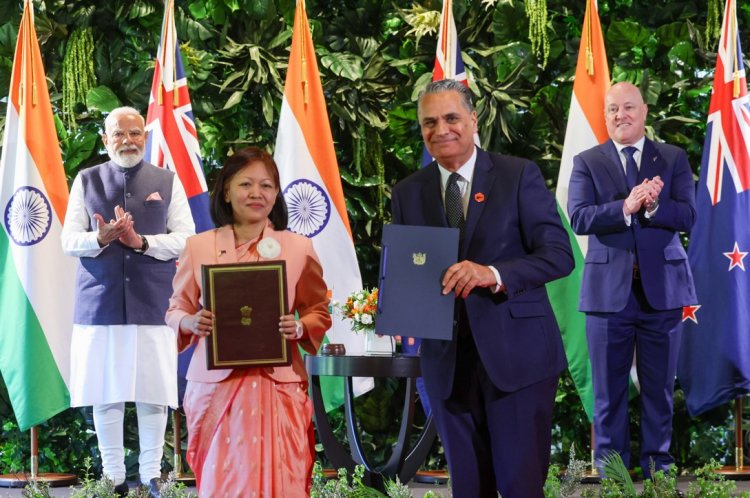
Among the major outcomes of the visit was the signing of a Memorandum of Cooperation (MoC) on Animal Husbandry and Dairying between India's Ministry of Fisheries, Animal Husbandry and Dairying and New Zealand's Ministry of Primary Industries. The agreement establishes a framework for technical collaboration, knowledge sharing and the exchange of best practices in livestock production, dairy farming, animal health and sustainable livestock management.
The partnership is expected to leverage New Zealand's globally recognised expertise in dairy productivity, food safety, sustainability, post-harvest management and value chain development to support India's efforts to modernise its livestock and dairy sectors.
The two Prime Ministers also announced an ambitious goal of doubling bilateral trade to NZ$7 billion (Rs 35,000 crore) by 2030. While welcoming the recent momentum in economic relations, they noted that trade between the two countries remains well below its potential and agreed to encourage businesses to explore new opportunities and build stronger commercial partnerships.
The leaders highlighted the growing collaboration in horticulture, forestry, animal husbandry and dairying, describing agriculture as a key pillar of the bilateral relationship. They emphasised that greater cooperation in these sectors would contribute to sustainable agricultural growth, improved productivity and enhanced market access for farmers and agribusinesses in both countries.
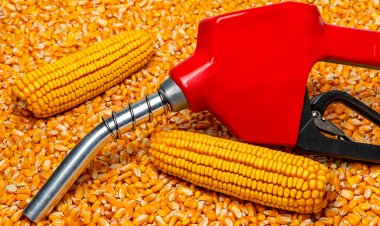
Another important outcome was New Zealand's decision to join the Global Biofuels Alliance, an initiative launched by India to accelerate the adoption of sustainable biofuels worldwide. The move is expected to strengthen international cooperation on cleaner energy technologies and support the transition towards low-carbon fuels through policy collaboration, technology exchange and capacity building.
To boost horticultural productivity, both countries launched a Kiwifruit Action Plan under the Agricultural Productivity Partnership linked to the proposed FTA. As part of the initiative, two Centres of Excellence for Kiwifruit will be established in Nagaland and Uttarakhand with New Zealand's support.
The Centres of Excellence will promote improved cultivation practices, quality planting material, skill development, research and industry collaboration aimed at enhancing kiwifruit productivity and expanding commercial cultivation in India's hill states. The two sides also agreed to cooperate on similar productivity enhancement programmes for apples and honey, drawing on New Zealand's expertise in horticultural production systems.
Education and research also received a boost with the signing of a Memorandum of Understanding between the National Institute of Food Technology, Entrepreneurship and Management, Kundli (NIFTEM-K) and Massey University, New Zealand. The agreement provides a framework for joint research, faculty and student exchanges, academic collaboration, innovation and other mutually agreed educational activities in food technology and agribusiness.
The collaboration is expected to strengthen research in food processing, entrepreneurship, value addition and sustainable food systems while facilitating greater institutional linkages between the two countries.
Overall, the outcomes of Prime Minister Modi's visit signal a broadening of India-New Zealand cooperation beyond trade into strategic sectors such as agriculture, livestock, horticulture, food technology and clean energy. By combining New Zealand's expertise in high-productivity farming and food systems with India's expanding agricultural market, the agreements are expected to create new opportunities for farmers, researchers, educational institutions and agribusinesses while supporting sustainable agricultural development in both countries.