
Self-Reliant Agriculture Hinges on Stronger Research Investment- Experts at the Rural Voice Conclave
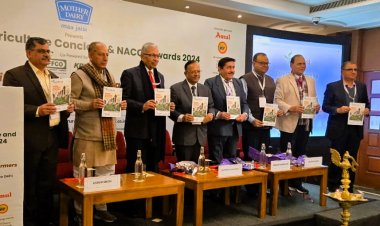
Experts at the Rural Voice Agriculture Conclave & Awards 2025 stressed that India cannot achieve self-reliance in agriculture without substantially increasing R&D investment. They highlighted the need for technology to address labour shortages, improve productivity and compete globally. Speakers also flagged quality issues in exports, weak infrastructure, slow decision-making, and the absence of a coherent national agricultural policy, urging closer collaboration between government, private sector and cooperatives.

 Join the RuralVoice whatsapp group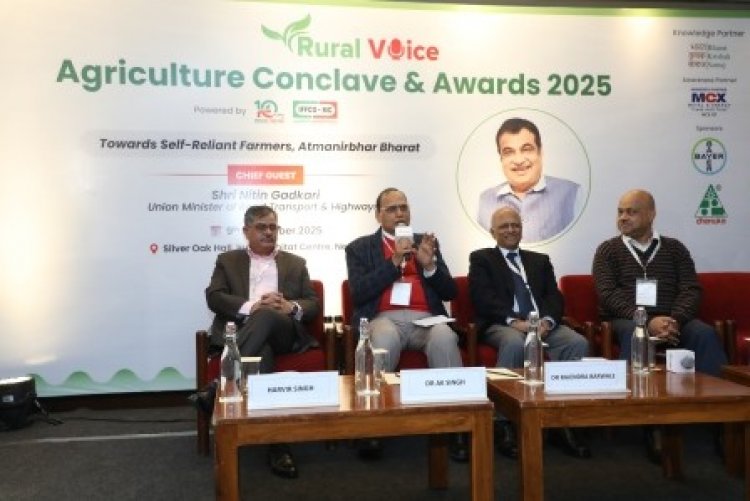
More investment is needed to ensure that farmers benefit from research and technology. Without research, technology cannot advance, and Indian agriculture will struggle to compete globally. Experts said that given the growing labour shortage, India needs technologies that help farmers boost productivity. These views were expressed during a discussion at the “Rural Voice Agriculture Conclave and Awards 2025,” the annual event of the media platform Rural Voice. They noted that international trade is complex and agricultural exports face high uncertainty. Those who produce at the lowest cost will survive. Therefore, linking exports and imports with pride is not a sound approach.
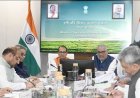
The theme of this year’s conclave was “ Towards Self-reliant farmers for an Atmanirbhar Bharat.” The event featured three technical sessions. The first session focused on “Prosperous Farmers: Role of Innovation & Technology.” Moderating the session, Harvir Singh, Editor-in-Chief of Rural Voice, asked panelists, “It is repeatedly said that the agricultural R&D budget should be raised to one percent of agricultural GDP. What prevents this from happening?” He also asked whether government institutions are fully able to utilize existing capacity.
Only Rs 20,000 crore spent instead of Rs54,000 crore: A.K. Singh
Dr. A.K. Singh, former Director of ICAR-IARI, said that India’s GDP is 300 lakh crore rupees, of which agriculture contributes roughly 54 lakh crore rupees, or 18 percent. One percent of this - Rs 54,000 crore - should be spent on R&D, but currently only Rs 20,000 crore is being spent on research and education. This is inadequate. He stressed that higher investment is required to ensure farmers benefit from research and technology.
He noted that total foodgrain production in 2024–25 is estimated at 358 million tonnes. India exports Basmati rice worth Rs 54,000 crore annually. Of the country’s total agricultural exports of $52 billion, Basmati accounts for $10–12 billion. Despite the absence of MSP, Basmati farmers often do not receive good prices. In Chhattisgarh, coarse rice was purchased at higher rates than Basmati.
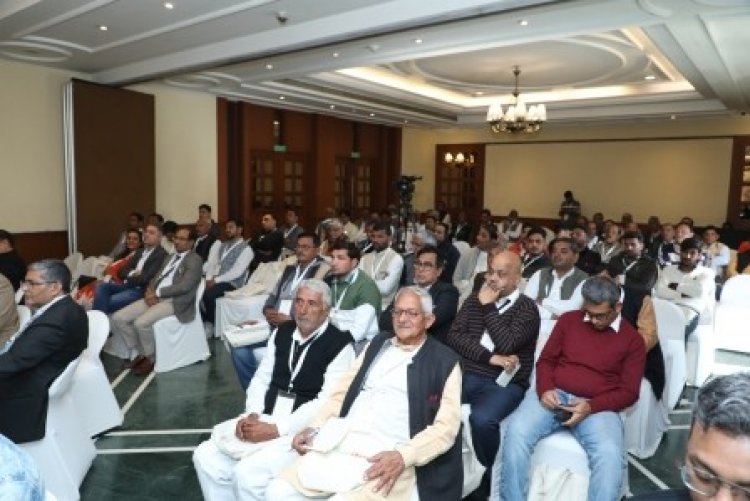
Although soil testing is done across the country, farmers do not receive customized fertilizers tailored to their soil needs. Dr. Singh said an integrated approach to biofertilizers and chemical fertilizers is required. Despite 60 years of work on biofertilizers, their use has not increased significantly. He said that those handling production, processing, and distribution are not competent enough. If chemical fertilizer companies are tasked with producing and distributing biofertilizers, quality biofertilizers will become more widely available.
Private sector spends 10–12 percent on R&D: Rajendra Barwale
Dr. Rajendra Barwale, Chairman of Mahyco Private Limited, said, “When the government spends, its approach is different, but private companies must report profits and losses to banks. They should be allowed to recover their costs, which the current system does not adequately support. Today, the private sector spends 10–12 percent on R&D.” He also raised the issue of a market-based pricing system and rights for researchers.
He said that without research, technology cannot develop, and Indian agriculture will fall behind other countries. Technology is essential to reduce production costs to global levels. He added that simply praising technology is not enough—farmers want to see its results. Technology must move from laboratories to farms for farmers to adopt it.
Technology needed to address labour shortages: Mrinmoy Choudhry
Mrinmoy Choudhry, Director (Marketing) at Savannah Seeds, said that labour shortages during paddy transplantation and weed management are becoming serious. “If workers are not available, how will farmers manage? We need technologies that help increase productivity. Work is underway, but much more remains to be done,” he said.
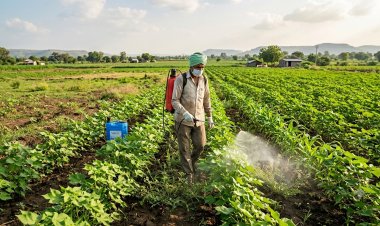
During the discussion, a farmer in the audience questioned the practicality of drones. He noted that pesticides requiring 100 or 200 litres of water for spraying need to be mixed in only 10 or 20 litres for drone use. Agreeing, Dr. A.K. Singh said that drone-specific pesticide formulations are yet to be developed, though research is ongoing.
Second session: International Trade and Self-Reliance
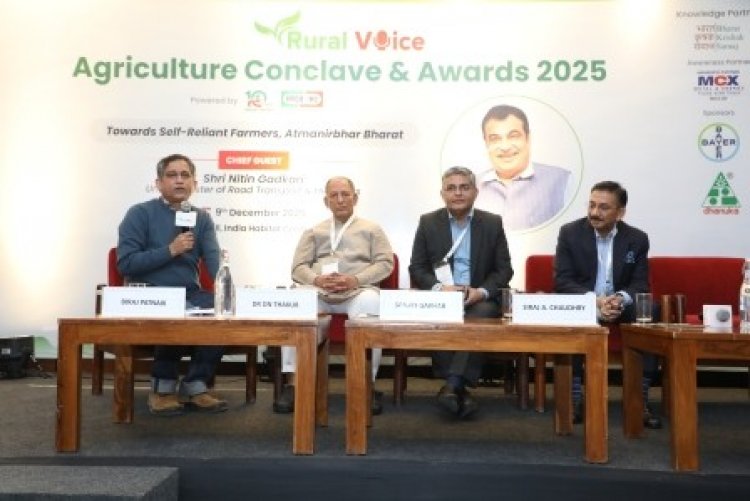
The second session, moderated by Biraj Patnaik, Executive Director of the National Foundation for India, focused on “International Trade and Self-Reliance.” Patnaik noted that India’s share in global agricultural exports is 2.5 percent. Current agricultural exports stand at $52 billion, with a target of $100 billion by 2030. He asked panelists what India needs to do in light of recent shifts in global trade, particularly after Donald Trump became U.S. President.
Linking exports and imports with pride is not correct: Siraj Chaudhary
Siraj A. Chaudhary, Partner at Agvaya LLP, said India is self-sufficient in many crops. Basmati rice, buffalo meat, and cotton are major exports. However, India remains heavily dependent on imports of pulses and oilseeds. He said that to achieve self-sufficiency in pulses, farmers must be paid higher prices than for other crops. He argued that India’s habit of linking exports and imports with national pride is misguided. Many major countries import extensively and export their surplus crops. He also emphasized the importance of brand building in exports, which requires collaboration between the government and the private sector.
Need to increase crop productivity: Sanjay Gakhar
Sanjay Gakhar, Vice President (Business Development) at MCX Limited, said that producers who offer the lowest costs will thrive. India must raise productivity in crops where production is low. On uncertainties caused by export restrictions, he said both private firms and cooperatives will need to work together.
Quality issues in agricultural exports: D.N. Thakur
Dr. D.N. Thakur, National President of Sahakar Bharati, said, “India is a reliable exporter of Basmati, marine products, and horticulture, but this is not true elsewhere. Quality issues remain a major challenge in India’s agricultural exports. A systems approach is needed.” Asked about India’s options while negotiating an FTA with the U.S., he said that India must protect domestic interests first, especially farmers’.
Need for a system enabling quick decisions: D.K. Singh
Devendra Kumar Singh, Chairperson of the Cooperative Election Authority and former APEDA Chairman, said that international trade is complex and uncertain, and agricultural exports add to that uncertainty. Farmers’ involvement also brings political dimensions, which is true not only in India but in other countries as well.
He said India's decision-making processes are slow and complicated, which global partners dislike. The government is promoting fruit and vegetable exports, and efforts are underway to increase production, but infrastructure and cold-chain facilities are lacking. He stressed the need to improve farm-to-port logistics and to consider conditions in importing countries.
Third session: “Enabling Policy and Effective Implementation”
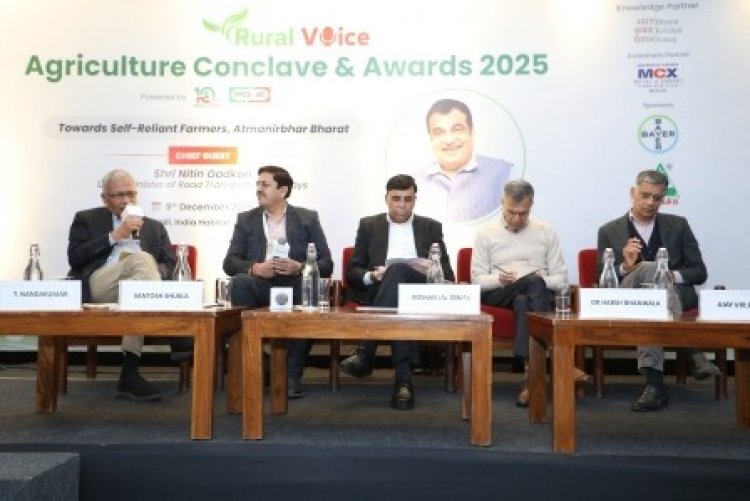
The third session was moderated by former Agriculture and Food Secretary T. Nandakumar. He stressed that farmers need greater choice and freedom, and must learn bargaining skills and market knowledge. He asked panelists how policies can be effectively implemented and what the government can learn from the private sector.
Intermediary institutions essential for policy implementation: Harsh Bhanwala
Dr. Harsh Bhanwala, Chairman of MCX and former NABARD Chairman, said India’s agriculture is highly diverse, with significant variations in temperature and rainfall. Therefore, uniformity is not possible. Agriculture is rightly a state subject, while the Centre governs markets and finance.
He said intermediary institutions—corporate or private—are needed to deliver policies to farmers. Monitoring is essential. Today, multiple institutions implement the same policy. Whether a multi-agency system is effective is debatable. People's participation is crucial, and cooperatives play a major role. Policies must allow regional flexibility. He suggested creating a Farmers’ Commission, even if its opinions differ from the government’s.
Agriculture Council on the lines of GST: Roshan Lal Tamak
Roshan Lal Tamak, CEO and Executive Director (Sugar Division) of DCM Shriram, suggested forming an Agriculture Council similar to the GST Council, with state participation. He said the private sector is more efficient because accountability is clear and decisions are quicker—something lacking in government systems. Digital infrastructure can support this, and digital literacy for farmers will ensure accountability and speed.
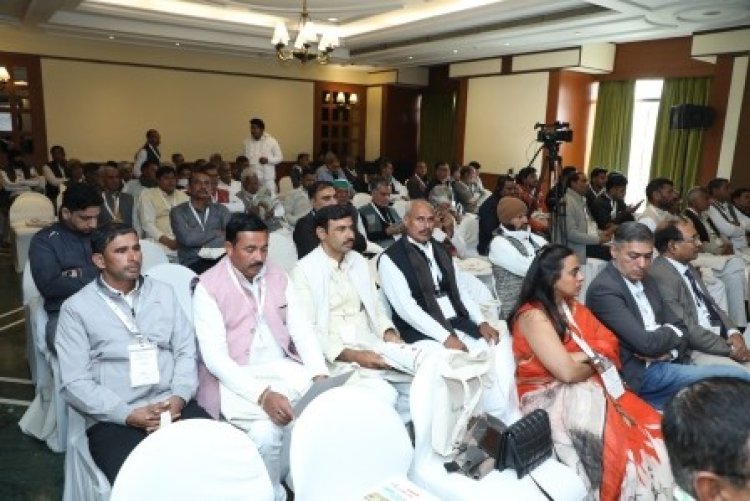
Tamak said most policies are production-oriented. Since India has surpluses in many crops, policies must now address consumption to ensure farmers receive fair prices. He also suggested making the private sector the nodal agency for policy implementation, as private companies have direct links with farmers.
Despite being an agricultural country, there is no agricultural policy: Santosh Shukla
Santosh Shukla, COO of IFFCO-MC, highlighted the importance of cooperatives. He said, “Agriculture provides 45 percent of employment but contributes only 18 percent to GDP. All stakeholders in agriculture should be brought onto a single platform.” He said India is an agricultural country but lacks an agricultural policy. Outdated laws need to be reformed and farmers and research institutions included.
He added that 300 million people are part of cooperatives. Cooperatives have grown rapidly in the last three to four years, with nearly 60 schemes launched. Computerization and model laws are critical. Since agriculture and cooperatives are state subjects, a single organization must register separately in each state. He suggested forming an authority on the lines of the GST Council to resolve this.
To improve governance, farmer leaders must also change: Ajay Jakhar
Ajay Vir Jakhar, Chairman of Bharat Krishak Samaj, said that policy is essential for improving farmers’ conditions. Yet neither the Centre nor the states have a clear agricultural policy. Most states lack laws governing higher agricultural education. Farmers’ views are not considered when drafting bills.
Jakhar said that for better governance, leaders of farmer organizations must also change their thinking and demands. They should engage with institutions such as the RBI so that their perspectives are heard in policymaking.