
Punjab Government to Move Assembly Resolution Against VB-G RAM G Law, Calls It a Threat to Rural Livelihoods
The Punjab government will move a resolution against the VB-G RAM G law during a special Assembly session on December 30. Cabinet Minister Tarunpreet Singh Sond accused the Centre of weakening rural employment, shifting financial burdens to states, and threatening women and marginalized communities dependent on MGNREGA. Punjab demands protection of workers’ rights, employment guarantees, and federal principles.

 Join the RuralVoice whatsapp group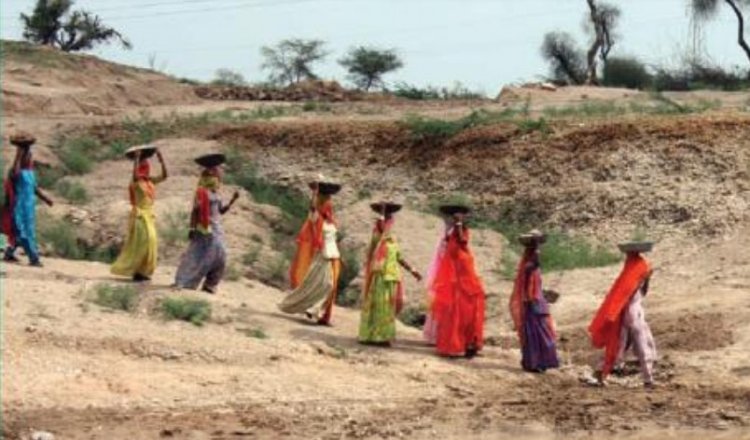
The Punjab government has decided to bring a resolution opposing the Viksit Bharat–Guarantee for Rozgar and Ajeevika Mission (Gramin) (VB-G RAM G) law in a one-day special session of the state विधानसभा scheduled for December 30. Cabinet Minister Tarunpreet Singh Sond announced the move on Saturday, accusing the Centre of undermining rural livelihoods and weakening India’s federal structure through the new legislation.
Criticising the Union government, Sond described the VB-G RAM G law as yet another “black law” that, according to him, directly threatens the survival of millions of workers dependent on the Mahatma Gandhi National Rural Employment Guarantee Act (MGNREGA). He alleged that the new framework shifts the financial burden of rural employment onto states while diluting the guarantee of work for labourers.
The minister said the proposed changes would have a severe impact on below poverty line (BPL) families, Scheduled Caste communities and rural labourers who rely on MGNREGA as a critical source of income. He accused the Centre of attempting to “hit two targets with one stone” by weakening the concept of guaranteed employment on the one hand and increasing the financial liability of states on the other, which he termed an attack on the country’s federal structure.
Sond questioned the Centre’s claim that the new scheme would provide up to 125 days of employment, compared to the 100-day guarantee under MGNREGA. Citing official data, he said that the BJP-led government had managed to provide an average of only 45 days of work per household in the previous year. “Making tall promises without delivering on the ground has become a habit of the BJP,” the minister alleged.
Highlighting the financial implications for Punjab, Sond said that under MGNREGA, wages for unskilled labour were fully borne by the Centre, while material costs were shared between the Centre and the states in a 75:25 ratio. Under the new VB-G RAM G framework, this ratio has been altered to 60:40, which would impose an additional annual burden of around ₹600 crore on Punjab alone, he claimed.
The minister further alleged that the new law weakens key worker safeguards. According to him, it does not guarantee employment during peak agricultural seasons, dilutes provisions for unemployment allowance, centralises decision-making related to village-level works, and restricts the types of permissible activities. He also expressed concern that traditional social audits would be replaced by AI-driven biometric verification and geo-tagging systems, which, he said, could exclude vulnerable workers.
Sond pointed out that nearly 70 per cent of MGNREGA workers in Punjab are women and warned that shortening the operational period of the scheme to 10 months would disproportionately affect them, pushing many households into deeper economic distress.
Reiterating the state government’s stand, Sond announced that the Aam Aadmi Party-led Punjab government has convened a special session of the Assembly on December 30 to pass a resolution opposing the VB-G RAM G law. He said the state would formally urge the Centre to reconsider the legislation and protect the rights, livelihoods and dignity of rural workers.