
Sugar Mills May Face Higher Sugarcane Payment Arrears as Sugar Prices Fall to Rs 36 Per Kg
India’s sugar sector is heading towards a major cane payment crisis as ex-factory prices fall to Rs 36 per kg amid excess production, weak export returns and limited ethanol allocation. Industry sources warn that falling prices could lead to large-scale sugarcane payment arrears for farmers in the 2025–26 crushing season unless immediate policy and price corrections are made.

 Join the RuralVoice whatsapp group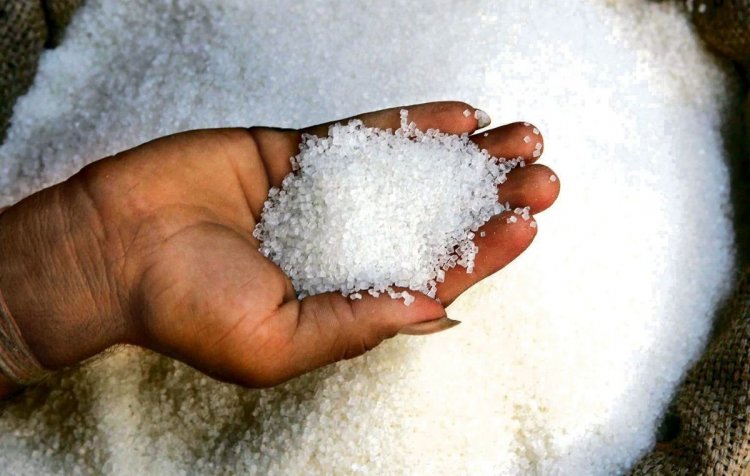
Higher sugar production than consumption, limited ethanol allocation and an unfavourable export environment are pushing India’s sugar industry towards a situation of mounting sugarcane payment arrears. For the ongoing 2025–26 crushing season, sugar production is estimated at around 34.3 million tonnes, while domestic consumption is expected to remain around 29 million tonnes. Although the government has permitted sugar exports, current export market conditions are not profitable. As a result, ex-mill sugar prices in Maharashtra have fallen to as low as Rs 36 per kg, and in many places remain around Rs 36.50 per kg. Industry sources told Rural Voice that the current scenario may lead to a significant rise in sugarcane dues owed to farmers.
According to sources, the government is considering a proposal to set the Minimum Selling Price (MSP) of sugar at Rs 37 per kg. However, industry stakeholders argue that the MSP should be at least Rs 41 per kg and linked to the Fair and Remunerative Price (FRP) of sugarcane. It is noteworthy that the MSP of sugar has not been increased since 2019 and still stands at Rs 31 per kg. Industry representatives say the cost of sugar production has now reached Rs 41.72 per kg.
Responding to industry demands, the government has allowed the export of 1.5 million tonnes of sugar during the current season. But prevailing global sugar prices are making exports a loss-making proposition. On ethanol, the industry has demanded that the price of ethanol made from B-heavy molasses and sugarcane syrup be brought at par with grain-based ethanol. The industry also points out that in the tender issued by oil marketing companies (OMCs) for the ongoing ethanol supply season, the sugar industry has been allocated only a 27.5% share—far below its production capacity.
Questions are now also being raised over the government’s ethanol policy, which appears to weaken the possibility of increasing ethanol blending in petrol beyond the current 20% (E20) target to 24% or higher. However, ethanol blending in petrol had reached 19.97% in October 2025.
According to estimates for the current crushing season, sugar mills are required to pay nearly Rs 1.30 lakh crore to sugarcane farmers. If sugar prices do not improve, the industry fears a major build-up of payment arrears. Industry sources further say that the government usually does not intervene as long as cane payments are being made on time; however, if arrears start rising, the government may be compelled to act to avoid farmer unrest.