UP Sugar Production Falls to Decade Low as Cane Economy Faces Mounting Challenges
India's sugarcane economy is facing mounting challenges as Uttar Pradesh's sugar production falls to a decade low amid declining cane availability, disease outbreaks, and falling farm productivity. Concerns over a weak monsoon, rising cultivation costs, and the lack of high-yielding sugarcane varieties have heightened fears of a deeper crisis for both farmers and the sugar industry.

 Join the RuralVoice whatsapp group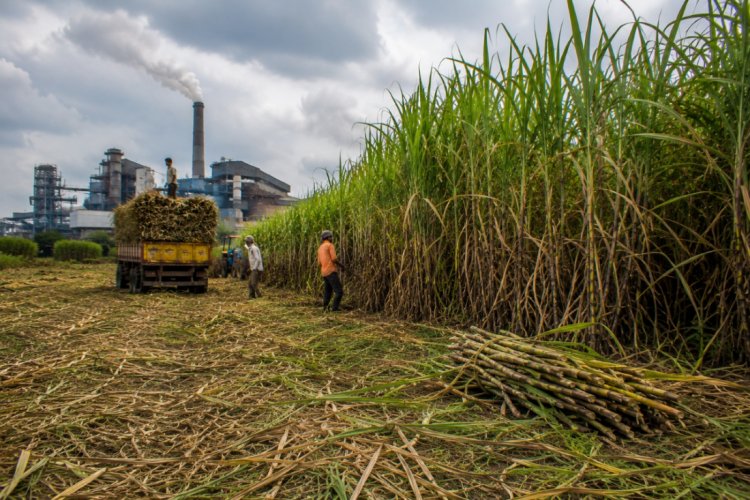
India's one of the largest sugar-producing states, Uttar Pradesh, is witnessing growing challenges in its sugarcane economy, with declining cane availability, falling sugar production, rising cultivation costs, and increasing disease pressure threatening both farmers and the sugar industry.
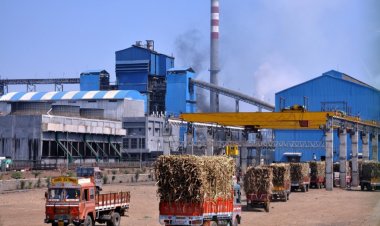
According to industry data, sugar mills in Uttar Pradesh crushed 7.3 million tonnes less sugarcane by May 15 of the ongoing 2025-26 sugar season compared to the previous year. As a result, the state's sugar production declined by 275,000 tonnes despite an improvement in sugar recovery rates.
Total sugar production in Uttar Pradesh stood at 8.97 million tonnes, the lowest level recorded in the past decade. Compared to the state's record production of 12.6 million tonnes in the 2019-20 season, sugar output has fallen by nearly 30 percent.
Sugar production in Uttar Pradesh
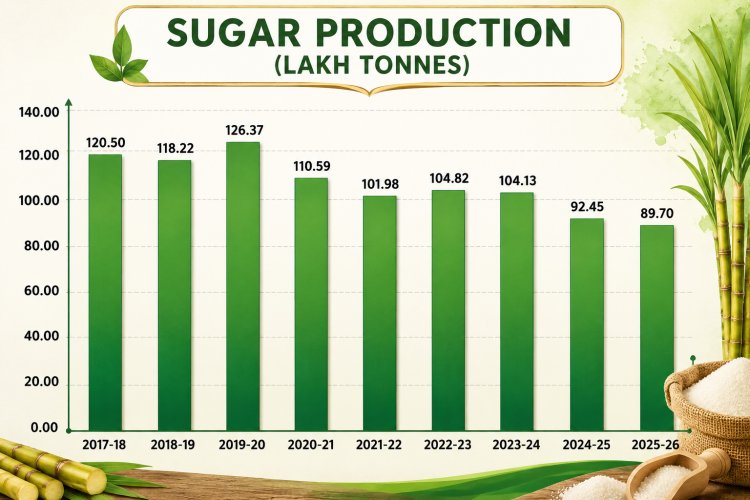
Source: upcane.gov.in, NFCSF
National Sugar Output Remains Below Consumption
At the national level, India's sugar production during the 2025-26 season reached 27.47 million tonnes, remaining below domestic consumption for the second consecutive year. The decline in production has effectively halted prospects for sugar exports and raised concerns about the availability of feedstock for ethanol production in the coming years.
Industry estimates suggest that diseases such as red rot and the lack of successful high-yielding replacement varieties have caused losses of around Rs 2,500-3,000 crore to farmers in Uttar Pradesh alone. Sugar mills have also been affected, with many unable to operate at full capacity due to cane shortages and several ending their crushing seasons earlier than scheduled.
Industry stakeholders warn that these developments could evolve into a more serious crisis during the next sugar season beginning in October.
El Niño, Weak Monsoon Add to Concerns
Concerns over a potentially strong El Niño event and a weak monsoon this year have further heightened uncertainty surrounding sugarcane cultivation.
According to the Ministry of Agriculture, sugarcane planting across India covered 5.731 million hectares by May 19, slightly higher than the 5.664 million hectares reported during the same period last year.
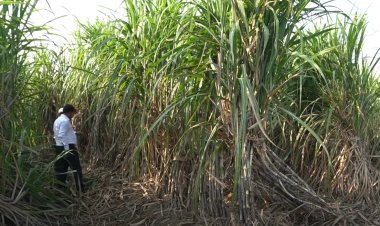
However, industry sources indicate that sugarcane acreage has declined in Uttar Pradesh. Rising cultivation costs, disease and pest attacks, labour shortages, and falling productivity have discouraged many farmers from expanding cane cultivation. Increasingly, farmers are shifting toward alternative crops and agroforestry systems.
If below-normal rainfall persists and drought-like conditions emerge, sugarcane production in the state could fall further next season.
Farmers Need High-Yielding Varieties
Tajinder Singh Virk, President of the Tarai Kisan Union, told Rural Voice that rising input costs and declining returns are reducing farmers' interest in sugarcane cultivation.
"Three to four years ago, farmers could harvest 80-90 quintals per bigha. Today, even achieving 50 quintals per bigha has become difficult," Virk said.
He attributed much of the problem to the absence of an effective alternative to the once highly successful Co-0238 sugarcane variety, which significantly boosted productivity in Uttar Pradesh during the past decade.
Virk argued that the situation raises serious questions about the performance of sugarcane research institutions and government agencies, as farmers have been struggling for years without access to a suitable replacement variety capable of matching Co-0238's performance.
Maharashtra Faces Drought Risk
The southwest monsoon, which arrived in Kerala on June 4, has advanced more slowly than usual this year. Its progress remained stalled for nearly two weeks, resulting in rainfall deficits across large parts of the country.
By June 23, India had received 42 percent below-normal rainfall, while central India recorded a rainfall deficit of 64 percent.
Maharashtra, another major sugarcane-producing state, received 76 percent less rainfall than normal during the period. Industry experts warn that inadequate rainfall during June could adversely affect sugarcane growth, which depends heavily on adequate soil moisture and irrigation.
If rainfall remains deficient over the coming weeks, production could suffer while farmers' irrigation expenses rise substantially.
Adding to the pressure, recent increases in diesel prices following rising global crude oil prices linked to geopolitical tensions in the Gulf region are expected to further increase sugarcane cultivation costs.
Industry Seeks Research Support
Productivity concerns have prompted the sugar industry to seek greater investment in sugarcane research.
Two leading industry bodies, the Indian Sugar and Bio-Energy Manufacturers Association and the National Federation of Cooperative Sugar Factories, have urged the central government to establish a Centre of Excellence for sugarcane research at the ICAR-Sugarcane Breeding Institute in Coimbatore.
The proposal remains under consideration. Industry representatives argue that the shortage of new high-yielding sugarcane varieties has emerged as a major challenge, threatening both farmer incomes and the long-term sustainability of India's sugar and ethanol sectors.
As climate risks intensify and productivity growth slows, the future of India's sugarcane economy may increasingly depend on breakthroughs in research, disease management, and the development of next-generation cane varieties.