
NFCSF Urges Government to Revise Sugar MSP Amid Falling Prices and Rising Costs
The Federation has emphasised the urgent need for revision of the sugar MSP to Rs 41 per kg, enhancement of ethanol procurement prices, and additional diversion of 5 LMT of sugar towards ethanol.

 Join the RuralVoice whatsapp group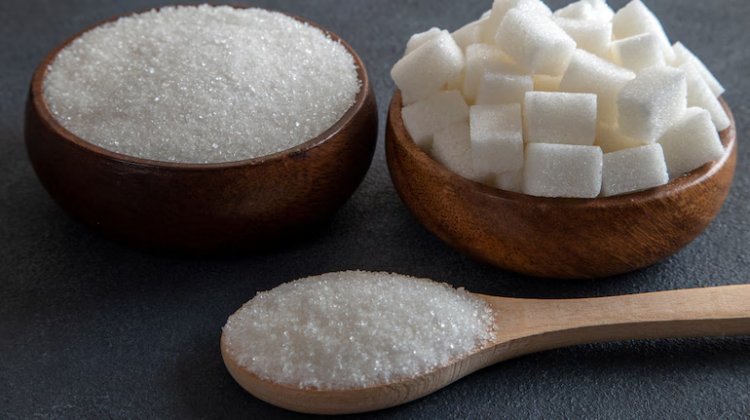
The National Federation of Cooperative Sugar Factories Ltd. (NFCSF), the apex body representing cooperative sugar mills across India, has urged the Government of India to undertake an immediate upward revision of the Minimum Selling Price (MSP) of sugar in view of rising production costs, declining ex-mill sugar prices, and mounting financial stress on sugar mills and sugarcane farmers.
Welcoming the Government’s decision to permit 15 LMT of sugar exports for the Sugar Season 2025–26, NFCSF stated that the move reflects the Centre’s continued commitment to empowering Ganna Kisans and supporting the sugar sector. However, the Federation cautioned that export facilitation alone will not be sufficient to address the deepening liquidity crisis faced by cooperative sugar mills.
The Sugar Season 2025–26 has commenced on a strong footing due to early crushing operations and improved yields. As of 15 December 2025, 479 sugar mills across the country have produced 77.90 LMT of sugar, compared to 60.70 LMT produced by 473 mills during the corresponding period last year—an increase of 17.20 LMT (28.34%). Cane crushing has increased by 183.75 LMT (25.61%), accompanied by an improving trend in sugar recovery.
State-wise performance further highlights this positive momentum. In Uttar Pradesh, 120 sugar factories have commenced crushing and processed 264 LMT of sugarcane, achieving an average recovery of 9.50% and producing 25.05 LMT of sugar, compared to 22.95 LMT last year with a recovery of 8.90%.
In Maharashtra, 190 factories are in operation and have crushed 379 LMT of sugarcane, producing 31.30 LMT of sugar with an average recovery of 8.25%, a sharp increase over the 16.80 LMT produced during the same period last season.
In Karnataka, 76 factories have started crushing and produced 15.50 LMT of sugar by crushing 186 LMT of cane, compared to 13.50 LMT last year. Other sugar-producing states, contributing around 13–15% of national output, have collectively produced 6.05 LMT of sugar through 93 mills, compared to 7.45 LMT during the corresponding period last season.
Despite the encouraging production trend, the financial outlook for sugar mills remains under severe stress. The all-India average ex-mill sugar price has declined by nearly Rs 2,300 per tonne since the beginning of the season and is currently hovering around Rs 37,700 per tonne, adversely affecting mill liquidity and their ability to ensure timely payment of cane dues.
The Federation has emphasised the urgent need for revision of the sugar MSP to Rs 41 per kg, enhancement of ethanol procurement prices, and additional diversion of 5 LMT of sugar towards ethanol. This additional ethanol production alone could generate nearly Rs 2,000 crore, directly strengthening mill cash flows and supporting timely payments to sugarcane farmers.
The Federation further pointed out that if the Government accepts NFCSF’s proposal for diversion of an additional 5 LMT of sugar for ethanol, the net sugar production estimates for the current season would be revised downward accordingly—particularly in Maharashtra and Karnataka, where ethanol-linked diversion plays a critical role in moderating surplus sugar availability.
At the macro level, over Rs 1.30 lakh crore is payable to farmers as cane dues during the current season, while surplus sugar stocks are likely to result in a working capital blockage of nearly Rs 28,000 crore. Rising FRP and SAP, coupled with sharp increases in harvesting and transportation costs, have significantly escalated the cost of sugar production.
Recognising the urgency of the situation, NFCSF has approached the highest levels of the Government of India, submitting detailed representations to the Prime Minister and the Union Minister for Consumer Affairs, Food & Public Distribution, calling for prompt corrective policy measures.
Harshvardhan Patil, President, NFCSF, remarked that cooperative sugar mills are owned by millions of farmers, and sustaining the present momentum of the sugar season requires decisive support from the Government at this critical juncture. He noted that early action would enable mills to honour cane payment commitments, protect farmer incomes, and preserve confidence in the cooperative sugar framework.
NFCSF reiterated that continued policy support from the Government of India will play a pivotal role in ensuring income security for farmers, financial stability for mills, and progress towards national goals of renewable energy expansion and Atmanirbhar Bharat, ensuring that the gains of the Sugar Season 2025–26 yield lasting and equitable outcomes.