
Steady Start to Sugar Season 2025-26 Despite Delays from ‘Retreat Rains’
The first fortnightly report reveals that 325 mills have started crushing operation as against 144 mills in Corresponding period of last year.

 Join the RuralVoice whatsapp group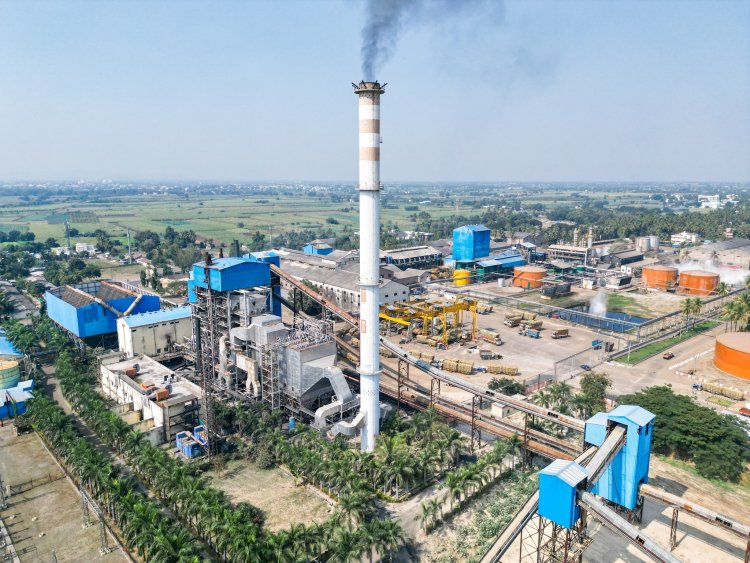
India’s 2025-26 sugarcane crushing season has begun on a cautious note after an unusual extension of the monsoon pushed back harvesting and mill operations across major producing states. The first fortnightly report by the National Federation of Cooperative Sugar Factories Ltd. (NFCSF) reveals that 325 mills have started crushing operations, compared with 144 mills during the corresponding period last year.
While the sugar season traditionally starts on October 1, heavy “retreat rains” in October and early November—particularly in Maharashtra’s Marathwada region—have delayed field operations and damaged several ready-to-harvest kharif crops.
Sugarcane is expected to gain weight due to the extended moisture, but harvesting has slowed significantly because of waterlogged fields. Ongoing farmers’ agitations over cane prices in Maharashtra and Karnataka have further affected the pace of crushing.
Despite these disruptions, early indicators show a stronger start than last year. This has resulted in 128 lakh tonnes (LMT) of cane crushed (up from 91 LMT) and 10.50 LMT of sugar produced (up from 7.10 LMT). The average sugar recovery rate has also improved to 8.2%, compared to 7.8% last season. Due to elections in Maharashtra last year, the season had started in late November.
Production Outlook and Exports
Despite the delayed start to the new crushing season, NFCSF estimates gross sugar production at 350 LMT for 2025-26. Maharashtra (125 LMT), Uttar Pradesh (110 LMT), and Karnataka (70 LMT) are expected to remain the leading contributors.
After diverting an estimated 35 LMT of sugar for ethanol production and factoring in domestic consumption of 290 LMT, India will have a tradable surplus of 20–25 LMT this season. Of this, the government has already permitted 15 LMT for exports, with the export window opening between January and April 2026. NFCSF expects that an additional 10 LMT could be cleared for export later in the season.
“This timely advance announcement will help stabilize market sentiments and relieve sugar millers who are currently in a semi-depressed state due to the non-revision of the Sugar MSP,” NFCSF said in a press release.
Concerns Over Sugar MSP and Ethanol Prices
Sugar millers remain under pressure as the Minimum Selling Price (MSP) of sugar has not been revised for six years, while ethanol procurement prices have remained unchanged for the last three years.
“We have farmers’ interests as our top priority, and we support their demand for better prices,” said Harshwardhan Patil, President of the National Cooperative Sugar Federation. “But it is equally important to revise sugar MSP and ethanol prices so that millers can generate adequate revenue to pay farmers and clear dues.”
Patil also urged cane growers to adopt Artificial Intelligence (AI)-based sugarcane farming, which has demonstrated up to 40% higher yields and 30% lower cultivation costs. With national sugarcane acreage plateauing at 55–57 lakh hectares and yields stagnating at 75–77 tonnes per hectare, he said technology adoption is essential for long-term sustainability.
Prakash Naiknavare, Managing Director of the Federation, said, “We have a three-pronged focus: raising the Sugar MSP to at least the level of existing ex-mill realizations pan-India, upward revision of sugar-based ethanol prices, and increasing sugar-based ethanol allocation in future cycles.”