Prime Minister Dhan-Dhaanya Krishi Yojana: Convergence of 36 Existing Schemes Across 11 Departments
The Scheme aims to enhance agricultural productivity, increase adoption of crop diversification and sustainable agricultural practices, augment post-harvest storage at the panchayat and block levels, improve irrigation facilities and facilitate availability of long-term and short-term credit

 Join the RuralVoice whatsapp group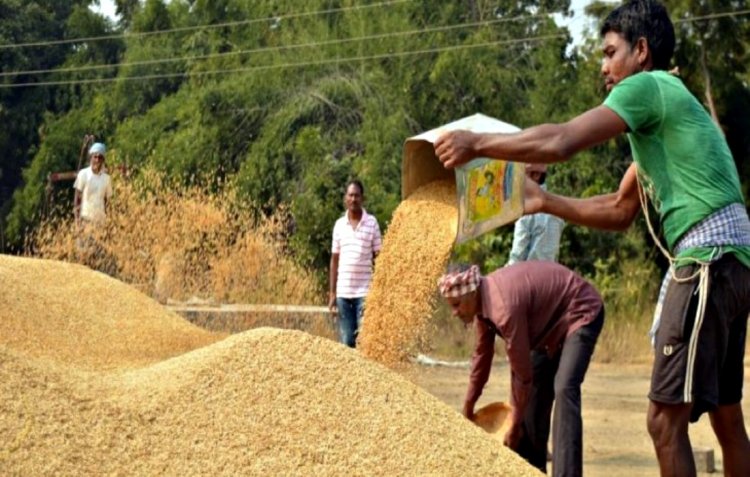
The Union Cabinet, chaired by Prime Minister Narendra Modi, approved the “Prime Minister Dhan-Dhaanya Krishi Yojana” for six years to cover 100 districts. The scheme draws inspiration from NITI Aayog’s Aspirational District Programme and is the first of its kind, focusing exclusively on agriculture and allied sectors.
The scheme aims to enhance agricultural productivity, promote crop diversification and sustainable agricultural practices, augment post-harvest storage at the panchayat and block levels, improve irrigation facilities, and facilitate access to both long-term and short-term credit. It is in line with the Budget announcement for 2025–26 to develop 100 districts under the “Prime Minister Dhan-Dhaanya Krishi Yojana”. Implementation will be through the convergence of 36 existing schemes across 11 central departments, along with relevant state schemes and local partnerships with the private sector.
A total of 100 districts will be identified based on three key indicators: low productivity, low cropping intensity, and limited credit disbursement. The number of districts per state/UT will be determined by the share of Net Cropped Area and operational holdings, with a minimum of one district selected from each state.
Committees will be formed at the district, state, and national levels for effective planning, implementation, and monitoring. A District Agriculture and Allied Activities Plan will be prepared by the District Dhan-Dhaanya Samiti, which will also include progressive farmers as members. The district plans will align with national goals such as crop diversification, water and soil conservation, self-sufficiency in agriculture and allied sectors, and the expansion of natural and organic farming. Progress in each Dhan-Dhaanya district will be tracked on a monthly basis through a dashboard featuring 117 Key Performance Indicators (KPIs). NITI Aayog will also review and guide district-level plans. Additionally, Central Nodal Officers, appointed for each district, will regularly monitor the scheme's implementation.
As the targeted outcomes improve in these 100 districts, the overall national average across key performance indicators is expected to rise. The scheme will lead to higher productivity, greater value addition in agriculture and allied sectors, local livelihood generation, and increased domestic production, thereby contributing to the goal of Atmanirbhar Bharat (self-reliant India). As indicators in these districts improve, national metrics will naturally show an upward trajectory.