
Calories Without Nutrition: New Survey Reveals India’s Quiet Dietary Crisis
Despite over a decade of economic expansion and aggressive poverty alleviation schemes, the report exposes a quiet stagnation in the country’s nutritional gains. A narrow focus on calories continues to mask deeper deficiencies in food quality, diversity, and equitable access—undermining long-term human capital development

 Join the RuralVoice whatsapp group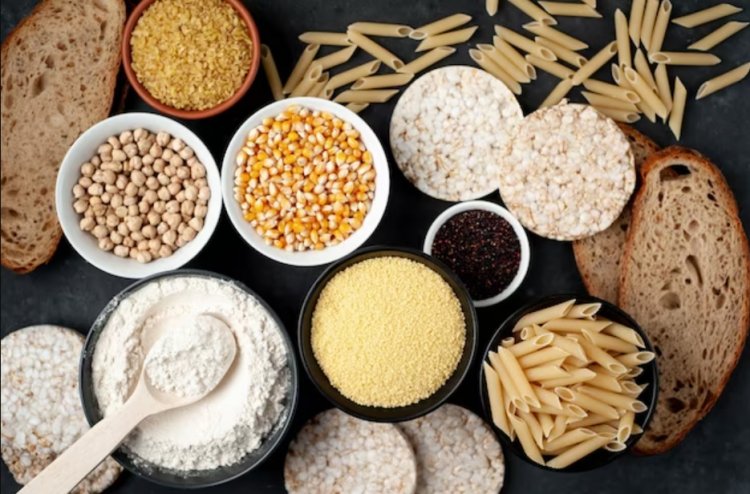
India’s twin Household Consumption Expenditure Surveys (HCES) for 2022–23 and 2023–24, released by the National Statistics Office (NSO), offer a detailed look at what Indians are eating—and what they are not. The data points to a country that is consuming more, but not necessarily better. While average calorie, protein, and fat intake remain largely stagnant, the real story lies in the implications for inequality, diet quality, and the sustainability of India’s nutritional transition.
Despite over a decade of economic expansion and aggressive poverty alleviation schemes, the report exposes a quiet stagnation in the country’s nutritional gains. A narrow focus on calories continues to mask deeper deficiencies in food quality, diversity, and equitable access, undermining long-term human capital development.
Caloric Sufficiency ≠ Nutritional Security
The latest survey reveals that India’s average daily per capita calorie intake barely moved across the two-year period: declining slightly in rural India (from 2233 to 2212 Kcal) and remaining virtually flat in urban India (2250 to 2240 Kcal). Similar stagnation is evident in protein and fat consumption, which saw only marginal changes. Even after adjusting for meals served to non-household members or purchased from outside, these figures remain underwhelming.
What’s missing is not just more food—but better food. The Indian diet remains overly reliant on cereals, with nearly half of all protein intake in rural India still coming from rice, wheat, and coarse grains. This overdependence persists despite evidence of rising incomes and greater food availability. The implications are stark: a population that may be meeting its caloric needs but falling short on essential micronutrients, leading to a rise in non-visible malnutrition like anemia, stunting, and poor cognitive development.
Growth Without Convergence
While there is a small uptick in calorie intake among India’s poorest households—a 5% gain among the bottom fractile class in rural India from 1607 Kcal to 1688 Kcal—the richest 5% in urban areas consume nearly twice that amount (3092 Kcal). The gap, though slightly narrower than in previous years, remains vast and structurally persistent.
This uneven progress underscores a sobering reality: India’s economic growth has not translated into equitable dietary improvements. The rich are diversifying their diets, while the poor are barely keeping pace. If the goal is to build a healthy, productive workforce, this divergence presents a serious policy challenge. Nutrition inequality, not just income inequality, is becoming the defining fault line of India’s demographic future.
Public Schemes Are Not Moving the Needle Fast Enough
The report is also a quiet indictment of existing nutrition interventions. Flagship programs like POSHAN Abhiyaan, Integrated Child Development Services (ICDS), and the Mid-Day Meal Scheme have yet to deliver transformational gains in dietary outcomes. The limited progress over more than a decade—since the last comparable NSS data in 2011–12—suggests that targeting calorie intake alone is an insufficient strategy.
The data should prompt policymakers to ask harder questions: Why hasn’t protein intake improved meaningfully despite widespread subsidies? Why does dietary diversity remain elusive for vast swathes of the population? And why are animal-based proteins—richer sources of bioavailable nutrients—still out of reach for many?
Structural Barriers to Dietary Diversity
The shift away from cereals is happening—but slowly. Since 2009–10, the share of cereals in protein intake has fallen by 14% in rural India and 12% in urban areas. But this has not been replaced by a proportional increase in pulses, dairy, or animal-source foods. Instead, a small share of the increase is coming from processed “other” foods—raising concerns about rising junk food consumption in urban settings.
This sluggish transformation reflects deep structural constraints: high relative prices for protein-rich foods, weak cold chain infrastructure, cultural dietary preferences, and inadequate public awareness. Without tackling these constraints head-on, India risks becoming a middle-income country with a low-quality diet trap.
State-Level Blind Spots May Obscure Crises
The report notes “wide variation” in calorie and nutrient intake across major states but withholds detailed state-level data in the current release. This absence is not trivial. Public health crises in India are rarely national—they are regional, caste-linked, and rural-urban bifurcated. Averages can obscure critical vulnerabilities in states like Bihar, Jharkhand, Uttar Pradesh, or parts of the Northeast, where malnutrition is most entrenched.
Without granular disaggregated data, central and state governments are flying blind in the very areas where interventions are most needed.
Nutritional Inertia in a Fast-Moving Economy
The HCES data should ring alarm bells, not applause bells. It tells the story of a nation whose nutritional progress has stalled—even as its economy, technology, and global ambitions race ahead. India is inching forward on dietary metrics when a leap is needed.
If policymakers continue to measure success by tonnes of grains distributed or meals served, rather than by the diversity and density of nutrients actually consumed, India may find itself with a well-fed, but undernourished, population.
In a country where over a third of children remain stunted and anemia remains pervasive among women, incrementalism is no longer acceptable. What is needed now is a sharp policy pivot—from food security to nutrition security. Without it, India’s long-term developmental dividends will remain compromised by the quiet, corrosive crisis of inadequate diets.