
Mahayuti’s Rajesh Patil Elected Gokul Dairy Chairman After Govt Nominees’ Votes
Mahayuti candidate Rajesh Patil has been elected chairman of Gokul Dairy after government-appointed directors tilted the final vote 16-13 in his favour. The Congress-backed Samvichari Aghadi had secured a 13-12 majority among elected directors. The outcome intensifies the debate over government intervention and cooperative autonomy in Maharashtra.

 Join the RuralVoice whatsapp group
Mahayuti candidate Rajesh Patil was elected chairman of Maharashtra’s influential Kolhapur District Cooperative Milk Producers’ Union, popularly known as Gokul Dairy, on Tuesday, following a closely contested election in which government-appointed directors proved decisive. The result has intensified the political controversy over the Maharashtra government's intervention in the cooperative, raising fresh questions about the autonomy of farmer-owned institutions and the role of nominated members in their governance.
Vote counting began at 2 pm. In the first phase, votes cast by the 25 elected directors were counted. Shashikant Patil Chuyekar, candidate of the Congress-backed Samvichari Aghadi led by MLC Satej Patil, secured 13 votes against 12 received by Mahayuti candidate Rajesh Patil. This reflected the outcome of the October 19 board elections, in which the Samvichari Aghadi had won 13 of the 25 seats, while the Mahayuti-backed panel secured 12.
However, in the second phase, votes of the government-appointed directors were included in the counting. Following this exercise, Rajesh Patil secured 16 votes against 13 received by Chuyekar, giving the Mahayuti candidate the chairmanship. The outcome demonstrated the decisive impact of the four government-appointed directors who were granted voting rights under the state's new ordinance.
The controversy over Gokul's leadership began after the October 19 election to its 25-member board for the 2026–31 term. The Congress-backed panel had secured a narrow majority in the election, defeating the Mahayuti-backed group. Gokul, one of Maharashtra's largest dairy cooperatives, has an annual turnover exceeding Rs 4,000 crore and represents approximately 5.5 lakh milk producers across Kolhapur district.
Following the election, the Maharashtra government decided to appoint five nominated directors to the managing committees of large cooperative institutions with annual turnover exceeding Rs 500 crore. Four of these nominees were granted voting rights. The provision, introduced through an ordinance invoking Section 73AAA of the Maharashtra Co-operative Societies Act, 1960, effectively expanded the voting strength in Gokul's chairman election from 25 elected directors to 29 members.
The government maintained that the provision was intended to strengthen the functioning of large cooperatives and resolve administrative deadlocks. Chief Minister Devendra Fadnavis defended the decision, saying the government supported the cooperative institution rather than any individual. He argued that neither faction had been able to provide the 14 directors required for a quorum to elect the chairman. Members of the Mahayuti-backed group had stayed away from meetings, preventing the board from completing the election process.
According to Fadnavis, continued failure to elect a chairman could have resulted in the District Deputy Registrar assuming the cooperative's powers under its bylaws, weakening the authority of elected representatives. He also questioned why the issue had acquired such a political character despite Gokul having only around 5,000 voters.
The opposition, however, accused the BJP-led government of changing the rules after the election to overturn the mandate of milk producers. Congress leaders argued that the ruling alliance was attempting to secure through government nominations what it could not achieve through the democratic election process. Rahul Gandhi described the move as an attempt to steal the mandate of milk producers, while NCP (SP) MLA Rohit Pawar called for mobilisation in defence of cooperative democracy.
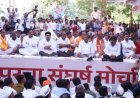
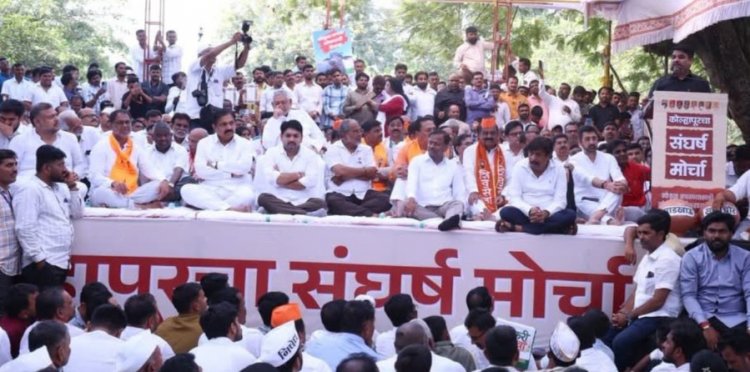
The controversy triggered widespread protests in Kolhapur, with thousands of dairy farmers marching to the district collectorate alongside their cattle. The agitation was led by the Rajarshi Shahu Shetkari Samvichari Aghadi under Satej Patil. Several political leaders, including MP Shahu Maharaj Chhatrapati, Jayant Patil and farmer leader Raju Shetti, supported the protest. Farmers also raised concerns about milk procurement prices and the need to protect their control over the cooperative.
Raju Shetti had questioned the legality of allowing government-appointed directors to participate in the chairman's election. He argued that the entire election process, including the selection of office-bearers, should be governed by the bylaws applicable when the election notification was issued. According to him, the composition of the board could not be changed midway through the election programme.
The legal proceedings added another dimension to the dispute. The Bombay High Court declined to stay the chairman's election scheduled for November 10 and permitted the four government-appointed directors to participate. However, it directed that their votes be kept sealed pending further consideration of the ordinance's validity. The next hearing has been scheduled for November 25. The election has now taken place, but the legal challenge to the voting rights of nominated directors remains unresolved.
Established on March 16, 1963, as part of the cooperative dairy development movement associated with Operation Flood, Gokul has grown into one of Maharashtra's most influential dairy institutions. Its extensive network of primary milk societies and its economic significance have made it a major centre of cooperative politics in western Maharashtra.
The outcome has brought the immediate leadership contest to a close, but the larger debate over cooperative autonomy remains unresolved. The episode raises important questions about whether government-appointed experts should have voting rights in leadership elections and whether changes in board composition should be introduced after members have already exercised their electoral choice.
The principles associated with Verghese Kurien, who consistently advocated managerial independence and farmer ownership of dairy cooperatives, remain relevant to this debate. Ultimately, the credibility of a cooperative institution depends on the confidence of its members that its leadership is determined through transparent democratic processes rather than changes in political or administrative arrangements.