
FAO Warns World Off Track on Half of Food and Agriculture-Related SDG Targets
A new FAO report on 22 SDG indicators reveals that the world is far behind on many food, agriculture, and sustainability targets. Nearly 2.3 billion people were food insecure in 2024, women face land ownership disparities, and food price volatility remains high. While data availability and water-use efficiency have improved, forest loss and unsustainable fishing persist.

 Join the RuralVoice whatsapp group
The Food and Agriculture Organization of the United Nations (FAO) has warned that global progress on food, agriculture, and sustainability targets remains uneven, with the world off track to meet many of the Sustainable Development Goals (SDGs) by 2030.
The UN agency’s latest report evaluates progress on 22 indicators across six SDGs — Zero Hunger (2), Gender Equality (5), Clean Water and Sanitation (6), Responsible Consumption and Production (12), Life Below Water (14), and Life on Land (15). The assessment includes a newly approved indicator on Minimum Dietary Diversity for Women (MDD-W).
According to the findings, only a quarter of the targets are close to being achieved, while another quarter are far or very far from completion. The remaining half show moderate progress. Data coverage for these indicators reached a record 65% in 2025, compared to just 32% in 2017.
FAO Chief Statistician José Rosero Moncayo urged renewed efforts: “We need to accelerate action towards food security, improved nutrition, and sustainable agriculture while safeguarding natural resources. This report identifies where progress is lagging most and where interventions are most urgently needed.”
Key Findings:
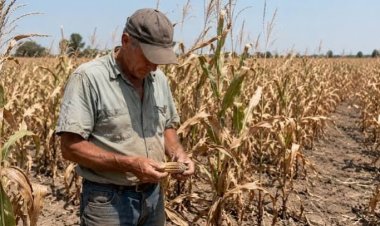
Food insecurity worsening: Around 28% of the global population — 2.3 billion people — were moderately or severely food insecure in 2024, up from 21.4% in 2015. About 8.2% of people may have faced hunger last year.
Women’s nutrition and land rights lag: Between 2019 and 2023, only 65% of women of reproductive age achieved minimum dietary diversity, with sub-Saharan Africa and Asia trailing. Women also face major land ownership disparities, with men twice as likely to own land in 80% of surveyed countries.
Rising food price volatility: Despite a slight decline in 2023, food price anomalies remain three times higher than the 2015–2019 average due to geopolitical tensions and climate shocks.
Small farmers underpaid: In low- and middle-income nations, small-scale producers earn less than half the income of larger producers, often below USD 1,500 annually.
Biodiversity and ecosystems under threat: While the number of animal genetic resources in conservation facilities is rising, only 4.6% of local breeds are sufficiently safeguarded. Forest cover continues to shrink, from 31.9% in 2000 to 31.2% in 2020, driven largely by agricultural expansion.
Water use improving, stress remains: Global water-use efficiency rose 23% between 2015 and 2022, yet regions like Western Asia and Northern Africa still face severe water stress.
Overfishing persists: Despite more international efforts to curb illegal and unsustainable fishing, the share of global fish stocks within biologically sustainable levels fell to 62.5% in 2021, from 90% in 1974.
The FAO report underscores that while there are areas of progress — such as improved data, water efficiency, and forest management — many crucial targets remain out of reach. The findings call for urgent, coordinated action to reverse negative trends and ensure that global food systems, ecosystems, and natural resources remain resilient and sustainable.