India’s Agriculture Sector Faces Setback as the U.S. 50% Tariff Target High-Value Exports: GSTR
The new tariffs will render Indian products uncompetitive, leading to order cancellations, job losses, and diversion of U.S. demand to competitors leading to estimated 70-80

 Join the RuralVoice whatsapp group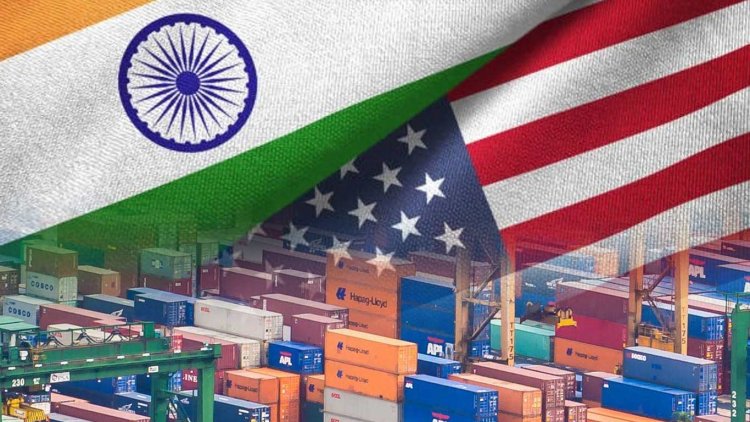
India’s agriculture and allied sector faces setback as the U.S. 50% tariff target high-value exports such as Shrimp, Basmati rice, spices, tea, pulses, and sesame says Global Trade Research Initiative (GSTR) a think tank on international trade. These sectors are highly dependent on the U.S. market, in terms of volume. The new tariffs will render Indian products uncompetitive, leading to order cancellations, job losses, and diversion of U.S. demand to competitors leading to estimated 70-80% decline in annual exports.India’s agricultural exports to US in FY2025 was $6 billion.
According to GSTR, India exported $2.4 billion worth of shrimps to the U.S. in FY2025, accounting for 32.4% of total shrimp exports. The U.S. previously had 0% MFN tariffs and 10% countervailing tariff, but now additional 50% tariff applies taking total to 60%. The U.S. is India’s top market for farmed shrimp, particularly peeled, deveined (P&D), cooked, and breaded varieties. In Andhra Pradesh, which accounts for the bulk of shrimp farming, exporter purchase prices dropped nearly 20% after the first 25% tariff in early August, pushing many farmers to the brink of losses.
The impact is cascading across the supply chain. Farm-gate prices in West Godavari and Ongole have plunged by ₹40–₹60/kg for small-count shrimp, making farming uneconomical. Processing plants in Visakhapatnam and West Godavari are cutting overtime and preparing for shift reductions as exports stall. Exporters report paused or cancelled orders.
Exporters have front-loaded shipments through July and early August to beat the tariff deadline. Marine Products Export Development Authority (MPEDA) is working to expand exports to Russia, UK, Australia, GCC, and East Asia. However, these alternative markets are smaller and cannot immediately offset the U.S. loss. Some exporters are also exploring lower-value products for markets with less stringent tariffs to maintain cash flow.
U.S. buyers are already pivoting to other suppliers. Ecuador is set to dominate raw frozen (green/HLSO) shrimp exports with a ~15% tariff, while Indonesia and Vietnam are expected to capture P&D, cooked, and breaded segments at ~19–20% tariffs, and Thailand is positioned to gain in processed products. With India’s price advantage gone, competitors are stepping up. India risks losing its leadership in the U.S. shrimp market, with Ecuador, Vietnam, Indonesia, and Thailand filling the gap and reshaping global seafood trade.
It is not only shrimp but other high value agricultural exports such as basmati rice, spices, tea, pulses, and sesame will face the same situation. In FY24, India shipped 2.7–3.0 lakh tonnes of Basmati rice to the U.S. worth $330–350 million, alongside significant volumes of other premium farm products.
Key production regions are under strain. Spice hubs like Unjha, Guntur, and Erode face cash-flow issues as U.S. buyers refuse to absorb higher costs. Tea gardens are seeing price pressure as Kenya and Nepal step up competition.
Global suppliers are moving in quickly. Pakistan is emerging as the biggest winner in basmati, with ~19% U.S. tariffs giving it a clear advantage. Thailand and Vietnam are set to capture non-basmati rice demand, Vietnam leads in spices, Kenya and Sri Lanka in tea, Canada in pulses, and Guatemala/Mexico/Nigeria in sesame. U.S. domestic rice producers are also expected to regain share.