ITC cumulatively harvests 6 times its net water consumption in FY 2025-26; already achieves 2030 goal
ITC has achieved its 2030 water stewardship target ahead of schedule by creating rainwater harvesting potential equivalent to more than six times its net water consumption in FY 2025-26. The company expanded watershed and water conservation programmes across 17 states, promoting groundwater recharge, efficient irrigation and sustainable water management.
 Join the RuralVoice whatsapp group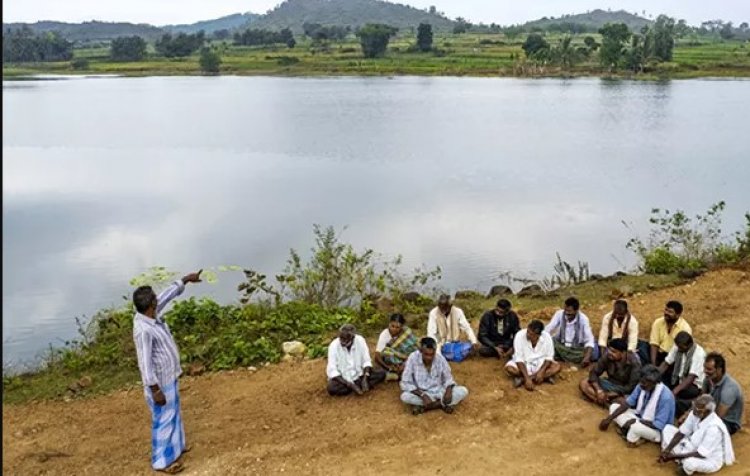
Given rising water stress in urban catchments, ITC is implementing water security programmes in Bengaluru and Chennai focused on restoring urban water bodies, improving groundwater recharge and promoting rainwater harvesting. These initiatives are aimed at strengthening urban water resilience by addressing groundwater depletion and reducing flood risks during extreme rainfall.
ITC tracks outcomes from its watershed programmes to strengthen long-term water security. As on 31st March 2026, integrated watershed projects covering over 1.98 million acres have created a total rainwater harvesting potential of about 66.31 million kl. Cumulatively, over 67 million kl of rainwater has been harvested (including within the fence), which is over six times the net water consumed by operations in FY 2025-26, thereby achieving the 2030 Sustainability 2.0 target of creating rainwater harvesting potential equivalent to over five times net water consumption. The programme currently spans 72 districts of 17 states.
Demand-side management is a key pillar of ITC’s Water Stewardship programme, with a focus on reducing agricultural water use while improving farmer incomes through ‘more crop per drop’ initiative. Over 2.01 million acres were covered during the year across 12 States through micro-irrigation and crop-specific agronomic practices. Based on established parameters, these interventions delivered potential water savings of over 1,520 million kl across 15 crops, including key agri value chains of wheat, pulpwood and spices, with savings in the range of 15% to 50% versus conventional practices. The shift to water-efficient practices also supports lower GHG emissions relative to conventional practices.
Alongside demand-side measures, ITC is strengthening supply at the sub-catchment level through rainwater harvesting, aquifer recharge and restoration of traditional water bodies and wetlands, guided by technical assessments. To drive durable outcomes in water-stressed regions, interventions have been scaled to the river sub-basin level. Till date, water positive status has been achieved (against baseline water deficits) across four sub-basins: Maharashtra (Ghod sub-basin), Madhya Pradesh (Kolans sub-basin), Tamil Nadu (Upper Bhavani sub-basin) and Telangana (Murreru sub-basin). In the South Pennar river basin of Karnataka, field interventions have commenced based on a study by the Indian Institute of Science (IISc), Bengaluru, and are being implemented through a Public Private Partnership with the Karnataka Government and Vyakti Vikas Kendra to restore water bodies in the sub-basin.
ITC is advancing sustainable water management at the catchment level through adoption of the Alliance for Water Stewardship (AWS) Standard, a globally recognised framework. As of 31st March 2026, nine units are certified under AWS, all at Platinum level, positioning ITC as the second largest holder of AWS Platinum certifications globally.