
Rs 23,731 Crore GOBARdhan Scheme to Take Effect from September 1, Consumer Impact Expected to be Minimal
The Centre has approved the Rs 23,731 crore GOBARdhan scheme for 2026-27 to 2035-36 to expand India’s Compressed Biogas sector. The scheme combines assured CBG offtake, Rs 2,110/MMBtu pricing, government affordability support, capital assistance, pipelines and credit guarantees. The government says wider gas pooling will keep the impact on CNG and PNG consumers negligible.

 Join the RuralVoice whatsapp group
The Government of India has approved a Rs 23,731-crore Central Sector Scheme for GOBARdhan (Galvanizing Organic Bio-Agro Resources Dhan) to accelerate the production and consumption of Compressed Biogas (CBG), strengthen waste-to-energy infrastructure and improve the commercial viability of CBG plants. The scheme, administered by the Ministry of Petroleum and Natural Gas (MoPNG), will operate from 2026-27 to 2035-36 and will come into effect from September 1, 2026.
The programme seeks to address some of the key challenges facing India’s CBG sector, including assured demand, pricing uncertainty, high capital costs, feedstock aggregation, pipeline connectivity and access to institutional finance.
A major feature of the scheme is an assured CBG offtake mechanism. CNG (Transport) and PNG (Domestic) entities will be required to meet specified CBG blending obligations. The blending target has been fixed at 3% for 2026-27, 4% for 2027-28 and 5% from 2028-29 onwards. Entities failing to meet the obligations could face financial disincentives or adjustments in their allocation of APM gas.
Rs 2,110 CBG price with government support
Under the new pricing framework, the administered CBG price has been fixed at Rs 2,110 per MMBtu, excluding taxes and compression charges. The price will be managed through a designated synchronisation operator for at least 10 years, providing producers with greater certainty.
However, the government clarified on Saturday that the entire increase in the procurement price will not be passed on to consumers. Under the scheme, the government will provide affordability support of Rs 10 per kg of CBG, equivalent to around Rs 215 per MMBtu for CBG containing 95% methane.
The government said the existing CBG producer price, linked to 85% of the retail CNG price, works out to approximately Rs 1,478 per MMBtu. After accounting for the government support, the effective CBG cost to be recovered is around Rs 1,895 per MMBtu, implying an effective increase of about 28%.
The ministry stressed that Rs 2,110 per MMBtu is the procurement price paid to producers and is not the price directly paid by CNG or household PNG consumers.
Importantly, CBG will be pooled with other domestically produced natural gas before being supplied to CGD entities. Under the new system, the net cost of CBG will be distributed across a domestic gas base 2.5 to 3 times larger than the earlier base. The ministry therefore expects the impact on individual consumers to be negligible.
Capital assistance and infrastructure support
The scheme allocates Rs 7,063 crore for capital assistance to greenfield CBG plants. Projects can receive support of up to Rs 2 crore per tonne per day (TPD), including assistance for plant machinery and feedstock aggregation and organic manure processing equipment. Special-category regions will receive an additional 20% support for plant machinery.
Another Rs 5,133 crore has been earmarked for pipeline infrastructure. The government will support up to 80% of eligible capital costs for cluster-based trunk pipelines and up to 50% of capital expenditure for connecting standalone plants to nearby City Gas Distribution networks.
To improve access to finance, a Rs 625-crore credit guarantee mechanism will cover up to 85% of default amounts for eligible MSME projects. The guarantee ceiling will be Rs 20 crore for general MSMEs and Rs 25 crore for women-led MSME projects.
A further Rs 500 crore CBG Ecosystem Challenge Fund will support domestic equipment manufacturing, research and development, productivity improvements, feedstock mapping and capacity building.
Focus on organic manure and circular economy
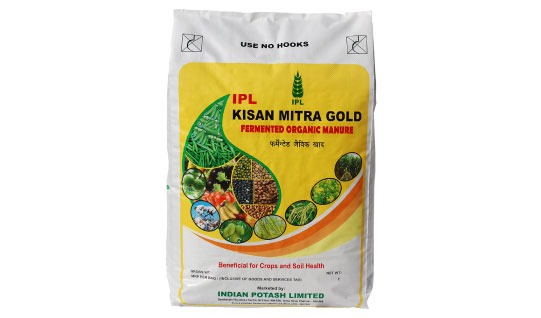
The scheme also seeks to create markets for by-products generated by CBG plants. The Department of Fertilizers will act as the nodal agency for marketing Fermented Organic Manure (FOM), Liquid FOM and Phosphate Rich Organic Manure (PROM).
Fertilizer marketing companies will be required to progressively increase procurement of FOM produced under GOBARdhan, while regulatory exemptions for organic manure sales will continue through 2035-36.
Several existing and overlapping programmes, including the SATAT initiative, certain Waste-to-Energy and biomass aggregation schemes and pipeline support programmes, will be rationalised or subsumed under the new framework.
The government expects the integrated approach to provide long-term demand certainty, improve plant economics, promote waste-based energy production and create a stronger domestic CBG ecosystem while limiting any significant impact on household and transport gas consumers.