
Are Small Farms More Productive? A New Study Challenges the Long-Held Belief
A new study by IIT Bombay and the University of Hyderabad challenges the long-held belief that small farms are always more productive than large ones. Using four decades of ICRISAT data from India’s semi-arid tropics, researchers found that while smallholders held an early edge, their productivity advantage faded over time due to rising input costs, monocropping, and structural challenges.

 Join the RuralVoice whatsapp group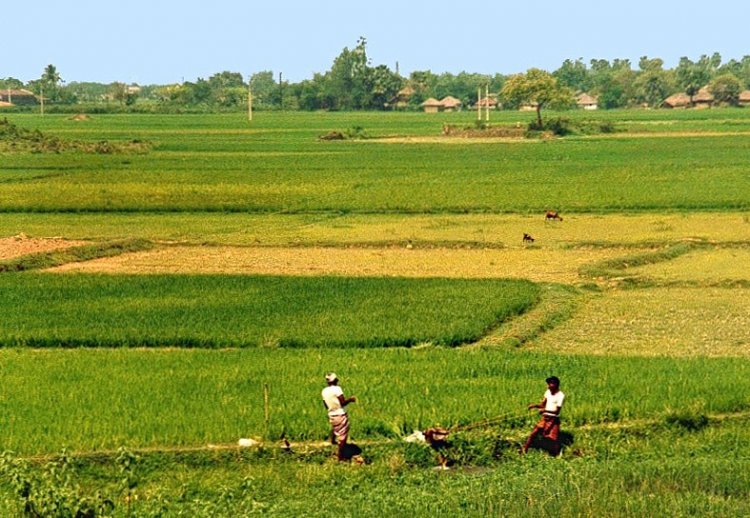
For decades, research has suggested that smaller farms produce more per acre than larger ones. This “inverse relationship” between farm size and productivity, observed since the 1960s, has shaped agricultural policies worldwide, as smallholders and family farms manage nearly 90% of farmland globally. But a new study by the Indian Institute of Technology Bombay (IIT Bombay) and the University of Hyderabad adds nuance to this belief, showing that in India’s semi-arid tropics the pattern is less clear-cut.
Using four decades (1975–2014) of household-level data from the International Crops Research Institute for the Semi-Arid Tropics (ICRISAT), the researchers found that while small farms were more productive in the early years (1975–84), their advantage weakened significantly by 2009–14. “Smallholders still matter greatly for food security and rural stability, but they are increasingly vulnerable due to monocropping and high input costs,” said Prof. Sarthak Gaurav of IIT Bombay, a coauthor of the study.
The semi-arid tropics—stretching across peninsular India, including regions such as Akola, Solapur, and Mahabubnagar—missed the early benefits of the Green Revolution. Farming here relies heavily on erratic rainfall between 400 and 800 mm annually. This made it a fertile ground for studying how delayed agricultural transitions shaped productivity.
The research is among the first to examine long-term farm size–productivity dynamics in this region. The team spent months harmonising datasets collected in phases, shifting from plot-level to household-level analysis, and supplementing with external sources like the India Meteorology Department (IMD).
Findings challenge some conventional wisdom. While smallholders did achieve higher yields initially, the advantage diminished once labour and fertiliser use were controlled for. Intensive family labour, closer attention to crops, and higher fertiliser use explained much of the early edge. “Both labour and non-labour inputs, such as seeds, fertilisers, and machinery, had a strong positive association with productivity. What matters is not the size of land but how effectively it is cultivated,” Prof. Gaurav noted.
Yet, higher inputs raised productivity without improving profitability. Small farmers often recorded more output per acre, but not necessarily higher profits. Crop diversification—commonly seen as a safeguard against market and weather risks—actually reduced productivity and efficiency, compounding financial stress.
Interestingly, the inverse relationship weakened but did not reverse in recent years, even with mechanisation and better market access. By 2014, the trend had only shifted to a statistically insignificant positive. “That persistence tells us how uneven and slow structural change can be in regions like the semi-arid tropics,” said Prof. Gaurav.
The implications are significant. Nearly half of India’s farmers cultivate less than two hectares, making their resilience central to food security, poverty reduction, and sustainability. The study recommends policies that strengthen smallholders’ collective capacity to access credit, technology, and markets. Organising them into cooperatives or producer groups, the authors argue, can help pool resources, adopt sustainable practices, and secure better prices.
While the research has limitations—such as reliance on self-reported data and focus on one agroecological zone—it underscores that farm size–productivity is a complex, context-dependent issue. Small farms still provide crucial social and food security benefits, but their economic sustainability remains fragile. The challenge, researchers conclude, is to protect these benefits while enhancing smallholders’ viability in a changing agricultural landscape.