
Supreme Court Questions E100 Vehicle Approval: Where Will the Supply of 100% Ethanol Come From?
The Supreme Court has questioned how fuel will be supplied for E100 vehicles after the Road Transport Ministry approved them, while Petroleum Minister Hardeep Singh Puri ruled out an immediate increase in ethanol blending beyond 20%. The court also stressed the need to prioritise farmers’ interests in ethanol policy.

 Join the RuralVoice whatsapp group
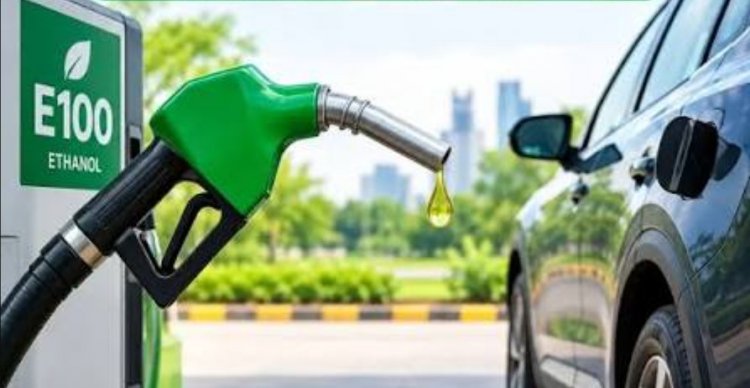
The Supreme Court has asked the central government how it plans to ensure an adequate supply of fuel for vehicles running on 100% ethanol. The question came during a hearing on ethanol allocation, amid differences in the positions of two government ministries. While the Road Transport Ministry has approved flex-fuel vehicles capable of running on E100, Petroleum Minister Hardeep Singh Puri has ruled out any immediate plan to increase ethanol blending beyond the current 20%.
A bench comprising Justice M.M. Sundresh and Justice Prasanna B. Varale referred to recent media reports about the approval of vehicles running on 100% ethanol. The bench said it wanted to understand, in principle, how the fuel supply would be ensured for such vehicles. Attorney General R. Venkataramani responded that large-scale changes to the manufacturing ecosystem would be required.
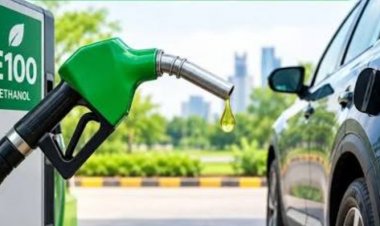
The Ministry of Road Transport and Highways issued a notification on October 26 amending the Central Motor Vehicles Rules, 1989. The amendment includes E100, along with E85, in the emission certification provisions for flex-fuel vehicles. E85 consists of 85% ethanol and 15% petrol, while E100 is nearly pure ethanol.
However, on October 27, Petroleum and Natural Gas Minister Hardeep Singh Puri said the government had no immediate plans to raise ethanol blending in petrol beyond the existing 20%.
This raises questions about how ethanol production, availability and distribution would be expanded if vehicles capable of running on nearly pure ethanol are permitted. Flex-fuel vehicles are designed to operate on different proportions of ethanol-petrol blends, whereas conventional petrol vehicles are designed for fuels with lower ethanol content.
During the hearing, the Supreme Court also highlighted environmental concerns, broader public interest and the need to empower farmers. Justice Sundresh observed that a large section of India's population lives in villages and that farmers' interests deserve greater attention. He indicated that this aspect had not received adequate consideration.
The Attorney General assured the court that he would address issues concerning farmers during his arguments. Lawyers appearing in the matter also submitted that promoting ethanol could benefit farmers and that their interests had been considered in the government's policy.
The Supreme Court is hearing petitions related to increasing ethanol allocations for the Ethanol Supply Year 2025-26. On June 30, the court had ordered the continuation of the status quo on a Karnataka High Court direction asking three public sector oil marketing companies - Hindustan Petroleum Corporation Ltd, Indian Oil Corporation Ltd and Bharat Petroleum Corporation Ltd - to consider and decide on a request by an ethanol producer for an increased allocation.
The oil marketing companies have argued that the High Court's order could undermine the national policy of blending 20% ethanol with petrol. The Supreme Court has scheduled the next hearing for next month.