India–EU FTA Will Have a Tangible Impact on Agriculture
The India–EU Free Trade Agreement promises economic gains but will significantly impact agriculture. While staples are excluded, reduced tariffs on processed foods, oils, wine and horticultural products may increase imports, strain domestic industries, and limit export benefits, raising concerns over farmer protection, food processing growth, and unequal market access.

 Join the RuralVoice whatsapp group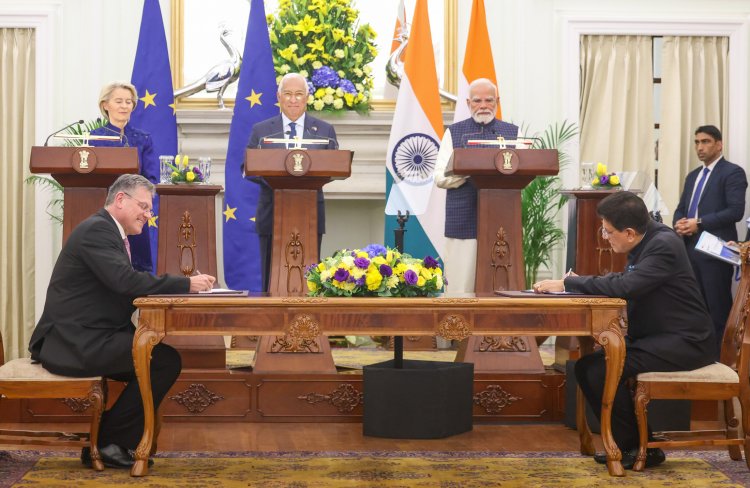
India and the European Union (EU) have projected the Free Trade Agreement (FTA) as a major win-win, noting that it covers nearly 25 per cent of the global economy. The agreement provides for substantial reductions in tariff rates across multiple tariff lines. Both sides have also maintained that sensitive sectors have been adequately protected at their respective ends.
The Indian government has asserted that the country’s agriculture sector has been fully safeguarded and that the agreement will benefit farmers without causing harm. However, ground realities suggest a more nuanced picture. The FTA will open India’s premium agricultural products market to EU producers. While the agreement still requires approval from the European Parliament — and may even face legal scrutiny in European courts — the situation in India is markedly different.
Once approved by the government, the agreement will come into force without a parallel process of parliamentary ratification. There is little likelihood of a detailed parliamentary debate before implementation. Moreover, apart from consultations with industry and the services sector, there has been no visible effort to formally engage agricultural stakeholders or farmer organisations during the negotiation process.
Trade experts point out that India has agreed to open a wide range of agricultural and food products to EU imports. This includes fruit juices, wine, edible oils, and a variety of processed food products, many of which will see steep customs duty reductions or even complete tariff elimination.
India’s food processing ecosystem remains far less developed than that of European countries. Even in segments such as fruit juices, imported products already command a significant share of the Indian market. Following the FTA, these imports are expected to rise further. India’s agricultural processing rate, which currently stands at around 10 per cent of total output, may struggle to improve in the face of intensified import competition. Cheaper imports of wine and fruit beer, in particular, could undermine domestic industries that are still in the early stages of development and have been creating market linkages for Indian fruit growers.
In edible oils, India already depends on imports for more than 60 per cent of its requirements. Reduced duties on olive oil could allow imports to capture a larger share of the premium edible oil market. Farmer organisations representing apple growers in Himachal Pradesh have warned that duty reductions under the India–New Zealand FTA have already hurt domestic producers, and similar concerns are being raised in the context of the EU agreement.
The government has clarified that key staples such as foodgrains, soybeans, and rice have been excluded from the agreement. These crops are already competitively priced in India, leaving limited scope for imports from Europe. However, concerns remain about other segments of agriculture that are more exposed.
Scepticism also surrounds the export opportunities being projected under the FTA. The EU has refused to offer concessions on India’s major export items such as rice, sugar, and dairy products. It has also made it clear that there will be no dilution of food safety and quality standards. As a result, any expansion of exports of fresh vegetables or grapes will require strict compliance with stringent sanitary, phytosanitary, and traceability norms. While India already exports products such as gherkins and grapes to the EU, these shipments are limited to companies capable of meeting rigorous standards. The inclusion of sheep meat in the agreement is also expected to adversely affect a fast-growing segment of India’s livestock sector.
The full implications of the FTA will become clearer once the detailed text is released. While horticulture offers the greatest potential for boosting farm incomes, many of the products granted import concessions under the agreement fall within this very segment. Notably, horticultural production in India has already surpassed foodgrain output, making it insufficient to frame agricultural protection solely around cereal crops.
India has pursued FTAs aggressively, concluding four agreements in the current year alone. Under the India–New Zealand FTA, concessions have been granted for imports of baby food and intermediary products, indirectly opening the door to dairy imports. Multinational corporations already dominate India’s baby food market, and such provisions could further consolidate their position. Taken together, these FTAs appear to be structured primarily around the interests of industry and services, with agriculture only partially accommodated under the banner of protection. A more realistic assessment requires viewing these agreements in the context of a rapidly evolving agricultural economy.