
Precision Breeding: A Transformative Technology Poised to Redefine India’s Crop Improvement Future
Precision breeding through genome editing is transforming India’s crop improvement landscape. Using CRISPR/Cas technology, scientists create precise, transgene-free mutations to develop high-yielding, climate-resilient crops. With regulatory support for SDN1 and SDN2 plants, breakthroughs like DRR Dhan 100 and Pusa DST1 promise faster breeding, improved productivity, food security, and sustainable Indian agriculture.

 Join the RuralVoice whatsapp group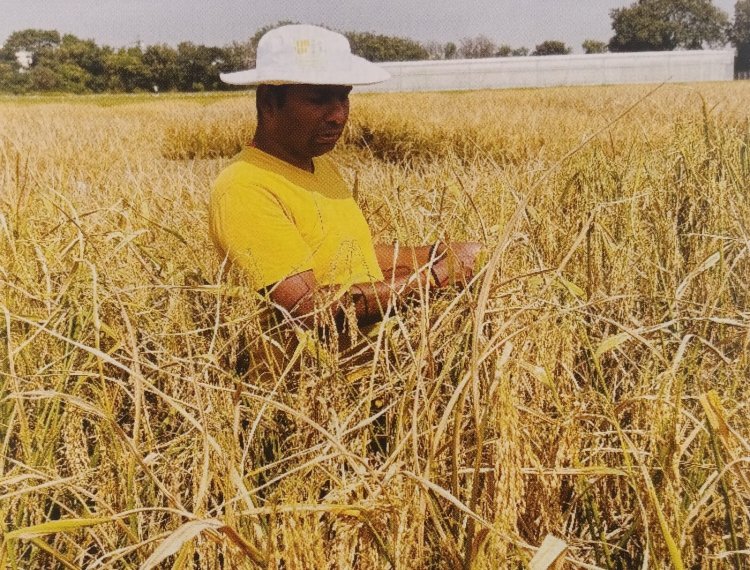
Genome editing is transforming modern crop improvement by enabling precise, targeted changes in plant DNA—without introducing foreign genes. Unlike older mutation-breeding methods that relied on random chemical or radiation-induced changes, tools like CRISPR/Cas allow scientists to mimic natural mutations with accuracy and speed. With India exempting SDN1 and SDN2 genome-edited plants from strict biosafety regulations, research institutions have begun advancing high-yielding, climate-resilient and quality-enhanced varieties at an unprecedented pace. Breakthroughs such as DRR Dhan 100 and Pusa DST1 show how genome editing can boost productivity, strengthen resilience and accelerate breeding timelines, offering immense promise for Indian agriculture.
What is genome editing and how is it done?
As the name suggests, it is a breeding tool to make targeted and precise editing (mutations) in any genome (DNA). This is a refined and improved version of earlier practiced mutation breeding, primarily done through chemicals or radiations, wherein DNA of plants or animals was randomly edited or mutated. Therefore, genome editing is a precise mutation tool.
Genome editing is achieved by various tools, the most prominent and widely practiced is CRISPR/Cas. The CRISPR/Cas has two major components- guide RNA (to specify the site of DNA where editing to be done) and Cas protein (to make necessary cutting and joining of DNA with the help of the inherent DNA repair system of plants). Both of these components are transformed into plant cells by routinely followed genetic transformation methods. After entering the plant cell, both these components make necessary target edits in the DNA. After the edits/mutations are confirmed at the target locus of DNA, researchers remove all these external components following a simple genetic process called segregation. The plants with clean background which have only targeted mutations but do not have transgene (guide RNA, Cas gene etc.) are selected and advanced for performance analysis. Therefore, although initial steps of genome- edited plants mimic transgenic processes, the end product is transgene free. Hence, it should be noted that genome edited plants are not GM (genetically modified) crops.
Whether genome edited plants are IP protected and will they cost more to farmers?
None of the genome edited plants are IP protected. As per Indian Patent law, the plants can’t be patented. Only the tool CRISPR/Cas is IP protected. Therefore, a researcher/research organization needs to acquire a license of CRISPR/Cas for its commercial application. The genome-edited plant or variety is considered as the sole IP of the individual/organization who develops it. Therefore, the developer has complete sovereignty over these plants/seeds. The license fee for commercial usage of CRISPR/Cas varies case to case. In most cases of non-profit usage, the IP holder of CRISPR/Cas considers free licensing. In either way, the cost of CRISPR/Cas licensing does not have any implication on seed cost sold to farmers. The genome edited plant varieties are like any other inbred varieties; therefore, farmers can preserve seeds, and use them year after year for several cycles. Farmers will not be dependent on seed companies for availability of seeds.
Who regulates and ascertains that genome edited plants are transgene free?
In India, the Ministry of Environment, Forest, and Climate Change has exempted genome edited plants (SDN1 and SDN2) from strict biosafety regulations by a Memorandum dated March 2022. Here, the developer needs to submit the data and report to Institute Biosafety Committee (IBSC) and Review Committee on Genetic Manipulation (RCGM) as per the Standard Operating Procedures (SOPs) of Department of Biotechnology, Ministry of Science and Technology, Government of India. These SOPs defined the necessary data to ascertain absence of transgene and establishment of homozygosity of mutations in genome edited plants. When both IBSC and RCGM are fully satisfied with the submitted data by the developer, they issue an exemption notice/certificate to that particular genome-edited plant.
Are there other countries where genome edited plants are exempted from strict biosafety regulations?
In addition to India, approximately 40 other countries including USA, China, Australia, Japan, Brazil, Philippines, Bangladesh etc. have exempted genome edited plants.
Is there any mechanism to distinguish genome edited plants?
There is no mechanism or diagnosis method by which one can differentiate genome edited plants from the plant mutated/bred through other means. Therefore, even if some countries export genome edited plant products in future, we will not be able to stop it in the absence of any diagnostic method. Genome edited plants at molecular level are very similar to plants obtained through natural or induced mutations.
Do these genome edited plants have any health hazard or danger to biodiversity?
As stated above, genome editing is exactly similar to mutation breeding which has been practiced for more than 150 years and ~4000 different plant varieties have been developed and cultivated. There have been no reports of health hazards or danger to biodiversity due to mutation breeding. On the contrary, genome editing has been proven an important tool to preserve biodiversity by precisely improving the agronomic traits of landraces and wild relatives of crops.
Whether genome edited breeding lines are treated differently for varietal release?
After exemption by IBSC and RCGM, genome edited plants are treated the same as breeding lines derived from other plant breeding methods. These plants undergo rigorous field evaluation under AICRP (All India Coordinated Research Project) to evaluate their field performance, adaptation zones, and trait verification (tolerance to biotic abiotic stresses etc.) Further, all the existing regulations and acts such as Seed Act 1966 and Protection of Plant Varieties and Farmers' Rights Act (PPVFRA) 2001 imply on genome edited plants.
Whether genome edited plant varieties will fetch lower prices?
As stated above, the genome edited plants are very similar to varieties developed through mutation, and there is no mechanism to distinguish them, there is certainly no question of fetching lower price.
Whether genome edited plant varieties need special care or growth conditions?
The genome edited plant varieties do not require any special care. The water, fertilizer, and other resources are mostly the same like any other crop variety. On the contrary, if the genome edited plant has been improved for a specific trait that helps growing plants in less water or fertilizer, these plants can be grown in less farm resources.
Where does India stand in genome edited application in agriculture?
India has done exceedingly well in application of genome editing in the field of agriculture. It emerged as the world's first country to develop two rice varieties by genome editing namely- DRR Dhan 100 (KAMALA) and Pusa rice DST1. The DRR Dhan 100 has been developed from a very popular mega rice variety Samba Mahsuri which has fine grain and premium cooking and eating quality. By mutating a gene cytokinin oxidase through CRISPR/Cas, the researchers at Indian Institute of Rice Research (IIRR) Hyderabad have increased the level of plant hormone cytokinin in rice, which helps enhancing grain yield by 19%, stronger culm (lodging resistance), early maturity (in most of Samba Mahsuri adapted zones), and complete panicle emergence in DRR Dhan 100 compared to parent variety Samba Mahsuri. Most importantly, the DRR Dhan 100 retains the original grain quality of Samba Mahsuri. It should be noted that natural mutations in cytokinin oxidase gene are already present and published in some of the high yielding Japanese and Chinese rice varieties. Additionally, it is well known that external spray of cytokinin phytohormone helps improve rice growth and yield, although it is an expensive method. Therefore, researchers at IIRR mimicked and improved those natural mutations present in high yielding rice varieties.
Similarly, Pusa rice DST1 has been developed from a very popular and mega rice cultivar MTU1010. Here, the researchers at Indian Agricultural Research Institute (IARI) New Delhi mutated a gene known as Drought and Salt Tolerance 1 (DST1) by CRISPR/Cas. The natural mutation in this gene is known to impart drought and salt tolerance in plants. The rice varieties with natural mutations in DST1 are already being grown and cultivated in drought and salt prone regions in other countries. Therefore, researchers at IARI mimicked those natural mutations in DST1 gene of MTU1010 to make it drought and salt tolerant. Under normal soil and growth conditions, the grain yield of Pusa rice DST1 is equivalent to MTU1010. But, under alkaline, inland salinity, and coastal salinity conditions, Pusa rice DST1 showed 14.66, 9.66, and 30.36% yield superiority over MTU1010 in the adaptation zone of parent variety MTU1010.
Both, DRR Dhan 100 (KAMALA) and Pusa rice DST1 have been developed and evaluated as per the existing rules and regulations. These two varieties were exempted by biosafety regulatory bodies in May 2023 after examining the complete data and report submitted to IBSC and RCGM. The IBSC and RCGM ascertained that DRR Dhan 100 (KAMALA) and Pusa rice DST1 do no have any foreign gene and the mutation in target gene (cytokinin oxidase in case of KAMALA and DST1 in case of Pusa rice DST1) is homozygous. After the exemption, both of these two-genome edited mutant lines (KAMALA and Pusa rice DST1) were entered for field evaluation under AICRPR (All India Coordinated Research Project on Rice). The two years of standard multi-location field evaluation recommended for near isogenic and genome edited lines was strictly followed. It should be noted that breeding lines evaluated under AICRPR are blind coded, therefore, their identity is not known by the researchers evaluating these lines at different centres. After establishing the superior performance of DRR Dhan 100 (KAMALA) and Pusa rice DST1 over their respective parent varieties, both of these genome-edited lines were identified as a variety by the Varietal Identification Committee in May 2025.
In addition to these two rice varieties, three other genome edited lines of rice, developed for high grain yield and aroma, are being field evaluated under AICRPR. Also, mustard with low glucosinolate content has been developed by NIPGR New Delhi by genome editing. It has been done to improve the oil quality of mustard, similar to canola. The genome-edited line of mustard is in the final year of AICRP field testing. Additionally, more than 25 different institutes/laboratories are working on trait improvement of oilseed, pulses, cereals, millets, and horticulture crops. Also, Indian scientists at IGIB New Delhi and CRRI Cuttack have developed indigenous genome editing tools which can be applied in near future to accelerate the delivery of genome edited crops with improved traits.
What promises it holds to Indian agriculture?
By enhancing the productivity of staple crops such as rice and wheat, India can strategically reduce the cultivated area under these crops without compromising total grain output-an essential requirement for ensuring food security for more than 1.46 billion people. The land thus saved can be effectively diversified towards pulses and oilseeds. Strengthening the production of these crops is critical for achieving true Atmanirbharta in agriculture. Advanced genome editing offers a powerful avenue to boost the productivity of pulses and oilseeds by creating superior alleles for key agronomic traits, thereby accelerating genetic gains in these traditionally low-yield crops. Genome editing can also be used to develop pest and disease resistance and climate resilience in popular elite crop varieties, therefore, reducing the burden of pesticides, and helping the environment. Most importantly, genome editing can provide quick solutions to agriculture problems. For example, in rice it takes 8-10 years for trait improvement in a variety by existing breeding methods, but genome editing can help develop those improved varieties in 3-4 years. Hence, it helps address agriculture problems not only precisely and efficiently, but timely too.
Every technology needs time to evolve and reach its full potential. What truly matters is our commitment to keep working, refining, and improving. With sustained effort and a positive mindset, excellence becomes inevitable. Genome editing too, like any other breeding tool, will prove it high worth in years to come, provided we support and give the right push at this juncture. The handholding and positive mindset for one of the most promising breeding technologies will not only motivate young researchers of this country but also will emerge as a significant industry to provide employment to biology and agriculture graduates.
(The writer is Principal Scientist, ICAR-Indian Institute of Rice Research, Hyderabad)