
Russian Grain Sector Faces Deepening Crisis as Wheat Production and Exports Decline, Farmers Shifting to Sunflower
Russia’s grain industry faces a deepening crisis as wheat production declines and exports shrink. Over 35,000 farmers have gone bankrupt in five years, hit by high export duties, rising input costs, and an overvalued ruble.

 Join the RuralVoice whatsapp group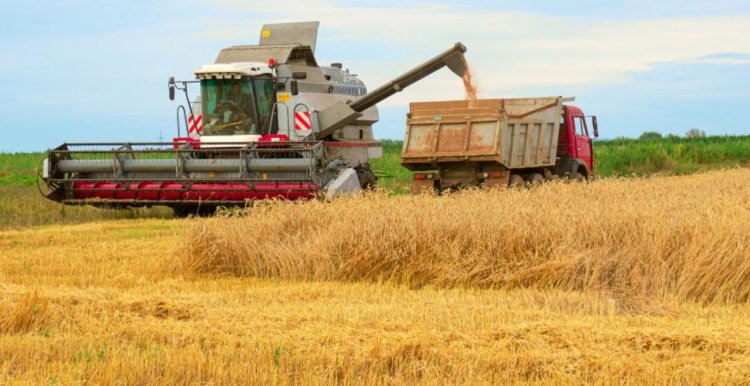
The Russian grain industry is grappling with a severe crisis that has been building over the last three years, culminating in a sharp decline in wheat production and an unusual contraction in exports. Over the past five years, nearly 35,000 grain farmers have gone bankrupt, reflecting the mounting financial strain across the sector.
The collapse stems from a combination of prolonged export duties, tightening quotas, and an increasingly challenging competitive environment. Originally introduced as a temporary measure during the COVID-19 pandemic to stabilize domestic food prices, the export duty has remained in place far longer than expected. Despite repeated calls from industry bodies to revise or remove the duty, it continues to impose a heavy financial burden on producers, a report by World Grain says.
In 2024, grain export duties generated an estimated 133.9 billion rubles ($1.60 billion) for the federal budget, with projections for 2025 exceeding 187 billion rubles ($2.37 billion), making it a critical revenue source amid Western sanctions and falling global oil prices.
Beyond export duties, farmers face steep production costs, which have surged by 20% over the past year due to rising fuel, energy, and fertilizer prices, while wholesale grain prices remain stagnant. The unusually strong Russian ruble has further suppressed domestic prices, making Russian grain less competitive internationally. Market consolidation has compounded the problem, with nearly 80% of exports from the Azov-Black Sea basin now controlled by just five companies, compared to 15 companies in 2020.
Many farmers are abandoning wheat cultivation altogether, shifting to sunflower seeds and other crops that remain profitable. This shift, however, carries risks, including soil nutrient depletion and higher vulnerability to pests and diseases due to monoculture practices. Crop insurance initiatives promoted by the government have seen limited uptake, as farmers remain skeptical of their effectiveness.
Planting data for 2025 indicates a sharp decline in spring wheat acreage to 11.8 million hectares—the lowest in a decade—with some regions planning to forgo wheat cultivation entirely in favor of alternative crops. Despite government projections of a slight rise in total wheat output to 82.8 million tonnes, industry insiders warn that this is unlikely without statistical adjustments, as many farmers have reduced fertilizer and pesticide use to conserve funds.
The crisis has also affected related sectors. Agricultural machinery sales fell sharply in 2024, with companies like Rostselmash selling only 3,900 grain harvesters, the lowest in a decade. Demand for farm equipment remains weak, with some manufacturers seeking additional state support and considering downsizing due to the unprecedented low activity.
Exports have suffered dramatically. In May 2025, Russia exported grain to just 18 countries, down from 50 the previous year. Wheat exports are projected to fall to around 41 million tonnes this season, from 55 million tonnes last year, reducing Russia’s share of global exports from 28% to 22%.
Looking ahead, the long-term growth ambitions of Russia’s grain sector—including a projected rise to 170 million tonnes annually and exports of 80 million tonnes by 2030—appear at risk. Industry observers suggest that stabilizing the sector would require revising export duties, reducing interest rates, and achieving a temporary ceasefire or peace deal with Ukraine to restore investor confidence.
With these challenges compounded by ongoing geopolitical tensions, Russian grain market experts warn that the crisis is likely to deepen in the coming months unless decisive policy interventions are implemented.