
Six Years After Redevelopment Promise, Ghazipur Flower Mandi Awaits Modernisation Amid Mounting Challenges
Delhi’s Ghazipur Flower Mandi, the capital’s principal flower trading hub, continues to grapple with poor infrastructure, administrative uncertainty and stalled redevelopment plans announced in 2020. Traders and workers cite drainage, sanitation and space constraints, while the absence of an elected chairman since 2023 has deepened concerns. Stakeholders warn that delayed modernisation could affect the market’s future growth.
 Join the RuralVoice whatsapp group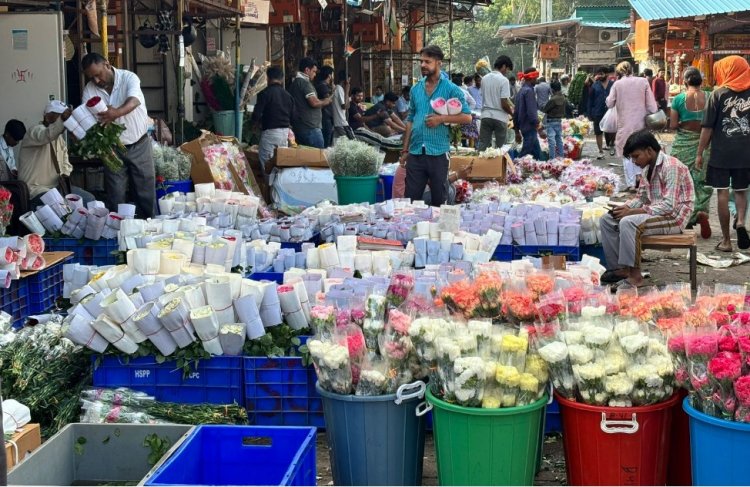
Abhash Anand/Prinsu
Delhi’s flower market at Ghazipur Flower Mandi continues to struggle with poor infrastructure, administrative uncertainty and delayed redevelopment plans, even six years after the Delhi government proposed modernising the market. Traders, labourers and former mandi committee members say the absence of an elected Chairman since 2023 and the lack of clarity over the proposed redevelopment have deepened concerns over the mandi’s future.
In conversation with Rural Voice, several traders and workers described how the market has been functioning without major structural improvements for years, while promises of redevelopment remain stuck on paper.
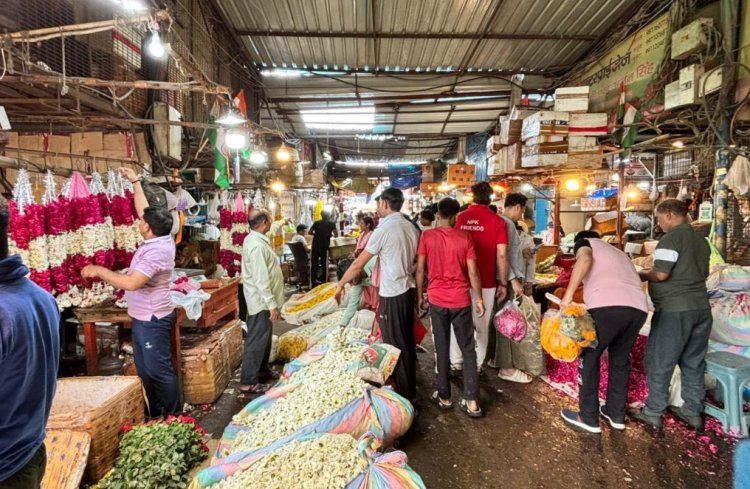
Shopkeepers at Ghazipur Flower Mandi continue operations under temporary tin sheds.
The Flower Marketing Committee (FMC), Gazipur, which is responsible for overseeing the flower trade in the mandi, has remained without an elected Chairman since 2023. Former committee member Jai Veer Singh says, “Official records show that more than 400 licences have been issued in the market, while nearly 1,500 to 2,000 labourers depend on the mandi for daily employment and logistics work.”
Redevelopment plan announced in 2020
According to notification by the Government of Delhi dated 3.6.1997, Mehrauli was declared as Principal Yard of Flower and Fatehpuri as its subsidiary market. Again vide notification dated 12.3.1998, Connaught place was also declared as sub-yard of Flower Market Mehrauli. To consolidate the flower trade at one place and under one roof, all the three notified markets were de-notified vide notification dated 06.06.2011 and a temporary flower market was set up in the area of 1.5 acre at Ghazipur, Delhi. By a notification dated 01.08.2011, it was declared as Principal Yard for Flower Marketing.
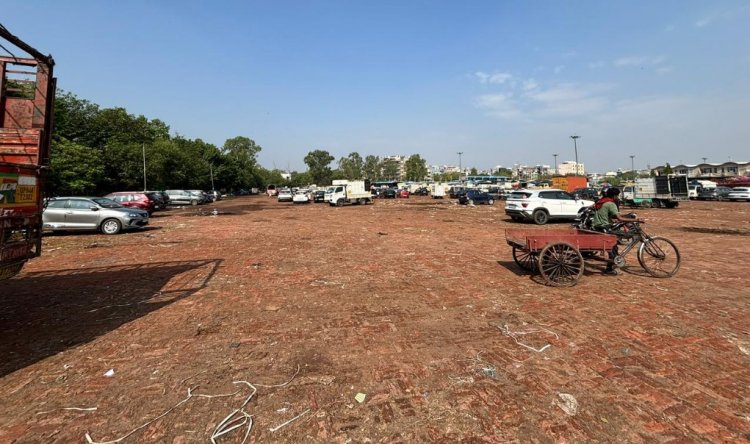
Unused land is currently being used as a temporary parking space.
Almost a decade later, the state government announced plans in 2020 to redevelop the flower market into a more organised and modern facility. However, financial constraints and budget-related challenges delayed the project, leaving traders uncertain about whether the proposal will move forward.
Many shopkeepers said the lack of clear communication from authorities has increased uncertainty within the market community. Several traders claimed that no concrete update regarding redevelopment has been shared with stakeholders in recent years.
Land lying useless
Traders and former mandi members also pointed to nearly 10 acres of land within the mandi premises that remains outside the redevelopment process. Around 1.5 acres of land is currently being used for operational market activities, while the remaining vacant land is mainly being used for parking and temporary market purposes.
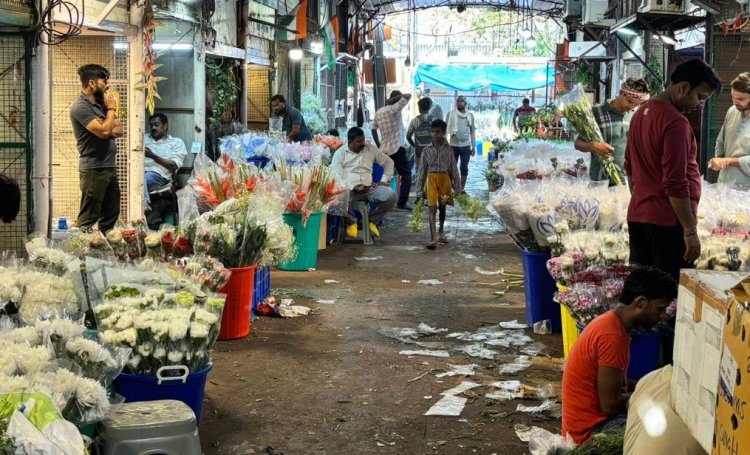
Customers and traders have to go through narrow lanes of Ghazipur Flower Mandi.
Stakeholders said the land was expected to become part of the proposed modernisation project announced in 2020, but no concrete development or official clarification has emerged so far. Traders say the pending status of the land has further delayed expansion plans and added to the uncertainty surrounding the future structure of the mandi.
The market has also been functioning without an elected chairman of the Flower Committee since 2023, creating what traders describe as an administrative vacuum. In the absence of elections, the mandi continues to be supervised by the Delhi Agricultural Marketing Board (DAMB).
Flowers from overseas
Despite infrastructural problems, trade at mandi is going as usual. Jaiveer said that several imported exotic flowers sold at the mandi arrive from countries including the Netherlands, Thailand, South Africa, New Zealand and China. According to traders, the Netherlands is known for supplying high-quality flowers such as lilies and pincushions, while Thailand remains a major source of orchids, heliconias and lucky bamboo. South Africa supplies varieties like proteas, banksia and hydrangeas, while New Zealand and China provide seasonal flowers including daisies, irises and lilies.
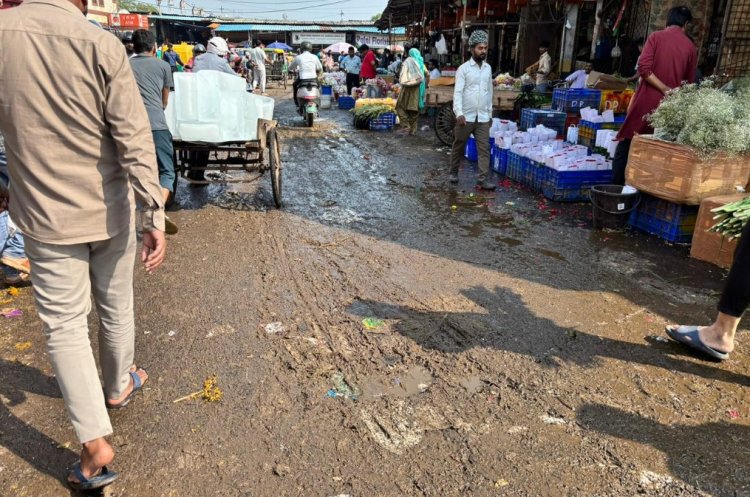
Traders navigate muddy, broken paths at the flower market, where poor infrastructure continues to stall daily operations.
Flowers in demand
Among the most traded flowers is marigold, locally known as genda, which is brought in huge quantities from Uttar Pradesh and Haryana. The bright orange and yellow flowers are commonly used for temple decoration, religious functions, weddings and festive events. Jasmine, popularly called mogra or motia, is another high-demand flower in the mandi due to its strong fragrance.
Sourced from nearby states, it is widely used in bridal jewellery, garlands and religious offerings. Tuberose, or rajnigandha, is also traded in large volumes in both loose flower form and long stems. The flower remains popular for wedding mandap decorations, floral arrangements and formal functions.
Apart from traditional flowers, the mandi also handles a large trade in cut flowers and decorative fillers. Roses in red, pink and white varieties are supplied from Bengaluru, Pune and nearby local farms. These flowers are commonly used in bouquets and event decorations.
Chrysanthemum flowers, known for their durability and seasonal colours, are widely used for decorative borders and floral designs during events and celebrations. Gladioli, recognised for their tall stems and vibrant appearance, are frequently used in stage decorations, flower vases and large floral displays. Aster flowers, which resemble daisies, are commonly traded as filler flowers and are used in bouquets and decorative arrangements across the city’s event industry.
Earnings & Issues
According to Imran Khan, owner of Priya Flowers at the Mandi, small traders usually earn between Rs 1,000 and Rs 2,000 daily. In comparison, large-scale traders such as Joshi Flowers reportedly earn around Rs 8,000 to Rs 10,000 per day during regular business operations.
Gazipur Phool Mandi, as it is popularly known, was established with the objective of providing modern market infrastructure, safeguarding farmers’ interests, and offering them a stable and organised platform to sell their produce.
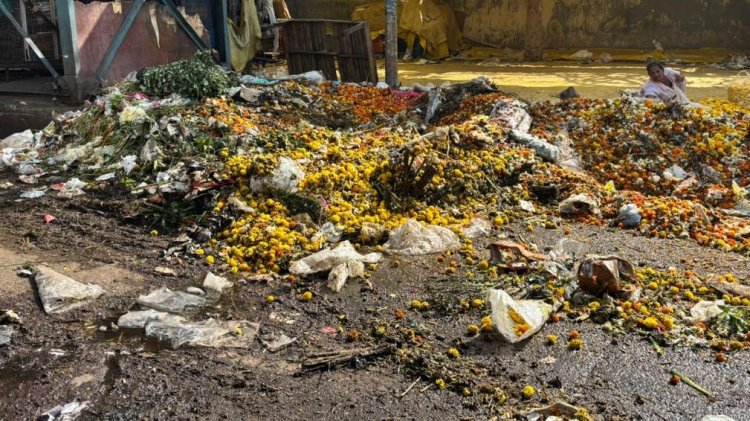
Discarded flowers pile up as labourers face poor sanitation.
However, labourers working within the mandi said several basic civic issues continue to hamper its day-to-day functioning. Poor drainage, inadequate sanitation facilities, overcrowding, and severe space constraints remain persistent challenges, particularly during peak demand periods such as festivals and the wedding season, when flower arrivals and trading activity increase significantly.
Traders, too, voiced concerns over the prolonged delay in the proposed redevelopment of the market. They warned that inadequate infrastructure could undermine the mandi’s long-term competitiveness at a time when demand for flowers across the Delhi-NCR region is rising steadily, driven by weddings, religious events, festivals, and expanding logistics requirements.
Despite a redevelopment proposal being announced in 2020, no official update on its progress has been made public so far. The mandi’s official website appears largely inactive, with its last update recorded in 2024. The most recent circular available on the website, dated September 28, 2024, merely notified the closure of the mandi on October 2 for Gandhi Jayanti. Notably, the market's price list has not been updated since January 25, 2019, raising questions about the availability of current market information for stakeholders.
While the mandi remains one of the most important centres of flower trade in the capital, stakeholders say its future depends on administrative clarity, infrastructure investment and timely government action.