
FAO Calls for Farmers’ and Local Communities’ Participation in Land-use Decisions
The FAO’s updated integrated land-use planning guidelines call for a shift from centralised decision-making to participatory, evidence-based resource management. The framework outlines nine steps for balancing agricultural production, food security, environmental protection and livelihoods, while addressing land degradation, water scarcity, climate change and competing demands.

 Join the RuralVoice whatsapp group
The Food and Agriculture Organization of the United Nations (FAO) has called for a more integrated, participatory and science-based approach to land-use planning, highlighting the need to balance agricultural production with environmental conservation, water management and rural livelihoods. Its updated publication, Guidelines for Integrated Land Use Planning, proposes a framework to help countries make informed decisions on the allocation and sustainable management of land and natural resources.
The guidelines come against the backdrop of mounting pressure on land, soil and water resources due to population growth, rising food demand, urbanisation, climate change and competing demands from agriculture, infrastructure and other sectors.
According to FAO estimates cited in the publication, agriculture will need to produce around 50 per cent more food, feed and fibre by 2050 compared with 2012. At the same time, more than 60 per cent of human-induced land degradation is already occurring on agricultural land, threatening production systems and food security.
The updated framework builds on FAO's original land-use planning guidelines published in 1993, incorporating developments in environmental assessment, land governance, digital technologies and stakeholder participation. It represents a shift away from conventional top-down planning towards an approach that places local communities and land users at the centre of decision-making.
FAO emphasises that land-use decisions should not be based solely on physical suitability or immediate economic returns. They must also consider social conditions, market forces, legislation, land tenure arrangements, environmental impacts and the interests of different resource users.
Nine-step planning framework
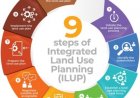
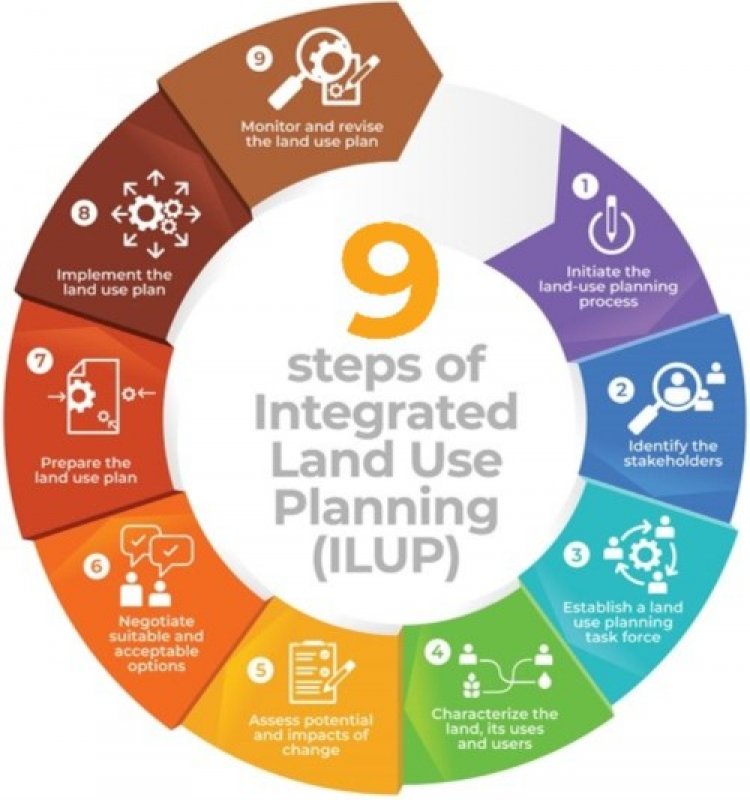
A central feature of the guidelines is a nine-step approach to integrated land-use planning. It begins with identifying the planning area, objectives and challenges, followed by mapping all stakeholders who have an interest in or are affected by land-use decisions.
The next stages involve establishing a multidisciplinary task force, assessing the characteristics of land and its users, and analysing alternative land-use options. These assessments should consider economic viability, environmental consequences, biodiversity, land degradation, climate resilience and the distribution of benefits and costs among different communities.
The framework then calls for consultations and negotiations to select acceptable land-use options, followed by preparation and implementation of a comprehensive plan. The final stage involves monitoring progress and evaluating outcomes, with revisions wherever necessary.
Focus on inclusion and sustainability
The guidelines place particular emphasis on the participation of farmers, pastoralists, forest-dependent communities, fisherfolk, women, young people, Indigenous Peoples and vulnerable groups. FAO argues that planning conducted without meaningful local participation can overlook community needs, weaken cooperation and create inequalities in access to land and natural resources.
Secure land tenure is another important consideration. The publication highlights that uncertainty over land rights can discourage farmers from investing in sustainable practices and restoring degraded land. It also stresses the need to recognise women's land rights and ensure their meaningful participation in resource governance.
Climate change adaptation and mitigation, restoration of degraded agricultural land, land degradation neutrality, biodiversity conservation and water management are identified as major priorities. The guidelines also recognise the implications of urban expansion for agricultural land and the potential contribution of urban and peri-urban agriculture to food security.
The framework encourages the use of geospatial technologies, digital information systems, soil data, mapping and local knowledge to improve planning decisions.
rifies that the guidelines are voluntary and non-binding. They are intended to complement existing national policies and institutions rather than replace them, allowing countries to adapt the framework to their legal systems, priorities and institutional capacities.
The broader objective is to make land-use decisions more equitable and sustainable while strengthening food security, restoring natural resources and improving the resilience of agrifood systems.