
Government Notifies Anhydrous Ammonia Fertiliser Under FCO; Clears Way for Manufacturing in India
The Centre has notified specifications for Anhydrous Ammonia Fertiliser under the Fertiliser Control Order (FCO), allowing its manufacture in India for three years. With a minimum nitrogen content of 82%, the move provides a regulatory framework for one of the world's most concentrated nitrogen fertilisers, though its use requires specialised infrastructure.

 Join the RuralVoice whatsapp group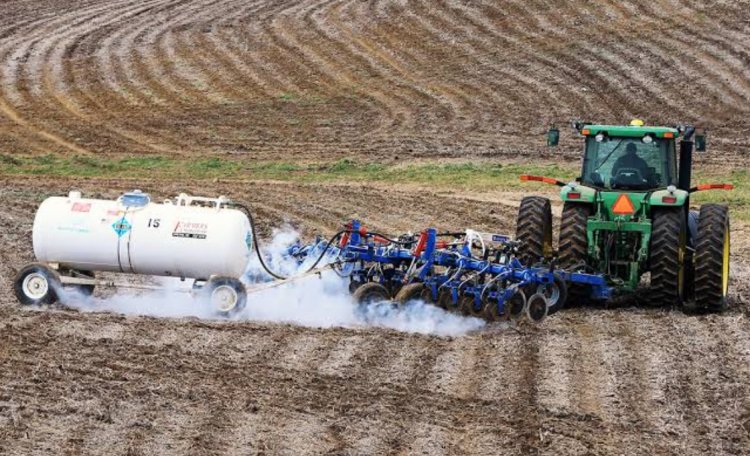
The Centre has notified the quality specifications for Anhydrous Ammonia Fertiliser under the Fertiliser (Inorganic, Organic or Mixed) (Control) Order, 1985, paving the way for its manufacture in India by any eligible manufacturing unit for an initial period of three years.
According to a Gazette notification issued by the Ministry of Agriculture and Farmers Welfare, the fertiliser must contain a minimum nitrogen content of 82% by weight, making it one of the most concentrated nitrogen fertilisers approved for agricultural use in the country. However, a major question remains over the availability of ammonia, the key raw material required to produce anhydrous ammonia fertiliser.
The notification has been issued under Clause 20A of the Fertiliser (Control) Order, 1985, which empowers the Central Government to notify specifications for new fertilisers. The approval will remain valid for three years from the date of publication in the Official Gazette.
The move is essentially a regulatory approval and does not introduce any subsidy, procurement programme or mandatory use of the fertiliser. Instead, it establishes official quality standards, enabling manufacturers to produce and market Anhydrous Ammonia Fertiliser in accordance with the prescribed specifications.
One of the highest nitrogen-content fertilisers
Anhydrous ammonia (NH₃) is recognised globally as one of the most concentrated nitrogen fertilisers, containing around 82% nitrogen, substantially higher than conventional nitrogen fertilisers used in India.
For comparison, urea, the country's most widely used nitrogen fertiliser, contains 46% nitrogen, while ammonium sulphate contains about 21% and calcium ammonium nitrate around 26%. The higher nitrogen concentration means smaller quantities are required to supply the same amount of plant nutrient, potentially reducing transportation and storage volumes.
Requires specialised handling
Despite its high nutrient content, anhydrous ammonia differs significantly from conventional fertilisers. It is stored as a liquefied gas under pressure and must be injected directly into the soil using specialised equipment. Exposure to air can result in rapid volatilisation, leading to nitrogen losses.
The fertiliser also requires dedicated storage tanks, pressurised transportation systems and trained operators because of its hazardous nature. Consequently, its adoption is expected to depend on the availability of appropriate infrastructure and safety protocols.
Regulatory significance
The notification brings Anhydrous Ammonia Fertiliser within India's formal fertiliser regulatory framework under the Fertiliser Control Order. By prescribing quality standards, the government has created a legal pathway for its manufacture and sale while ensuring regulatory oversight over product quality.
Although the notification itself does not mention any policy objective, the approval could eventually support efforts to diversify nitrogen fertiliser options and improve nutrient-use efficiency in Indian agriculture.