
India’s Vegetable Oil Imports Rise 3% in First 11 Months of 2025-26, Import of Refined Decline
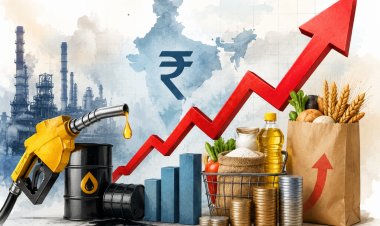
India’s vegetable oil imports rose 3% to 154.64 lakh tonnes during November 2025-September 2026, with crude oils accounting for 95% of edible oil imports as refined oil shipments declined. Nepal supplied 6.82 lakh tonnes of refined oils, while higher global prices and rupee depreciation increased import-cost pressures.

 Join the RuralVoice whatsapp group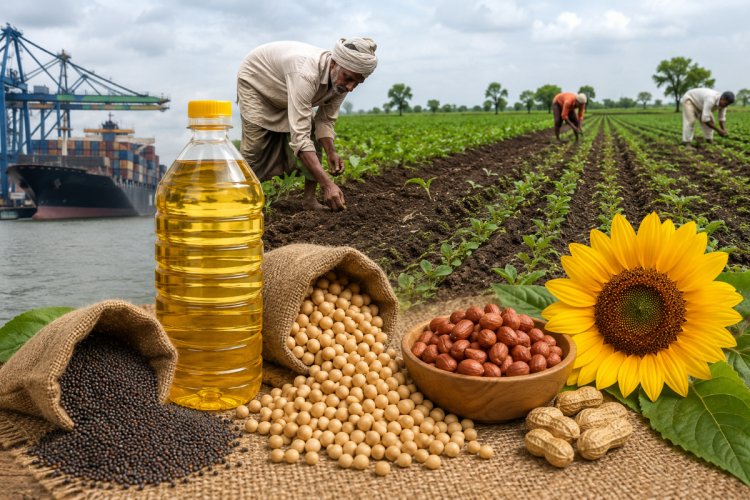
India’s total vegetable oil imports increased 3% to 154.64 lakh tonnes during the first eleven months of the 2025-26 oil year, from November 2025 to September 2026, driven by higher crude oil purchases. The import mix shifted significantly towards crude edible oils, whose share rose to 95% from 88% a year earlier, while refined oil imports declined sharply.
According to data released by the Solvent Extractors’ Association of India (SEA), cumulative imports of edible oils rose 3% to 151.64 lakh tonnes during the period, compared with 146.83 lakh tonnes in the corresponding months of the previous oil year. Total imports, including non-edible oils, stood at 154.64 lakh tonnes against 150.31 lakh tonnes a year earlier.
In September 2026, edible oil imports declined marginally to 15.44 lakh tonnes from 15.72 lakh tonnes in August. The reduction was mainly due to a sharp fall in imports of refined, bleached and deodorised (RBD) palmolein, which dropped to 2,905 tonnes from 22,700 tonnes, and crude sunflower oil, which fell to 1.05 lakh tonnes from 1.56 lakh tonnes.
Crude oil imports gain share
The most significant change during the eleven-month period was the sharp decline in refined oil imports. These fell to 7.40 lakh tonnes from 16.89 lakh tonnes in the corresponding period of 2024-25, reducing their share of edible oil imports to 5% from 12%.
In contrast, crude edible oil imports increased to 144.24 lakh tonnes from 129.94 lakh tonnes, raising their share to 95% from 88%. The shift was primarily driven by higher crude palm oil imports, which partly replaced refined palmolein supplies from Indonesia and Malaysia.
Palm oil imports rose to 73.52 lakh tonnes from 69.80 lakh tonnes in the corresponding period last year. Soft oil imports, comprising soybean, sunflower, rapeseed and other oils, increased to 78.12 lakh tonnes from 77.03 lakh tonnes. Their respective shares remained broadly unchanged at 48% for palm oil and 52% for soft oils.
Crude palm oil was the largest individual imported oil category at 72.32 lakh tonnes, followed by crude and refined soybean oil at a combined 51.76 lakh tonnes and crude and refined sunflower oil at 26.24 lakh tonnes.
Nepal emerges as a major refined oil supplier
Despite the overall decline in refined oil imports, supplies from Nepal remained significant. Nepal exported 6.82 lakh tonnes of refined oils to India during November 2025-September 2026, including 6.06 lakh tonnes of refined soybean oil, 37,734 tonnes of refined sunflower oil, 31,633 tonnes of RBD palmolein and 7,189 tonnes of rapeseed oil.
Nepal imports mainly crude soybean oil, along with smaller quantities of crude sunflower oil and crude palm oil, processes these oils domestically and exports the refined products to India. The nil import duty available under the South Asian Free Trade Area (SAFTA) agreement supports these shipments.
Country-wise data show Argentina as the largest supplier of edible oils to India during the period, with 34.43 lakh tonnes, primarily crude soybean oil and crude sunflower oil. Malaysia supplied 29.76 lakh tonnes, mainly palm oil, while Indonesia supplied 29.05 lakh tonnes, also dominated by palm oil. Russia supplied 12.89 lakh tonnes, largely crude sunflower oil.
Global prices rise as rupee weakens
International prices of major edible oils were higher in September 2026 than a year earlier. The average cost, insurance and freight (CIF) price of RBD palmolein rose 9.7% to $1,228 per tonne, while crude palm oil increased 10.4% to $1,285 per tonne. Crude soybean oil prices climbed 11.2% to $1,314 per tonne, and crude sunflower oil prices rose 10.8% to $1,432 per tonne.
The rupee's depreciation added to the pressure on import costs. The average exchange rate weakened to Rs95.51 per US dollar in September 2026 from Rs88.32 a year earlier, a depreciation of approximately 8.1%.
Domestic stocks edge higher
India’s total edible oil stocks, including port inventories and supplies in the domestic distribution pipeline, stood at an estimated 20.72 lakh tonnes on October 1, 2026, up 29,000 tonnes from 20.43 lakh tonnes on September 1. Port stocks increased to 12.36 lakh tonnes from 11.03 lakh tonnes, while pipeline stocks declined to 8.36 lakh tonnes from 9.40 lakh tonnes.
Meanwhile, imports of non-edible oils fell 14% to 2.99 lakh tonnes during November 2025-September 2026, compared with 3.48 lakh tonnes in the same period a year earlier. These oils, including palm fatty acid distillate and RBD palm stearin, are used mainly by the soap and oleochemical industries.
The data indicate that India's overall dependence on imported vegetable oils remained high during the current oil year, with crude oils accounting for an increasingly large share of supplies. Rising international prices and a weaker rupee also point to continued pressure on the domestic edible oil import bill.