
China’s Soybean Imports Hit Record Pace as Vietnam’s Feed Demand Surges on Livestock and Aquaculture Growth
China’s soybean imports hit record levels in June and July 2025, fueled by Brazil’s bumper harvest, with annual imports projected to tie the all-time high of 112 million tonnes. In Vietnam, feed demand is climbing on livestock and aquaculture growth, driving higher imports of corn, DDGS, and wheat, even as rice output declines and exports rise.

 Join the RuralVoice whatsapp group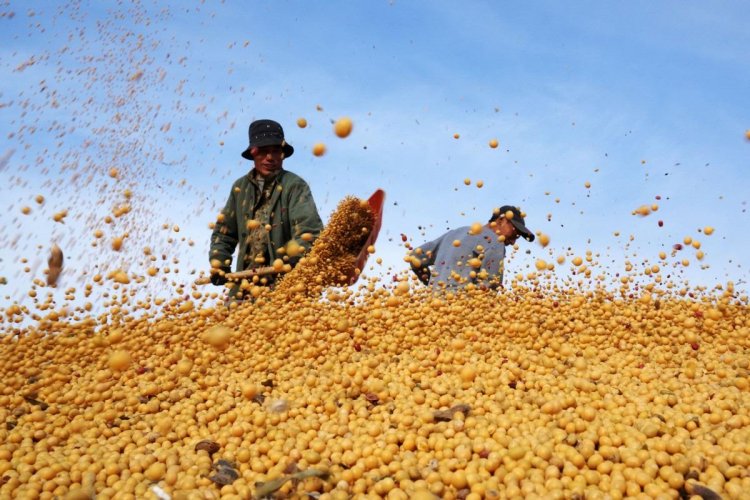
China’s appetite for soybeans and Vietnam’s rising feed demand are reshaping grain trade flows in Asia, as strong livestock, aquaculture, and food processing sectors push imports higher and support global commodity prices.
In July 2025, China — the world’s largest soybean consumer — set its second consecutive monthly import record, bringing in 11.67 million tonnes, up 18.5% from 9.85 million tonnes a year earlier, according to data from the General Administration of Customs. The figure surpassed analysts’ expectations of 10.48 million tonnes and followed June’s record 12.26 million tonnes, which was 10% higher year-on-year.
As per reports by World Grain, the Foreign Agricultural Service (FAS) of the US Department of Agriculture projects China’s soybean imports in the 2025-26 marketing year to reach 112 million tonnes, tying the record set two years ago. Domestic soybean production is also expected to reach a record 21 million tonnes, but this will be outweighed by a forecast record-high consumption of 133 million tonnes, surpassing last year’s 126.9 million tonnes.
Brazil remains China’s dominant supplier, with soybean output in 2025-26 projected at 176 million tonnes, nearly 2% higher than last year, driven by expanded planted area and strong global demand. Brazilian trade data shows that soybean exports to China in the first quarter of 2025 totaled 16.9 million tonnes, up nearly 7% from the same period in 2024.
While China’s demand for soybeans is primarily linked to animal feed and vegetable oil production, Vietnam’s feed demand growth reflects broader structural changes in its agriculture sector. According to the FAS’s August 6 quarterly update, Vietnam’s total feed demand is forecast to reach 28.7 million tonnes in 2025 and 29.5 million tonnes in 2026, supported by expansion in both livestock and aquaculture.
Aquaculture output in the first half of 2025 reached 2.6 million tonnes, a 4.9% increase over last year, with the United States, Brazil, and members of the Comprehensive and Progressive Agreement for Trans-Pacific Partnership (CPTPP) remaining key export destinations. The pig population has also rebounded, driven by a shift from traditional household farming to semi-industrial models and growing collaboration between smallholders and large commercial operations.
Poultry numbers continue to rise steadily, with the flock in June 2025 estimated up 4% from the previous year and no major disease outbreaks reported. However, domestic corn production has declined, prompting higher imports of feed ingredients. Corn imports in the 2024-25 marketing year are forecast at 12.2 million tonnes, while domestic output is expected to fall to 4.1 million tonnes from 4.3 million tonnes last year.
Vietnam also imported 750,000 tonnes of distiller’s dried grains with solubles (DDGS) in the first half of 2025, a 13% year-on-year increase, underscoring the country’s reliance on imported feed inputs. Corn consumption in 2024-25 is estimated at 15.8 million tonnes, with 85% to 88% used for animal feed.
Beyond feed grains, Vietnam’s wheat imports are projected to rise to 5.72 million tonnes in 2024-25, driven by strong demand from food processors and bakeries. The main suppliers are Australia, Ukraine, and Brazil.
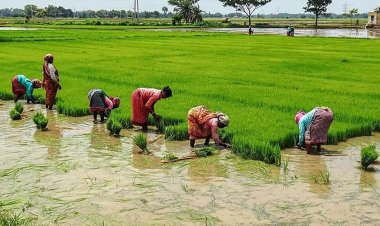
Meanwhile, rice production continues a gradual decline as farmers shift to higher-value crops, with output forecast to fall to 6.79 million tonnes in 2025-26. The supply gap is being met partly through higher imports of paddy rice from Cambodia, which surged 54% in the first half of 2025. The FAS has raised Vietnam’s 2024-25 rice export forecast to 8.5 million tonnes.