
Devastating Floods Hit Nepal After Earthquake and Landslides, 384 Tourists Missing
Flash floods in Nepal’s Himalayan region have caused widespread destruction, leaving at least 17 people dead and 384 tourists, including 105 Indians, missing. The disaster has damaged roads and hydropower projects, disrupted the Nepal-China border region, and triggered a flood alert in Bihar as authorities fear further downstream flooding.

 Join the RuralVoice whatsapp group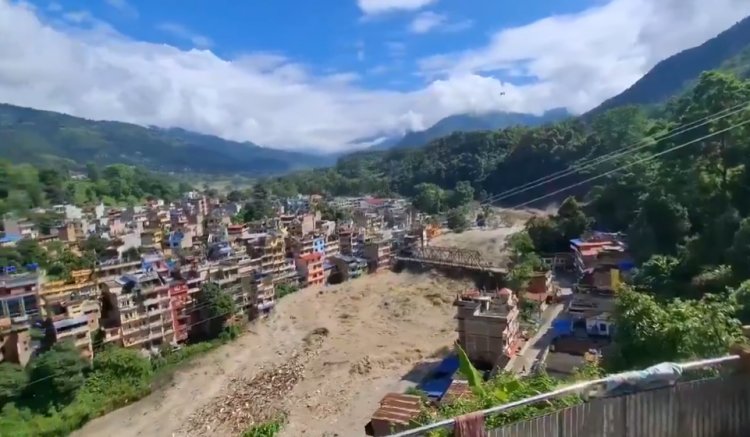
A massive flood swept through Nepal’s Himalayan region on Wednesday morning, causing widespread destruction and leaving hundreds of people missing. At least 17 people have been reported dead, while 384 tourists, including 105 Indian nationals, are missing in the affected areas near Nepal’s border with Tibet.
The disaster struck parts of Rasuwa district, where a sudden surge of water swept through villages, roads and buildings. Nepal’s government has sought assistance from India and China as rescue teams continue efforts to locate missing people and evacuate those stranded in remote areas.
Earthquake and Landslides
According to officials, the flooding began at around 9 a.m. on Wednesday, with a powerful surge reported in the Bhotekoshi river region. Preliminary assessments suggest that an avalanche involving snow and rocks, or a large-scale landslide and debris flow, may have blocked or disrupted the river before water was suddenly released downstream.
Some reports have also linked the disaster to an earthquake-triggered avalanche or an event in the glacial region that may have temporarily obstructed the river's flow.
Nepal’s Foreign Minister Shishir Khanal, addressing the House of Representatives, said the disaster situation in Rasuwa was caused by an avalanche that followed the earthquake. The flooding has caused extensive damage across several areas of Rasuwa and Nuwakot districts.
PM Modi Offers India’s Support
Following the disaster, Indian Prime Minister Narendra Modi spoke with Nepalese Prime Minister Balen Shah and expressed his condolences over the loss of lives and destruction caused by the floods.
Modi said India stood firmly with the people of Nepal during the difficult time and was ready to provide every possible assistance for rescue and relief operations.
Extensive Damage
The powerful floodwaters have damaged roads and other infrastructure in the border region. Residential areas, road connectivity and hydropower projects have been severely affected.
According to Reuters, around 430 megawatts of electricity generation capacity has been impacted by the disaster, accounting for more than 12 percent of Nepal’s total hydropower generation capacity. The damage could affect electricity supply and create wider disruptions in the country’s energy sector.
The flooding has also affected an important border and trade corridor between Nepal and China. Significant damage and possible casualties have also been reported in the Gyirong region on the Tibetan side of the border.
Poor weather, damaged roads and difficult mountainous terrain are complicating rescue and relief efforts.
Fears of Another Flood
Authorities have warned people living along riverbanks to remain alert and avoid approaching affected rivers. Officials fear that debris may have accumulated upstream and temporarily blocked the river.
If the natural obstruction breaks or trapped water is suddenly released, another powerful flood could occur downstream. Authorities have therefore increased monitoring and alert levels in areas around the Bhotekoshi, Trishuli and Narayani river systems.
Nepal’s army, police and disaster response agencies are conducting search and rescue operations in the affected areas. Helicopters are being used to evacuate stranded people, although adverse weather conditions and difficult geography continue to hamper the operation.
Bihar on High Alert
The disaster in Nepal has also raised concerns in India, particularly in Bihar, where authorities have issued a high alert and intensified monitoring of rivers flowing from Nepal.
A sudden increase in water flow from Nepal’s upper catchment areas could affect downstream rivers and increase the risk of flooding in several parts of northern and western Bihar.
According to Bihar’s disaster management authorities, special precautions are being taken in view of a possible flash flood-like situation in the upper catchment of the Gandak River. A high-level review chaired by the state’s Chief Secretary has been held, with authorities in vulnerable districts instructed to closely monitor river levels and the possibility of sudden surges in water flow.
Recent rainfall in Nepal’s catchment areas has already caused water levels in the Kosi, Bagmati and Gandak rivers to rise, keeping the threat of flooding in low-lying areas alive.