
India’s Lower Kharif Crop to Drive First Global Rice Production Decline in Over a Decade: IGC
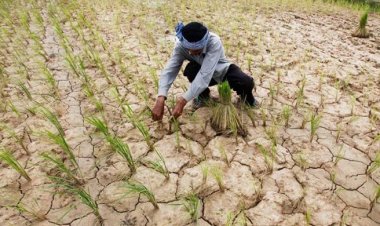
India’s lower kharif rice crop is a key factor behind the IGC’s forecast of the first global rice production decline in more than a decade in 2026-27. The Council has also revised wheat, barley, maize and sorghum estimates. Global soybean output remains at a record, while grain markets have strengthened.

 Join the RuralVoice whatsapp group
India’s expected lower kharif rice production is a key factor behind the International Grains Council’s (IGC) forecast that global rice output will decline for the first time in more than a decade in 2026-27. World rice production is projected to fall by 5 million tonnes from the August estimate after reaching a peak in 2025-26.
The IGC has also lowered its forecast for global rice consumption by 3 million tonnes for 2026-27. However, higher carry-in reserves are expected to broadly offset the impact of lower production and consumption on global ending stocks, leaving the stock outlook largely unchanged from August. India is also expected to see a modest contraction in rice stocks.
Global rice consumption is nevertheless projected to grow 1% year-on-year, supported by rising demand in key Asian and African markets. International trade is expected to remain firm, with 2027 rice trade maintained at 61.7 million tonnes. The IGC also sees global rice trade expanding 3% to a new high, driven largely by demand from sub-Saharan Africa.
The rice outlook comes against a broader tightening in global grain markets. The IGC has raised its 2026-27 production forecasts for wheat and barley, more than offsetting reductions in maize and sorghum. As a result, total world grains production is now estimated at 2,420 million tonnes, up 4 million tonnes from the previous month, though still below the record of the previous season.
Global grain consumption is forecast at 2,444 million tonnes, unchanged from the previous estimate. Tighter supplies and higher prices are expected to constrain demand. Global closing stocks are projected at 608 million tonnes, while grain trade is forecast at 451 million tonnes, down 16 million tonnes from the previous year.
Wheat markets face supply and trade disruptions, particularly because of severe interruptions to Black Sea exports. The IGC expects global wheat flows to remain unusually slow. The maize outlook has also weakened, with the maize sub-Index rising 5% over the four weeks to the latest report amid a tighter US supply outlook and continued disruption to Ukrainian exports.
Soyabeans present a different picture. Global 2026-27 soybean production is still projected to reach a record, despite a marginal month-on-month downward revision linked to South American producers. Output is expected to rise 3%, while global utilisation is also forecast to reach a new peak. World soybean trade is projected at nearly 191 million tonnes, up 2% and marking a fifth consecutive annual increase.
The broader market has turned firmer, with the IGC Grains and Oilseeds Index rising 6% to a three-year high and gaining 20% year-on-year. Its wheat, maize, rice and soybean sub-indices increased 6%, 5%, 3% and 7%, respectively, reflecting supply concerns, weather risks, shipping disruptions and stronger energy prices.