
From Grains to Dairy, Heatwaves and Drought Cut Europe’s Farm Production by Up to 60%
Successive heatwaves and worsening drought are pushing European agriculture into a severe crisis, with sharp crop losses reported across France, Italy and Spain. Falling yields, livestock stress and rising disaster costs are also increasing pressure on governments, while low insurance coverage could leave taxpayers carrying a growing share of climate-related losses.

 Join the RuralVoice whatsapp group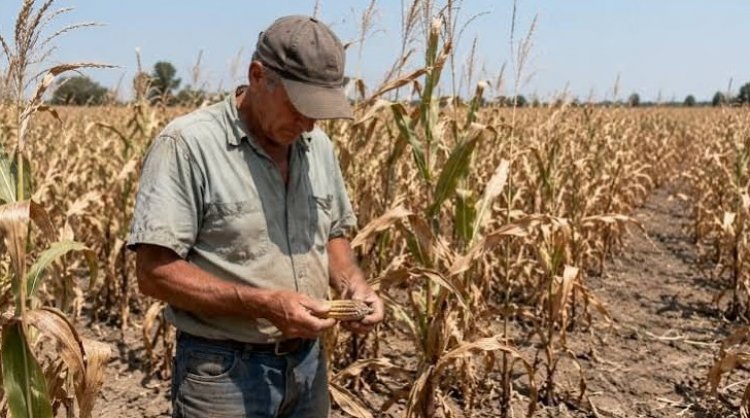
Europe’s agriculture sector is facing mounting pressure from a summer of extreme heat and prolonged drought, with damage spreading from crops and livestock to government finances. Vegetable, grain, dairy and wine producers across major farming regions are reporting significant production losses, while repeated climate disasters are raising concerns over how future losses will be financed.
France, one of Europe’s biggest agricultural producers, has emerged as a major hotspot. Vegetable growers have reported production shortfalls ranging from 25% for courgettes and 35% for lettuce to 60% for broccoli. Artichoke losses are estimated at between 50% and 100% in some areas. The simultaneous impact across several production regions has made the current situation particularly difficult, as farmers normally rely on better-performing regions to offset losses elsewhere.
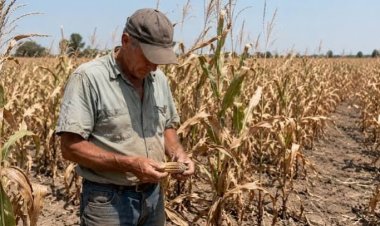
The heat has also severely affected grain production. France’s maize harvest is projected at around 9 million tonnes, about 35% below last year’s level and the lowest volume since around 1980. While some of the decline is linked to farmers shifting acreage to other crops, extreme temperatures during critical crop-development stages have added to the losses.
The livestock sector is also feeling the effects. Dairy cows begin experiencing heat stress at relatively moderate temperatures, and French farmers have reported milk production declines of 10-15%. At the same time, hay production for winter feed is estimated to be around 30% below the long-term average, raising concerns about feed availability and costs in the coming months. Poultry production has also suffered, with heat-related mortality contributing to a decline of roughly one million eggs a day compared with normal output.
Italy is facing an equally serious situation. Around 60% of its agricultural land is estimated to be affected by drought ranging from mild to severe. Corn, rice, soyabean, fruit and vegetable production have all suffered, while milk output has fallen by around 20%. The combined economic damage to agriculture, including losses from wildfires and severe storms, has been estimated at more than €3 billion.
The Po Valley, Italy’s agricultural heartland, is particularly vulnerable because of declining water availability in the Po River. The region accounts for about 80% of Italy’s rice production. To conserve scarce irrigation water, rice farmers have adopted unusual measures, including irrigating fields only in alternate weeks.
Spain is also recording substantial agricultural losses. Cereal production is down sharply in several regions, including by 35% in Castilla y León, 49% in Madrid and 24% in Andalucía. Sheep and goat milk production has also declined. The wine industry expects production to fall by about 20% in 2026, with heat and moisture shortages reducing grape size.
The agricultural crisis is unfolding alongside a broader economic problem: the rising cost of climate-related disasters. EU data show that weather and climate extremes caused an estimated €822 billion in economic losses between 1980 and 2024, with about one-quarter of the damage occurring during the most recent four years.
The financial burden is particularly worrying because only about one-fourth of climate-related catastrophe losses in the EU are insured. In several countries, insurance coverage is below 5%, meaning governments and ultimately taxpayers may have to finance a large share of reconstruction and compensation.
This creates a growing fiscal challenge for European governments already dealing with higher defence expenditure, ageing-related costs and constrained budgets. Repeated droughts, floods, wildfires and heatwaves could turn what were once exceptional emergency expenses into a recurring fiscal liability.
Governments are therefore considering more permanent solutions, including stronger climate-resilient infrastructure, expanded insurance coverage, public-private reinsurance mechanisms and catastrophe bonds. The European Union is also preparing proposals on climate resilience and disaster-risk management.
For farmers, however, the immediate challenge remains protecting production and incomes. France has announced emergency support of €145 million, but the scale and frequency of climate shocks suggest that short-term relief alone may not be sufficient. Europe’s farm crisis is increasingly becoming a test of whether governments can move from emergency compensation to long-term investment in climate-resilient agriculture and risk management.