
India Pegs FY26 GDP Growth at 7.4%, but Agriculture Lags Broader Expansion
The First Advance Estimates released by the National Statistical Office (NSO) on Wednesday show agriculture and allied activities expanding by 3.1% in real terms in FY2025–26.

 Join the RuralVoice whatsapp group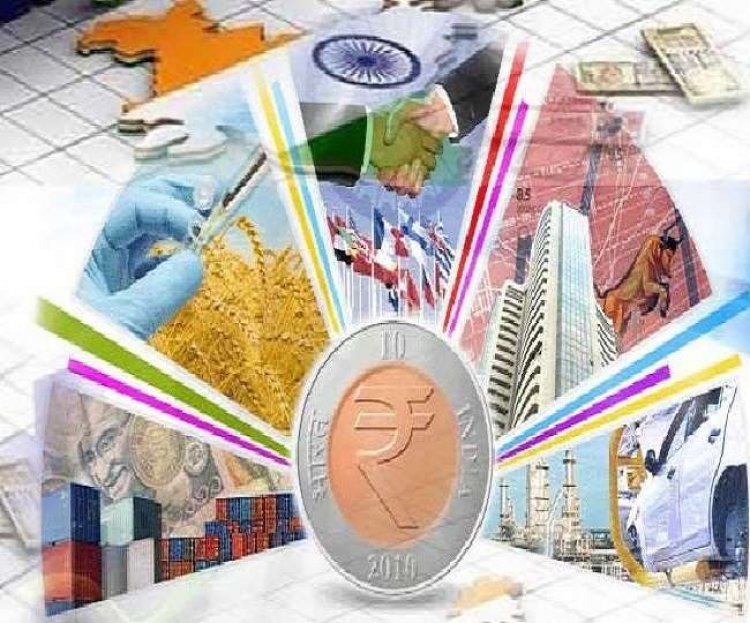
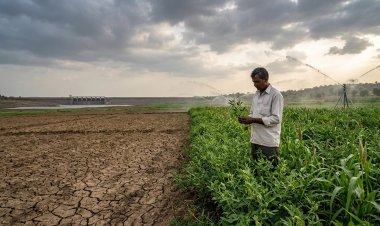
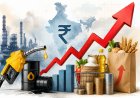
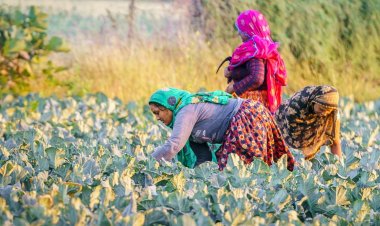
India’s economy is estimated to grow 7.4% in the financial year ending March 2026, faster than the provisional 6.5% expansion in FY2024–25. However, the latest official data underline a persistent imbalance: agriculture, which supports nearly half of the country’s workforce, remains one of the slowest-growing sectors.
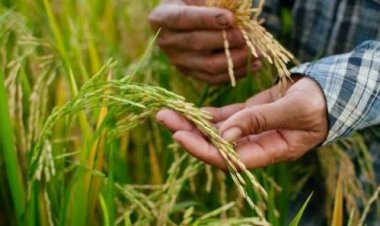
The First Advance Estimates released by the National Statistical Office (NSO) on Wednesday show agriculture and allied activities expanding by 3.1% in real terms in FY2025–26. This is well below overall GDP growth and significantly behind the services sector, which continues to drive the economy.
At constant 2011–12 prices, real GDP is projected at Rs 201.90 lakh crore in FY26, up from Rs 187.97 lakh crore a year earlier. Nominal GDP is estimated to grow 8.0% to Rs 357.14 lakh crore, reflecting a combination of steady real activity and easing inflation.
Agriculture’s modest contribution
While headline growth remains robust, the sectoral data point to a familiar divergence. Agriculture, livestock, forestry, and fishing are projected to grow 3.1%, marginally above population growth but insufficient to meaningfully lift rural incomes. Utilities, including electricity and water supply, are projected to grow just 2.1%, while mining is expected to contract slightly.
By contrast, financial, real estate, and professional services, along with public administration and defense-related services, are estimated to grow 9.9% in real terms. Trade, hotels, transport, and communication-related services are projected to expand 7.5%, reinforcing the services-led nature of India’s post-pandemic recovery.
Manufacturing and construction, key sectors for employment outside agriculture, are both projected to grow 7.0% in real terms. While this offers some support to non-farm job creation, it is not enough to offset weak momentum in the farm sector.
Rural demand concerns persist
Economists say relatively modest agricultural growth helps explain why rural consumption has struggled to keep pace with urban demand. Private final consumption expenditure (PFCE), which accounts for more than half of GDP, is projected to grow 7.0% in real terms in FY26. This broadly matches overall growth but masks sharp rural-urban differences.
Per capita real GDP is estimated at Rs 1,42,119 in FY26, up 6.5% from FY25, while per capita real consumption is projected to rise just over 6%. Analysts note that these gains are unevenly distributed, with farm households seeing far smaller income improvements than urban service-sector workers.
Implications for Budget 2026–27
The GDP estimates are likely to weigh heavily on preparations for the Union Budget 2026–27, particularly on farm and rural spending. With agriculture growing at less than half the pace of the overall economy, pressure is expected to persist for continued support through minimum support prices, fertilizer subsidies, and rural employment schemes.
However, fiscal space to expand such spending appears limited. Nominal GDP growth of 8.0% is significantly lower than in the immediate post-pandemic years, reducing the automatic boost to government revenues that comes from higher inflation and faster nominal expansion.
At the same time, the government has relied heavily on public capital expenditure to support growth. Gross fixed capital formation is projected to grow 7.8% in real terms in FY26, underscoring the importance of infrastructure spending as a key growth driver.
“This creates a tension for the next Budget,” said an economist at a New Delhi-based policy institute. “Rural and farm-sector pressures remain, but cutting back on capital expenditure would risk weakening growth, while expanding subsidies would strain deficit targets.”
External and price risks
The estimates also flag potential risks for agriculture-linked spending. Imports are projected to grow 14.4% in real terms, far outpacing export growth of 6.4%, raising concerns about the current account balance if global commodity prices rise.
Although inflation has eased, officials caution that food and energy prices remain vulnerable to weather shocks and global market volatility, factors that could quickly revive subsidy pressures.
Revisions ahead
The NSO said the First Advance Estimates are based on partial data available up to November 2025 and will be revised as more information becomes available. The Second Advance Estimates, along with revised historical GDP data using a new base year of 2022–23, are scheduled for release on February 27, 2026.
For now, the FY26 numbers reinforce a familiar policy challenge: a fast-growing economy whose weakest link remains agriculture, leaving rural demand fragile and complicating fiscal choices as India enters its next Budget cycle.