
“Solar Panels Above, Thriving Crops Below”: Shivraj Singh Chouhan Calls for Farmer-Friendly Agrivoltaics Policy
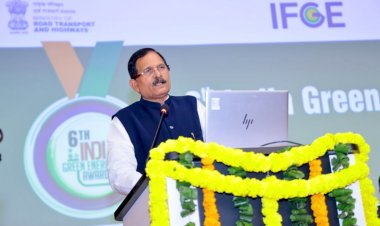
The 7th AgriVoltaics World Conference (AWC) 2026 began today at Bharat Mandapam in New Delhi. The conference is being held in India for the first time in the Global South. It brings together experts and stakeholders to explore ways to combine agriculture with renewable energy and promote food security.

 Join the RuralVoice whatsapp group
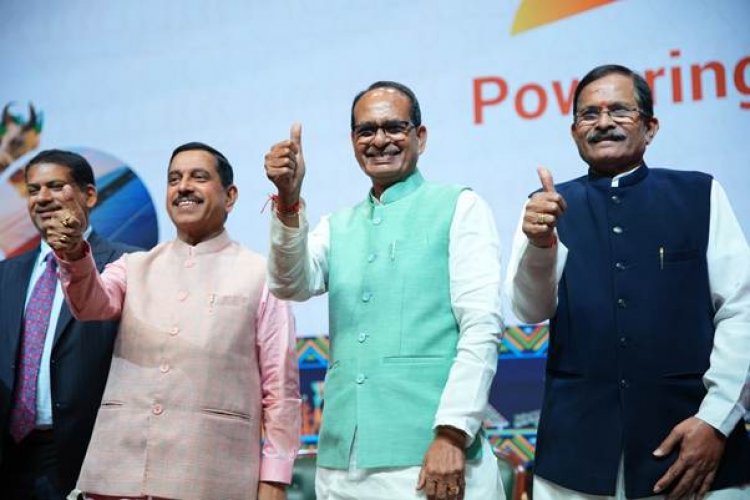
Union Agriculture and Farmers’ Welfare Minister Shivraj Singh Chouhan has called for an agrivoltaics policy that meets the needs of India’s small and marginal farmers, enabling them to generate solar power without compromising crop production. Addressing the inaugural session of the three-day 7th Agrivoltaics World Conference at Bharat Mandapam in New Delhi on Wednesday, he said the technology could help farmers become both food and energy providers.
Chouhan stressed that the policy must be practical for the more than 85 per cent of Indian farmers who operate small and marginal holdings. Agrivoltaics combines crop cultivation with solar power generation on the same land, offering farmers an opportunity to diversify their income. He emphasised that agrivoltaics systems must be designed to support regular farming operations.
The height of solar panels, spacing between supporting structures and arrangements for ploughing must allow farmers to cultivate crops efficiently and change cropping patterns according to their needs. He also called for proper drainage and rainwater harvesting systems to prevent soil erosion and improve water use.
The minister stressed the need for reliable electricity procurement, grid connectivity and transparent, timely payments to farmers. Farmer Producer Organisations (FPOs) should be actively involved, while rural youth and women should receive training in equipment operation, repair and maintenance to generate local employment.
He also called for safeguards to ensure farmers do not bear financial or physical liabilities if a company abandons a project or solar panels have to be removed after a contract expires. Chouhan assured that the Ministry of Agriculture and Farmers’ Welfare would work closely with the Ministry of New and Renewable Energy to advance the initiative.
4.75 Crore Hectares Suitable for Agrivoltaics
Union Minister for New and Renewable Energy Pralhad Joshi said a study by The Energy and Resources Institute (TERI) had identified 47.5 million hectares of India’s 116 million hectares of agricultural land as technically suitable for agrivoltaics.
Maharashtra, Rajasthan, Andhra Pradesh, Madhya Pradesh, Karnataka and Uttar Pradesh together account for around 50 per cent of this suitable land.
Joshi said that installing agrivoltaics systems on just 10 per cent of the suitable area could help India meet its projected electricity demand up to 2050. He also cited studies indicating that the technology could increase crop yields by 10 to 20 per cent.
PM-KUSUM's Next Phase to Include Agrivoltaics
Joshi announced that the government would soon launch an ambitious agrivoltaics programme under the next phase of the Pradhan Mantri Kisan Urja Suraksha evam Utthaan Mahabhiyan (PM-KUSUM).
He said 3 million agricultural pumps had already been connected to solar energy under the scheme, helping farmers access daytime electricity for irrigation and reduce the risks associated with night-time irrigation.
According to studies cited by Joshi, the agrivoltaics sector could generate approximately 332,000 full-time local jobs, creating employment opportunities for rural youth and reducing migration to cities.
Renewable Energy Capacity Crosses 560 GW
Highlighting India's renewable energy progress, Joshi said the country's total installed electricity capacity had increased from around 249 GW before 2014 to more than 560 GW. Installed non-fossil energy capacity had crossed 308 GW, including an addition of 100 GW over the preceding two and a half years.
He added that the cost of non-fossil electricity had declined from approximately Rs. 11 per unit in 2012-13 to Rs. 2.60 per unit.
Chouhan also highlighted India's agricultural progress, noting that the country had moved from dependence on foodgrain imports to maintaining substantial wheat and rice stocks. Agriculture continues to grow at 4.5 per cent, while agricultural exports have reached a record US$52.55 billion. Sowing for the 2026-27 rabi season has begun, with a focus on pulses and oilseeds.
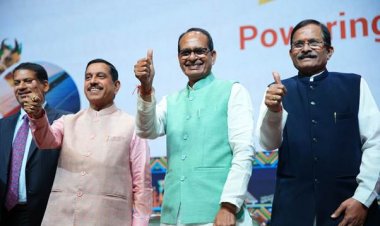
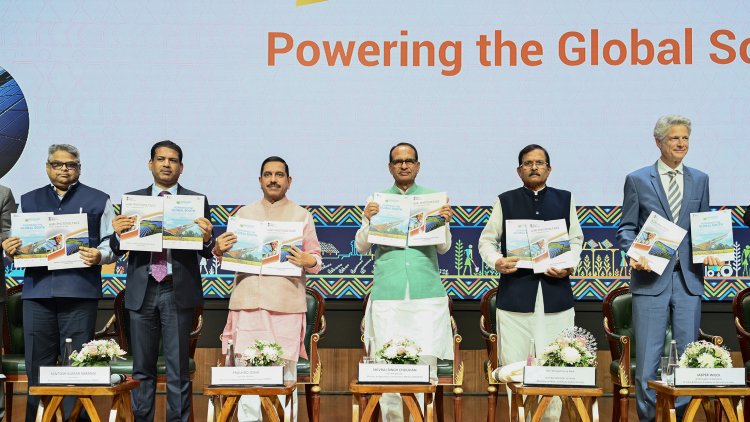
The conference was attended by Union Minister of State for New and Renewable Energy Shripad Yesso Naik, Germany's Ambassador to India and Bhutan Dr Jasper Wieck, senior government officials, ICAR Director General Dr Mangi Lal Jat and International Solar Alliance Director General Ashish Khanna.
Technical tools and communication materials for agrivoltaics were also launched to support informed, field-level decisions. The conference is being held under the theme ‘Powering the Global South’, with the Ministry of New and Renewable Energy organising the event in collaboration with Germany's environment ministry.