
RBI Raises Repo Rate By 25 bps to 5.50%, 1st Increase in 3.5 Years, Inflation Projected at 5.2% in 2026-27
The RBI raised the repo rate by 25 basis points to 5.50 per cent and shifted its stance to calibrated tightening, citing broadening inflation risks despite strong growth. GDP growth estimates for 2026-27 was raised to 7.1 per cent, while CPI inflation is projected at 5.2 per cent.

 Join the RuralVoice whatsapp group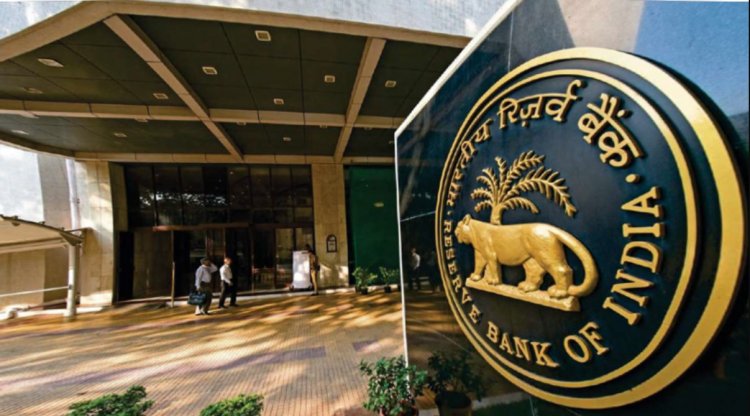
The Reserve Bank of India’s Monetary Policy Committee (MPC) on Wednesday unanimously raised the policy repo rate by 25 basis points to 5.50 per cent, citing rising inflation risks despite resilient economic growth. The MPC also shifted its policy stance from neutral to calibrated tightening, signalling that rate cuts are off the table in the near term.
The decision was taken at the MPC’s 63rd meeting held from October 5 to 7, 2026, chaired by RBI Governor Sanjay Malhotra. The standing deposit facility (SDF) rate has consequently been adjusted to 5.25 per cent, while the marginal standing facility (MSF) rate and Bank Rate stand at 5.75 per cent.
This is the first repo rate hike in about three and a half years. The last increase was in February 2023, when the repo rate was raised from 6.25 per cent to 6.5 per cent. Following the outbreak of the Russia-Ukraine war, the repo rate was raised six times between April 2022 and February 2023, from 4 per cent to 6.5 per cent.
Inflation concerns drive rate hike
The MPC said the inflation outlook is no longer as benign as it was last year. Headline CPI inflation rose to 4.8 per cent in August from 4.5 per cent in July, driven largely by higher food and fuel inflation. Food price pressures have become more broad-based, with notable increases in sugar and onion prices.
Core inflation also increased to 4.2 per cent in August after remaining at 3.9 per cent for three consecutive months. Core inflation excluding precious metals rose to 2.9 per cent. The share of CPI items recording inflation above 4 per cent increased to about 37 per cent in August, indicating a broadening of price pressures.
The RBI has projected CPI inflation at 5.2 per cent for 2026-27, with inflation expected at 4.9 per cent in Q2, 6.0 per cent in Q3 and 5.7 per cent in Q4. Inflation for Q1 of 2027-28 is projected at 5.6 per cent, while core inflation for 2026-27 is projected at 4.4 per cent.
The central bank said deficient southwest monsoon, strong El Niño conditions and volatility in international oil and other commodity prices could keep supply-side inflationary pressures elevated.
Rate cuts off the table for now
The shift to calibrated tightening is significant. The RBI said the new stance means that, under current conditions, rate cuts are off the table in the near term. Future policy action can only involve a rate hike or a pause, depending on how growth and inflation evolve.
Governor Malhotra said the duration and extent of any rate-hike cycle would depend on underlying inflation, the extent to which price pressures broaden, the emergence of second-round effects from supply shocks and the impact of demand conditions.
The MPC noted that while there are limited signs of supply-side pressures becoming embedded in firms’ pricing behaviour, there is some evidence of elevated inflation expectations and a generalisation of inflation. It also flagged risks arising from strong growth in monetary and credit aggregates. Two MPC members - Dr Nagesh Kumar and Prof Ram Singh - favoured retaining the stance at neutral.
Growth outlook remains strong
Despite global headwinds, the RBI retained a positive assessment of the domestic economy. Real GDP growth in Q1 of 2026-27 came in at 7.8 per cent, higher than expected, supported by private consumption, fixed investment, merchandise exports and strong services activity.
High-frequency indicators for July-August indicate that economic activity has maintained momentum in Q2, although with some moderation from the previous quarter. Manufacturing activity remains resilient despite cost pressures, while services continue to benefit from strong domestic and external demand.
The RBI has raised its GDP growth forecast for 2026-27 to 7.1 per cent, an upward revision of 40 basis points. Growth is projected at 7.2 per cent in Q2, 6.9 per cent in Q3 and 6.8 per cent in Q4. GDP growth for Q1 of 2027-28 is projected at 7.1 per cent. The Governor said the upward revision underscores the strength of economic activity despite significant global headwinds.
West Asia conflict clouds global outlook
The RBI said the re-escalation of the West Asia conflict since September and resulting volatility in crude oil prices have heightened uncertainty and financial market volatility.
Global growth remains resilient, but is expected to decelerate in 2026. Rising energy and food prices have pushed inflation higher in several major economies, prompting monetary policy tightening. The US Federal Reserve raised its policy rate by 25 basis points in September.
Higher global bond yields, an appreciating US dollar, trade uncertainty and fiscal sustainability concerns are also keeping financial markets under pressure. The RBI identified further tightening of global financial conditions, elevated AI-related asset valuations, high public debt and the unresolved West Asia conflict as major downside risks.
Monsoon, oil prices pose inflation risks
The RBI said deficient and uneven monsoon conditions, combined with strong El Niño conditions, could affect the upcoming rabi season and rural demand. However, resilient non-farm activity is expected to support rural consumption.
Energy prices and supply-chain pressures also remain uncertain because of the West Asia conflict. The RBI said their impact is being contained to some extent through diversification of supply sources.
Urban demand is expected to remain supported by sustained services activity and broadly stable employment conditions, while strong capacity utilisation, robust credit growth, government infrastructure spending and a rebound in private capital expenditure should support investment.
Liquidity remains in surplus
System liquidity increased substantially during August and September following measures to attract capital inflows. Average daily surplus liquidity under the liquidity adjustment facility stood at Rs 5.9 lakh crore since the August MPC meeting.
Liquidity absorption measures and quarterly advance-tax outflows subsequently moderated the surplus. The RBI said it would continue using an appropriate mix of liquidity management tools to align the weighted average call rate with the policy repo rate. Credit growth remains robust and broad-based, while the banking and NBFC sectors continue to have sound capital, liquidity, asset-quality and profitability parameters.
Two new financial-market measures
The RBI also announced two measures. It will allow inter-operability among NBFC account aggregators, enabling financial information to be aggregated through different account aggregators. SEBI-regulated depositories will also be facilitated to include deposit-account information in consolidated account statements. These measures are to be implemented by December 31, 2026.
The RBI will also constitute a Technical Consultative Committee for Financial Markets to provide a structured forum for engagement with market participants and stakeholders on policy and operational issues concerning financial markets.
The minutes of the MPC meeting will be released on October 21, while the next MPC meeting is scheduled for December 2-4, 2026.