
Assam Budget Allocates Rs 4,000 Crore for Irrigation, Big Tax Relief for Small Tea Growers
Assam's Rs 2.85 lakh crore Budget for 2026-27 prioritises agriculture and rural development with Rs 4,000 crore for irrigation, Rs 6,190 crore for rural development and Rs 5,421 crore for agriculture. It also provides tax relief to small tea growers, continues tea garden welfare programmes, and increases spending on healthcare, social welfare and infrastructure.

 Join the RuralVoice whatsapp group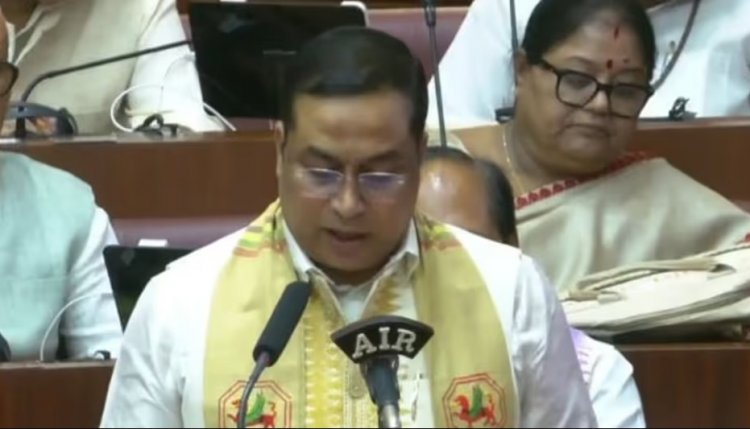
Agriculture, irrigation, tea plantations and rural development received a significant boost in the Assam Budget 2026-27, with Finance Minister Jayanta Malla Baruah announcing a Rs 4,000 crore irrigation package for the Brahmaputra Valley, a four-fold increase in the agricultural income tax exemption limit for small tea growers, and continued welfare measures for tea garden workers.
Presenting a Rs 2.85 lakh crore Budget in the Assembly on Friday, Baruah outlined the government's development roadmap focused on agriculture, rural infrastructure, healthcare, education, employment and energy.
The Budget earmarks Rs 6,190 crore for rural development and Rs 5,421 crore for agriculture and allied activities, underlining the government's focus on strengthening the rural economy. Besides, Rs 11,934 crore has been allocated for social welfare and nutrition, while the health and family welfare sector will receive Rs 8,998 crore.
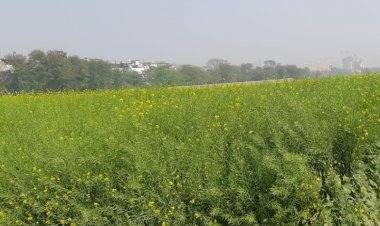
The biggest announcement for the farm sector was an allocation of Rs 4,000 crore for irrigation projects in the Brahmaputra Valley, aimed at expanding irrigation coverage and improving agricultural productivity. The investment is expected to improve water availability, reduce dependence on rainfall and enhance climate resilience in the state's key agricultural belt.
In a major relief for small tea growers, the Budget proposes increasing the agricultural income tax exemption threshold from Rs 2.5 lakh to Rs 10 lakh, providing substantial tax relief to thousands of tea cultivators.
The government also reaffirmed its commitment to the welfare of tea tribes and plantation workers, stating that ongoing programmes will continue to focus on healthcare, nutrition and improving living conditions in tea-growing regions.
Beyond agriculture, the Budget proposes an investment of Rs 72,000 crore in the power sector, covering thermal, hydropower, solar and battery energy storage projects to strengthen Assam's energy infrastructure.
Healthcare received another major boost with the announcement of 33,000 recruitments to strengthen district hospitals and improve public health services across the state.
The education sector will continue teacher recruitment in universities, colleges and newly established institutions. The government also plans to expand skill development programmes by training youth in emerging technologies such as artificial intelligence (AI), visual effects (VFX) and foreign languages, including English, Japanese and Korean.
Infrastructure development remains another priority, with the government planning to accelerate investments in roads, bridges, rail connectivity and airports. The Budget also reiterates the proposal to develop Dibrugarh as Assam's second capital to promote balanced regional development and improve administrative access in Upper Assam.
To encourage cleaner energy consumption, the Finance Minister proposed reducing VAT on piped natural gas from 14.5% to 5%, which is expected to lower household energy costs and support the expansion of city gas distribution networks.
The Budget estimates aggregate receipts of Rs 2,88,309.45 crore and total expenditure of Rs 2,85,084.45 crore during the 2026-27 financial year.