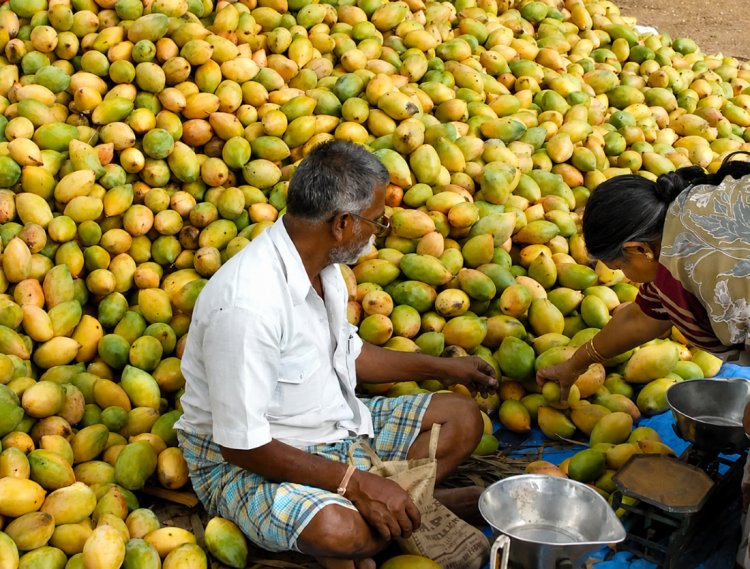
Totapuri mango growers in Andhra Pradesh are facing a severe crisis as a sharp fall in prices has badly hit farm incomes. The variety is grown largely to supply the processing industry, but limited procurement by processors, large stocks of mango pulp and export disruptions linked to the conflict in West Asia have added to the difficulties of growers in the state’s major mango-producing regions.
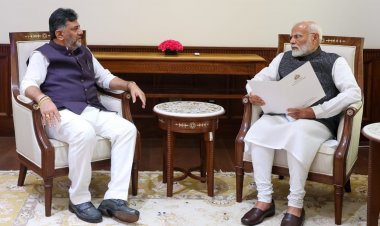
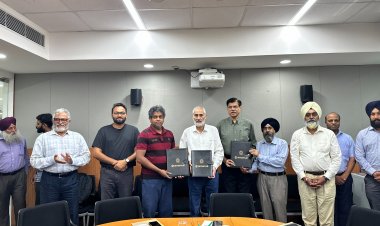
Union Agriculture and Farmers’ Welfare Minister Shivraj Singh Chouhan interacted with Totapuri mango growers during his recent visit to Andhra Pradesh. Following the interaction, he directed the Indian Council of Agricultural Research (ICAR) to constitute an expert committee to examine the problems faced by growers.
The committee will visit major Totapuri mango-producing areas in the state within 10 days. It will study the entire value chain, interact with stakeholders and recommend measures to address both the immediate crisis and the long-term structural challenges facing the sector.
Expert Committee
The expert committee constituted by the ICAR-Central Institute for Subtropical Horticulture (CISH), Lucknow, will be chaired by its Director, Dr T. Damodaran.
Other members include Dr M. Sankaran, Head of the Fruit Crops Division at ICAR-Indian Institute of Horticultural Research (IIHR), Bengaluru; Dr H.S. Singh, Principal Scientist at ICAR-CISH, Lucknow; Dr D. Srinivasa Reddy, Professor at the College of Horticulture, Anantharajupeta, Dr YSR Horticultural University, Andhra Pradesh; and the Director of Horticulture, Andhra Pradesh, or a nominee.
Chouhan has said that protecting farmers’ incomes and livelihoods is a priority for the government. Based on the recommendations of the expert committee, measures will be taken to provide sustainable relief to mango growers in Andhra Pradesh.
Price deficiency payment
The Centre has approved a Price Deficiency Payment framework under the Market Intervention Scheme (MIS) for up to 2.16 lakh tonnes of Totapuri mangoes in Andhra Pradesh. The Market Intervention Price (MIP) has been fixed at Rs 1,747 per quintal. The financial burden of the scheme will be shared equally by the Centre and the state government.
Under the guidelines, the maximum price deficiency payment cannot exceed 25 per cent of the fixed MIP. This puts the maximum payment ceiling at Rs 436.75 per quintal. The price differential will be transferred directly to eligible farmers’ bank accounts through Direct Benefit Transfer (DBT).
The Andhra Pradesh government had sought Rs 281 crore in assistance from the Centre to tackle the crisis. Chief Minister N. Chandrababu Naidu, in a letter to the Union Agriculture Minister, sought central support for providing price deficiency payments to farmers under the market intervention mechanism for 7.03 lakh tonnes of Totapuri mangoes. The state government has also decided to provide an additional assistance of Rs 4 per kg to growers.
Crisis hits mango-growing districts
The impact of the Totapuri mango crisis has been particularly severe in Chittoor, Tirupati, Annamayya and Kadapa districts. Totapuri mangoes are mainly used by the pulp and juice industry, making their prices highly dependent on demand from processing units and export markets.
Weak demand and slower procurement compared with production have made it difficult for farmers to sell their produce this season.
Mangoes are cultivated on around 3.99 lakh hectares in Andhra Pradesh, with annual production estimated at about 52.65 lakh tonnes. In the Rayalaseema districts of Chittoor, Tirupati, Annamayya and Kadapa alone, Totapuri mangoes are cultivated on nearly 91,000 hectares, with production estimated at around 8.65 lakh tonnes.
Tirupati MP Maddila Gurumoorthy, in a letter to the Union Agriculture Minister, claimed that farmers were being forced to sell Totapuri mangoes at distress prices ranging from Rs 1 to Rs 4 per kg.
The crisis has also become a political issue in the state, with the opposition YSR Congress Party questioning the ruling NDA coalition over the plight of mango growers.
More than just a production glut
The Totapuri mango crisis is not merely the result of higher production. The Chittoor region is one of India’s major mango pulp processing hubs, and a large proportion of its pulp production is destined for overseas markets, including West Asia, Europe, the United States, Japan and South Korea.
The conflict in West Asia and disruptions in maritime transport have affected the mango pulp trade, increasing uncertainty for exporters and processors. With export demand under pressure and inventories remaining high, processing units have become cautious about procuring fresh mangoes.
This uncertainty has directly affected both the quantity of fruit purchased from farmers and the prices offered to them. The state’s mango processing industry has also sought government support to deal with export-related disruptions.
Second consecutive difficult season
This is the second consecutive difficult season for mango growers in Andhra Pradesh. Totapuri prices had also fallen sharply in 2025, when market prices dropped below Rs 8 per kg, prompting demands for government intervention.
The Centre subsequently approved a price deficiency payment mechanism covering 1.625 lakh tonnes of Totapuri mangoes in Andhra Pradesh.
The crisis this year appears more complex, with domestic supply pressures compounded by uncertainties in export markets and geopolitical risks. The key challenge for policymakers and the expert committee will be to develop a more resilient value chain in which farmers’ incomes are not excessively dependent on a limited number of processing units and a narrow set of export markets.



 Join the RuralVoice whatsapp group