
Gujarat Hikes Compensation for Farmers Amid Protests Against Power Transmission Lines
The Gujarat government has announced a major hike in compensation for farmers affected by power transmission lines and towers amid growing protests. Farmers will now receive compensation equivalent to twice the prevailing market value of their land, with the full amount to be paid upfront before project work begins.

 Join the RuralVoice whatsapp group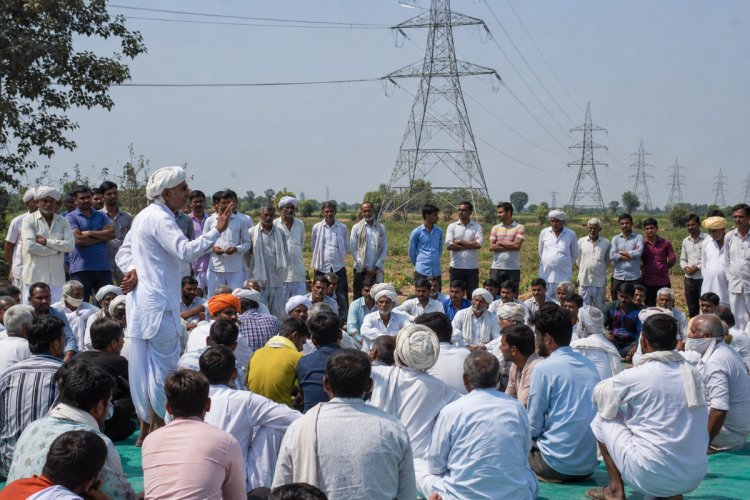
The Gujarat government has announced a significant increase in compensation for farmers whose land is affected by power transmission lines and towers, as protests over land compensation spread across the state.
In an effort to address growing discontent among farmers, the state government has decided that compensation for land used for transmission infrastructure will now be calculated on the basis of prevailing market value instead of the government-determined jantri rate. Farmers will be paid compensation equivalent to twice the prevailing market value of the land. The entire compensation amount will also be paid upfront, before work on the project begins.
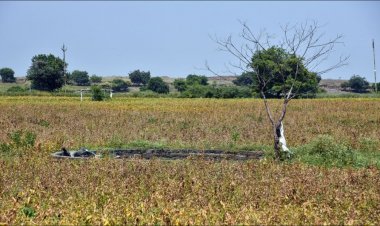
Discontent among farmers in Gujarat over compensation for land affected by power transmission lines and towers has been simmering for a long time. However, the latest phase of protests gathered momentum from June 9, 2026, with Jetpar village in Morbi district emerging as a major centre of the agitation.
Farmers in Jetpar began an indefinite hunger strike on June 17. The agitation received support from farmers in several surrounding villages, intensifying pressure on the state government to revise its compensation policy.
Under the previous policy, compensation for power transmission lines and poles passing through agricultural land was calculated at 200 per cent of the jantri value. Farmer organisations had long argued that jantri rates were often significantly lower than prevailing market prices and had demanded that compensation be linked to the actual market value of land.
The government's decision to replace the jantri-based formula with compensation equivalent to twice the prevailing market value, along with changes in the payment mechanism, marks a major policy gain for the protesting farmers.
An official release issued on Friday said, “Until now, compensation for electricity poles and transmission lines passing through agricultural land was paid at 200 per cent of the jantri value. Responding to long-standing representations from farmer organisations, the state government has decided that compensation will now be calculated at twice the prevailing market value of the land instead of the jantri rate.”
Committee to Determine Market Value
To determine the market value of affected land and bring greater transparency to the compensation process, the state government will constitute a Market Rate Committee (MRC).
According to reports, the committee will include the district collector, representatives of affected landowners, an authorised market valuer nominated by the farmers, and representatives of the concerned transmission service provider.
Compensation for the Right of Way (RoW) corridor of transmission lines will also be linked to the market value determined by the MRC. The new mechanism is expected to address farmers' concerns over the gap between official land valuation rates and actual market prices.
Compensation Area Around Towers Expanded
The revised policy also expands the area eligible for compensation where power transmission towers are installed.
Earlier, compensation was calculated only based on the actual base area occupied by a transmission tower. Under the new policy, an additional one-metre area around the tower base will also be included while calculating compensation.
The change is expected to increase payouts to farmers whose agricultural land is permanently affected by transmission tower infrastructure and associated restrictions on land use.
Full Compensation Before Work Begins
The Gujarat government has also scrapped the earlier instalment-based compensation payment system.
Under the previous arrangement, farmers received 40 per cent of the compensation when foundation work began, another 40 per cent after the tower was erected, and the remaining 20 per cent after the transmission wires were installed.
Under the revised policy, farmers will receive 100 per cent of the compensation in a single upfront payment before project work begins.
The state government says the new payment mechanism will help eliminate delays in compensation and provide greater financial security to affected farmers. The policy revision comes amid growing farmer mobilisation over power transmission projects and represents a significant shift towards market-linked compensation for agricultural land affected by electricity infrastructure.