
Govt Lifts Export Ban on De-Oiled Rice Bran, Industry Welcomes Move
In a notification, the Directorate General of Foreign Trade (DGFT) said the export policy of de-oiled rice bran is amended from “prohibited” to “free” with immediate effect.

 Join the RuralVoice whatsapp group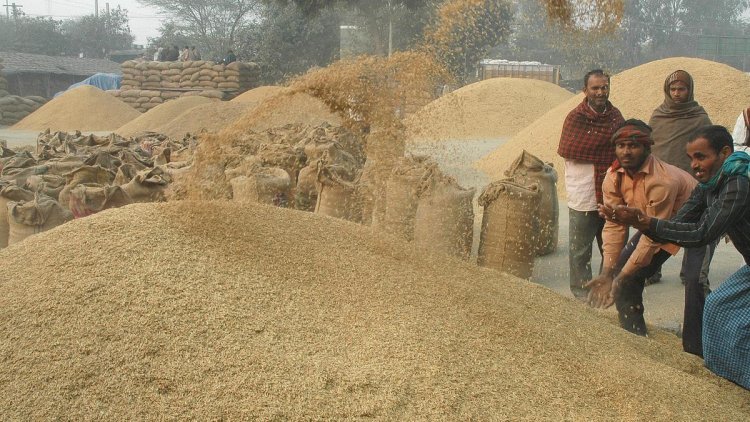
The government lifted the export ban on de-oiled rice bran (DORB) on Friday, which is widely used in the cattle and poultry feed industries. In a notification, the Directorate General of Foreign Trade (DGFT) said the export policy of de-oiled rice bran is amended from “prohibited” to “free” with immediate effect.
The industry body, Solvent Extractors’ Association of India (SEA), welcomed the decision. “The lifting of the ban will benefit the rice milling and solvent extraction industry, particularly in eastern India, by opening export opportunities. It will aid farmers and processors in securing better realisation for byproducts of rice bran,” SEA said in a statement.
The export ban on DORB has been in force since July 2023 and was extended up to September 30, 2025. SEA had earlier urged the government to lift the ban to protect domestic processors and enhance farmers' income.
Before the ban, India exported around 5 lakh tonnes of DORB annually, valued at around ₹1,000 crore, mainly to Vietnam, Thailand, and other Asian countries. India was positioned as a reliable supplier in the international market. Lifting the export ban will lead to higher production of both de-oiled rice bran, which is used in the cattle feed industry, and rice bran oil, an import substitution.
"Once again, this will absolutely help boost India's agro-processing exports and strengthen the country's reputation as a reliable supplier to global feed markets," SEA Executive Director BV Mehta said in a statement.
The government’s objective behind the export ban was to ensure adequate availability of DORB for the domestic livestock and poultry feed sector and to control prices, which at that time stood at around ₹20,000 per tonne. Prices have since fallen to ₹10,000–11,000 per tonne.
The change in export policy is also expected to support farmers indirectly, as higher demand for rice bran will improve value realisation from paddy milling. Eastern states like West Bengal, Odisha, Bihar, and Assam, which are major rice-growing and rice-bran producing regions, are likely to benefit the most.