
Brinda Karat Urges Agriculture Minister to Withdraw Rules Under New Rural Employment Law, Retain MGNREGA
Senior CPI(M) leader Brinda Karat has urged Union Agriculture Minister Shivraj Singh Chouhan to withdraw the rules framed under the Viksit Bharat-Guarantee for Rozgar and Aajeevika Mission (Gramin) Act (VB GRAM-G) and continue MGNREGA, alleging that the new framework weakens workers' rights, centralises decision-making and relies excessively on technology.

 Join the RuralVoice whatsapp group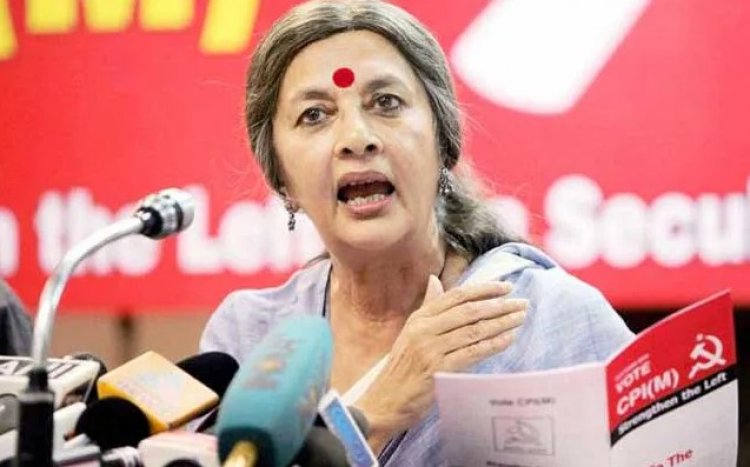
Senior CPI(M) leader Brinda Karat has written to Union Agriculture Minister Shivraj Singh Chouhan seeking the withdrawal of the rules notified under the Viksit Bharat-Guarantee for Rozgar and Aajeevika Mission (Gramin) Act (VB-GRAMG Act) and demanding that the Mahatma Gandhi National Rural Employment Guarantee Act (MGNREGA) continue in its existing form.
In her letter, written ahead of the rollout of the new law, Karat claimed that the replacement of MGNREGA had severely affected rural workers, particularly in tribal areas. Referring to her recent visit to Barapala village in Rajasthan's Udaipur district, she said workers, mostly women, were unable to begin work because the online attendance system failed to function for several hours. She alleged that such technical problems had become common and had reduced employment opportunities.
According to Karat, workers in the village had received only 18 days of employment between January and June after MGNREGA was discontinued. She also claimed that several elderly women were unable to register attendance because biometric face recognition technology failed to identify them.
The CPI(M) leader alleged that the rules for implementing the new law were framed without consulting rural workers' organisations or trade unions. She questioned whether some provisions were consistent with constitutional principles governing Centre-State relations, arguing that the rules impose financial and administrative responsibilities on states while limiting their role in decision-making.
Karat also criticised the proposed system for allocation of funds, claiming that linking financial assistance to recommendations of the Sixteenth Finance Commission could disadvantage states with lower populations despite high demand for rural employment. She cited Kerala and Tamil Nadu as examples of states that could receive fewer funds despite providing a higher number of workdays under MGNREGA.
The letter further raised concerns over the use of mandatory online registration, Aadhaar-based e-KYC verification and biometric attendance, arguing that these requirements could exclude a large number of rural workers who lack smartphones or face technological barriers.
Karat also objected to the composition of the proposed National Level Steering Committee, saying it provides limited representation to state governments and excludes workers' organisations as well as ministries dealing with tribal affairs, social justice and women.
She urged the minister to withdraw the rules, continue MGNREGA and reconsider the provisions after wider consultations with workers' organisations, state governments and other stakeholders. According to the letter, discontinuing MGNREGA from July 1 would adversely affect rural workers dependent on the employment guarantee programme.