Global Cereal Production Forecast Hits All-Time High in 2025, Driven by Strong Coarse Grain Outlook
FAO’s latest forecast pegs global cereal production in 2025 at a record 2,961 million tonnes, up 3.5% year-on-year. Improved maize and sorghum yields in the US, Brazil, and Mexico drive the surge, offsetting weather-related wheat and rice downgrades in China, Argentina, Nepal, and the US. Utilization, stocks, and trade are also set to reach historic highs.

 Join the RuralVoice whatsapp group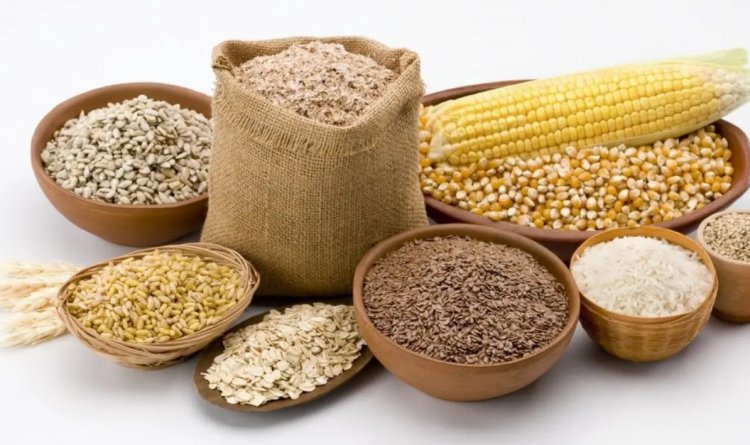
The Food and Agriculture Organization (FAO) has projected that global cereal production in 2025 will reach a record 2,961 million tonnes, revising its forecast upward by 35.6 million tonnes, or 1.2 percent, compared to its July outlook. The increase is largely driven by improved prospects for coarse grains, particularly maize and sorghum, reinforcing expectations of an all-time high global cereal harvest.
The forecast for coarse grain production has been significantly raised to 1,601 million tonnes, up 36.1 million tonnes from July’s estimate and 5.9 percent higher than 2024’s output. Much of this surge comes from the United States, where record maize yields and expanded planting areas are expected to deliver bumper crops. Brazil and Mexico have also seen positive revisions, with higher yields in Brazil and larger planted areas in Mexico boosting output.
By contrast, maize forecasts in the European Union have been trimmed due to dry weather and above-average temperatures, which are expected to reduce both yields and harvested area. Global sorghum production is also projected higher, reaching 66.6 million tonnes, 5.6 percent above the previous year, led by record output in Brazil.
Wheat output to reduce slightly, but record production of Rice
FAO’s wheat output forecast stands at 804.9 million tonnes, a slight reduction from July due to weaker yield prospects in China and lower acreage in Argentina. However, this is still 6.9 million tonnes higher than the previous year. The European Union has benefited from improved weather, lifting its wheat production outlook.
For rice, the global production forecast remains at a record 555.5 million tonnes (milled basis) in 2025-26, despite localized downgrades. Nepal and the United States have seen reductions due to poor rainfall and flooding, respectively. However, stronger planting in Indonesia, along with expansions in Bangladesh, Brazil, China, and India, are expected to sustain global growth.
Cereal utilization to reach 2,922 MT
World cereal utilization in 2025-26 is projected to reach 2,922 million tonnes, up 44.6 million tonnes (1.6 percent) year-on-year. Coarse grain use will rise 1.7 percent to 1,568 million tonnes, supported by increased maize feeding in Brazil and the United States. Wheat utilization is forecast to hit a record 803.5 million tonnes, with rising demand from animal feed sectors in China, the EU, and Thailand. Rice use is expected to grow modestly by 1.9 percent to a record 550.6 million tonnes.
Global cereal stocks are forecast to reach 898.7 million tonnes by the end of the 2025-26 season, up 3.7 percent year-on-year and another record high. The increase is mainly due to higher maize reserves in the United States, expected to exceed 50 million tonnes. Wheat stocks, however, are projected slightly lower, particularly in Iran and the EU, following production and historical consumption revisions. Rice reserves are expected to climb by 2 percent to 214.5 million tonnes, led by buildups in Brazil, China, India, and Thailand.
The global cereal stocks-to-use ratio is projected at 30.6 percent, nearly one percentage point higher than last season, underlining a comfortable supply outlook.
Brazil and the US to lead cereal trade
World cereal trade in 2025-26 is forecast at 493.4 million tonnes, 1.4 percent higher than 2024-25 and up 6.5 million tonnes from July’s estimate. Maize exports from Brazil and the US will drive coarse grain trade higher, despite reduced purchases by China. Wheat trade is set to grow 4 percent, supported by strong demand from China, Iran, Pakistan, Syria, and Türkiye, with the EU regaining market share.
Rice trade is expected to hit a fresh peak of 61.4 million tonnes in 2025, with higher imports by Bangladesh, Ghana, and Guinea-Bissau offsetting reductions elsewhere.
With global cereal production, utilization, stocks, and trade all projected at record levels, the 2025-26 season underscores a period of abundant supply. Strong coarse grain harvests are the main driver, providing resilience against localized setbacks in wheat and rice production.