
Commodity Trading Week Europe set for May 6-7 as grain traders warn of mounting global market pressures
Commodity Trading Week Europe will be held on May 6-7 in London as global grain traders warn of growing pressure on the industry. Despite record grain production, shrinking margins, volatile markets, changing buying patterns and rising costs are creating major challenges for traders and reshaping the global commodity trading landscape.
 Join the RuralVoice whatsapp group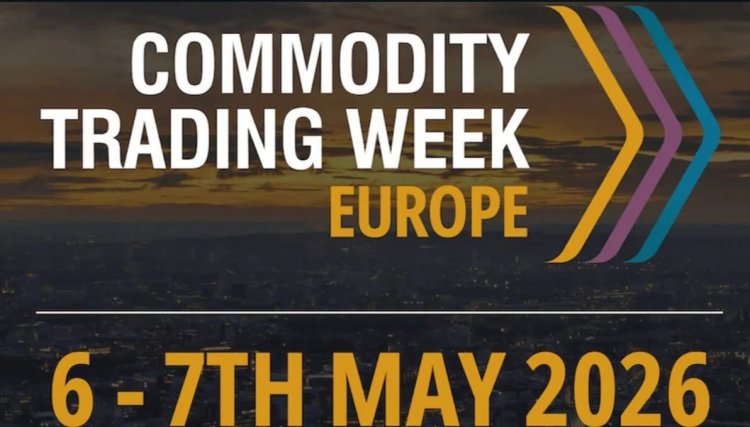
Commodity Trading Week Europe is scheduled to take place on May 6-7 in London, bringing together more than 1,000 senior decision-makers and over 100 speakers from across the global commodity trading ecosystem to discuss emerging risks and market shifts in agricultural trade.
The event comes at a time when the global grain trade is facing mounting structural pressures despite record production levels. Global grain output has reached about 2.46 billion tonnes, yet market participants say the traditional grain trading model is increasingly under strain due to shrinking margins, volatile markets and rising operational costs.
Industry analysis indicates a widening disconnect between grain prices and global inflation trends. While many sectors have experienced significant price increases in recent years, grain prices have moved toward a decade-long low when adjusted for inflation. This has compressed margins across the supply chain and made profitable trading more difficult for companies operating in global markets.
Market observers say that traders are now grappling with what some describe as a “margin desert,” where the cost of executing trades, including logistics, financing and compliance is eroding profitability. In such an environment, even record supplies do not necessarily translate into strong earnings for trading houses.
Shifts in buying patterns are also adding uncertainty to the trade. Importers and consumers are increasingly moving away from medium-term supply coverage and instead purchasing grain on a short-term or spot basis, reducing predictability for traders and complicating planning across supply chains.
Geopolitical developments and policy changes are another factor shaping the market outlook. Governments and regulators are becoming more active in commodity markets, while some industry participants point to the growing presence of informal or “shadow” trading channels that can create uneven competition for companies operating under strict compliance frameworks.
Meanwhile, policymakers are also attempting to manage rising production costs for farmers. For example, European authorities have proposed temporarily suspending import duties on nitrogen fertilizers to ease input cost pressures that remain significantly higher than in 2020. The measure could help reduce expenses for agricultural producers and stabilize farm economics.
Against this backdrop, Commodity Trading Week Europe aims to provide a platform for commercial, risk and operations professionals to assess market developments, exchange insights and build industry partnerships. The gathering is expected to focus on risk management strategies, evolving trade flows and the long-term transformation of global commodity trading models as the sector adapts to a more complex and uncertain environment.