
Global Sulfur Shortage Keeps DAP Prices High; Government Subsidy Decision Awaited
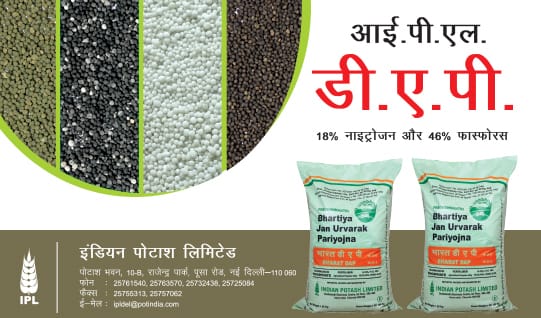
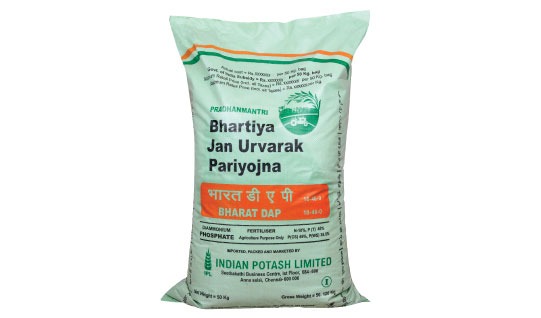
A global sulfur shortage is keeping DAP prices elevated, with international prices hovering at $910-$920 per tonne and recent Indian import deals reaching $930. While the government has kept DAP’s MRP unchanged at Rs 1,350 per 50-kg bag, the industry is awaiting a decision on higher subsidies and continuation of the special incentive for the upcoming rabi season.

 Join the RuralVoice whatsapp group
The adverse impact of the war that began following US and Israeli attacks on Iran on global fertilizer prices continues to persist. As a result, the surge in prices of diammonium phosphate (DAP) has remained sustained, with little likelihood of a decline in the near future.
DAP prices in the global market are currently hovering between $910 and $920 per tonne. For several months, the price of DAP imported by India has not fallen below this level. In recent import deals, DAP was contracted at around $930 per tonne.
However, the high global prices have so far had no direct impact on farmers, as the government has kept the maximum retail price (MRP) of DAP unchanged at Rs 1,350 per 50-kg bag. The government is compensating fertilizer companies for the higher import cost through subsidies.
Sulfur Prices Rise
According to fertilizer industry sources, the main reason for the elevated price of DAP is a shortage of sulfur, with prices remaining above $1,000 per tonne.
The high cost of sulfur has severely affected production at Morocco-based OCP, the world's largest DAP exporter. Despite Morocco having the world's largest reserves of rock phosphate, production has not returned to normal. Industry sources say the shortage of sulfur is the primary reason.
A major portion of global sulfur supplies comes from oil refineries, where sulfur is produced as a by-product during crude oil refining. Attacks linked to the Iran conflict have caused significant damage to refineries in the UAE, Saudi Arabia, Qatar and other Gulf countries, resulting in a shortage of sulfur.
Meanwhile, attacks by Ukraine on Russian oil refineries have also severely affected production there, further tightening global sulfur supplies.
NPK, SSP Costs Also Rising
The shortage and high cost of sulfur are affecting not only DAP but also complex fertilizers, including various NPK grades, as well as single super phosphate (SSP). Their production costs are also rising.
Industry sources said domestic DAP manufacturers are also being affected by the higher cost of raw materials, with several plants unable to operate at full capacity.
The government has kept the MRP of DAP unchanged at Rs 1,350 per 50-kg bag for the past four years. The higher import cost is being compensated through government subsidies.
According to industry estimates, once an import price of $910-$920 per tonne is combined with GAC, port charges and transportation costs, the landed cost of DAP comes to around Rs 1 lakh per tonne.
At the current MRP of Rs 1,350 per 50-kg bag, companies recover only Rs 27,000 per tonne from sales. The remaining cost is met through government support, including a subsidy of Rs 32,786 per tonne. In addition to the subsidy, the government also provides a special incentive to help offset the cost.
Although DAP falls under the category of decontrolled fertilizers, the government effectively keeps its price under control through its subsidy mechanism. In contrast, companies have raised prices of other phosphate and potash fertilizer variants, with most of them now costing more than DAP.
DAP Subsidy May Rise for Rabi
The government may have to increase the subsidy for DAP for the upcoming rabi season under the Nutrient Based Subsidy (NBS) scheme.
The government is expected to announce the subsidy rates for the rabi season beginning in October. Under the NBS scheme, subsidy rates are announced separately for the rabi and kharif seasons. The subsidy rates for Kharif 2026 are valid until September 30.
Industry sources said DAP consumption is higher during the rabi season. The fertilizer is particularly important for crops such as mustard, potato and wheat, besides several other crops.
If the government announces the subsidy rates on time, DAP availability for farmers is likely to improve as importing companies will be able to finalize import deals early.
Government Decision Awaited
In addition to the subsidy provided under the NBS scheme, the government is giving fertilizer producers and importers additional relief through a special incentive on DAP. However, this provision is currently valid only until the end of Kharif 2026.
The government will therefore have to decide the NBS subsidy rates for the rabi season within the next few days. It will also need to decide whether the special incentive on DAP should be continued.
India consumes more than 70 million tonnes of fertilizers annually. After around 40 million tonnes of urea, DAP is the most widely consumed fertilizer, with annual consumption of around 10 million tonnes.
A significant portion of domestic DAP requirements is met through imports. Even for domestic production, India has to import rock phosphate and other raw materials, making the domestic fertilizer industry vulnerable to fluctuations in global commodity prices and supply disruptions.