
AIKS Demands Rs. 575 per Quintal for Sugarcane, Questions Centre’s New Committee
AIKS has demanded a legally guaranteed sugarcane price of Rs. 575 per quintal and an increase in sugar’s minimum selling price to Rs. 50 per kg. Questioning the composition of the Centre’s new committee on sugarcane pricing, the farmers’ organisation has also called for MSP at C2+50% for all Kharif and Rabi crops, backed by a legal guarantee of procurement.
 Join the RuralVoice whatsapp group
The All India Kisan Sabha (AIKS) has demanded a minimum legal price of Rs. 575 per quintal for sugarcane and called for a comprehensive overhaul of the Centre’s agricultural pricing policy, including a minimum support price (MSP) of C2+50% for all Kharif and Rabi crops.
In a press release, the farmers’ organisation welcomed the Centre’s decision to constitute a committee under former NITI Aayog member Professor Ramesh Chand to examine the demands of sugarcane farmers and the minimum selling price of sugar. However, it said the committee was the outcome of a month-long farmers’ agitation in Maharashtra and Karnataka, rather than a concession by the government.
AIKS congratulated sugarcane growers and their leaders in southern Maharashtra and northern Karnataka for their protests, which it said had compelled the government to engage with farmers and appoint the committee.
AIKS Questions Committee’s Composition
The organisation raised concerns over the appointment of Professor Chand, describing him as a prominent supporter of the three contentious farm laws repealed in 2021. AIKS also criticised his association with an earlier MSP committee that, according to the organisation, failed to provide a legal guarantee for MSP.
The organisation said the committee’s other three members were bureaucrats and alleged that neither farmers’ organisations nor the governments of sugarcane-producing states had been represented.
It also questioned the committee’s terms of reference, arguing that linking farmers’ prices to the financial viability of sugar mills could give mill owners excessive influence over the outcome.
AIKS further demanded that the committee submit and publish its report within 30 days and that its recommendations be implemented during the current sugarcane crushing season.
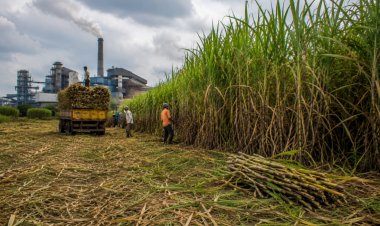
Sugarcane Price Should Be at Least Rs. 575 per Quintal
AIKS challenged the Commission for Agricultural Costs and Prices (CACP) assessment that the Fair and Remunerative Price (FRP) of Rs. 365 per quintal for the 2026–27 season provides a profit margin of 100.5% over production costs.
According to the organisation, this calculation uses the A2+FL cost of Rs. 182 per quintal. When measured against the C2 cost of Rs. 258 per quintal cited by the CACP, the margin falls to 41.5%, it argued.
AIKS said correcting what it described as ten methodological errors in its analysis, The Sugarcane Price, Decoded, would raise the estimated C2 cost to approximately Rs. 308 per quintal. It cited the use of an outdated index from 2011–12 and the use of average yields that allegedly obscure substantial crop losses caused by red rot disease.
On this basis, the organisation argued that sugarcane should fetch at least Rs. 575 per quintal and never less than Rs. 550. It also demanded that farmers receive an additional Rs. 57 per quintal or more as their share of revenue from ethanol and electricity production.
AIKS criticised the CACP for describing the State Advised Prices (SAPs) in Uttar Pradesh and Haryana as an additional financial burden on sugar mills.
Sugar Mills’ Financial Viability Under Scrutiny
The organisation also questioned the minimum selling price (MSP) of sugar, which it said has remained unchanged at Rs. 31 per kg since 2019.
According to AIKS, the unchanged price is cited as a reason for mills’ inability to pay farmers, while soft drink and confectionery companies, which it said purchase 60–65% of the country’s sugar, benefit from an implicit subsidy worth approximately Rs. 15,000 crore annually.
The organisation demanded that the minimum selling price of sugar be raised to at least Rs. 50 per kg. It also called for a dual-pricing system under which corporate buyers pay higher prices, with the additional revenue passed on to sugarcane producers.
AIKS Flags MSP Shortfalls Across Crops
Extending its criticism beyond sugarcane, AIKS alleged that the CACP’s MSP calculations systematically underestimate farmers’ production costs.
For Kharif 2026–27, the organisation cited the following differences between prices calculated using the CACP’s own C2 cost estimates and the announced MSPs. AIKS also alleged that no Kharif crop received a margin of even 24% over its C2 cost, despite four increases in diesel prices, and that MSPs had not been revised accordingly.
For the 2027–28 Rabi season, the organisation said the CACP’s C2 cost estimates indicated a wheat price of Rs. 2,774 per quintal, compared with the announced Rs. 2,610. For gram, it calculated a price of Rs. 7,426 per quintal, against the announced Rs. 5,958, representing a difference of Rs. 1,468.
States Also Criticised Over Cost Estimates
AIKS alleged that some state governments had submitted understated production-cost estimates to the CACP.
It cited Uttar Pradesh’s sugarcane cost calculations, which it said assumed a yield of 800 quintals per hectare, compared with an actual yield of 563 quintals. The organisation argued that the higher assumed yield artificially lowered the estimated cost per quintal. It also said Maharashtra had not submitted a sugarcane cost estimate.
For paddy, AIKS alleged that Uttar Pradesh, Madhya Pradesh, Gujarat, Maharashtra and Assam reported production costs below the CACP’s own estimates. It further said Uttar Pradesh, Madhya Pradesh, Rajasthan and Haryana had not submitted wheat cost estimates for the Rabi season.
AIKS said it had sought an appointment with the committee. It added that it would work with like-minded organisations and the Samyukt Kisan Morcha to intensify its campaign at sugar mills, mandis and villages if the committee was used to delay action on farmers’ demands.