BRICS’ Agricultural Power and Its Growing Role in Global Food Security
BRICS countries have emerged as a major force in global food security, accounting for significant shares of agricultural land, water, cereals, livestock production, food reserves and agricultural trade. Their growing influence could help build more resilient food systems, strengthen agricultural markets and improve global food stability amid climate and geopolitical disruptions.

 Join the RuralVoice whatsapp group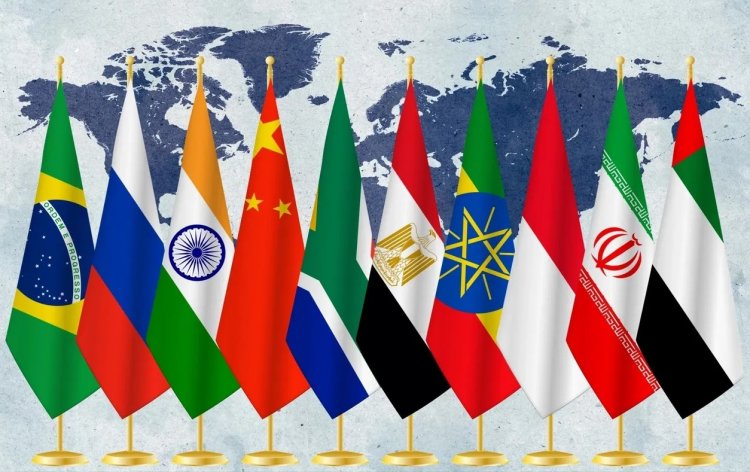
As India prepares to host the BRICS Summit on September 12-13, 2026, the grouping's growing role in global food security is attracting increasing attention. BRICS countries have emerged as major producers, consumers, exporters and importers of agricultural commodities, giving the bloc considerable influence over global food supplies, trade flows and commodity markets.
The significance of BRICS extends well beyond its economic weight. The grouping now represents nearly half of the world's population, around 40% of global GDP and about 26% of global trade. Its expanding agricultural footprint makes it an increasingly important pillar of the global food system at a time when climate change, geopolitical conflicts, trade restrictions and supply-chain disruptions are threatening food security.
From emerging economies to a global food powerhouse
The transformation of BRICS into a major force in international markets has been remarkable. According to UNCTAD data, total merchandise exports of BRICS countries increased from $906 billion in 2003 to $5.9 trillion in 2024. Their share of world exports consequently rose from around 12% to approximately 24%. Merchandise imports also expanded from $783 billion to $4.92 trillion during the same period, increasing their share of global imports from around 10% to about 20%.
Agriculture represents a substantial component of this expanding trade. In value terms, BRICS agricultural exports and imports accounted for approximately 16% and 17%, respectively, of global trade in 2025. The principal agricultural export categories include oilseeds, cotton, fish, grains and meat, with BRICS+ accounting for roughly 20% to 40% of global exports in these product groups. Soybeans represent more than 80% of oilseed exports, while rice, wheat and corn dominate grain exports. India is at the forefront of global rice exports.
BRICS' enormous food-production capacity
According to data cited by BricsGrain, BRICS countries account for approximately 42% of worldwide food production. The bloc also encompasses around 33% of global agricultural land and nearly 39% of the world's water resources. Collectively, BRICS countries account for more than 40% of global grain and meat production, while also contributing significantly to global maize and wheat supplies.
Individual members reinforce this collective strength. Brazil exports more than $165 billion worth of agricultural products annually and is one of the world's leading agricultural exporters. Russia has become the world's largest wheat exporter. India is a major rice producer and exporter, while China has a vast and diversified agricultural sector. This concentration of productive resources gives BRICS the capacity to influence global commodity prices, trade flows and food-supply conditions.
Cereals at the heart of global food security
Cereals constitute the most important component of the BRICS food-security base. Since 2009, cereal production has increased in almost all BRICS countries. China remains the largest producer, followed by India, Russia and Brazil.
FAO's Agricultural Production Statistics 2010-2023 shows the extraordinary contribution of BRICS countries to global cereal production. They account for approximately 60% of global rice production, 45% of wheat, 40% of maize, 25% of sorghum and 20% of barley.
The high concentration of cereal production within BRICS has two major implications. It reduces the bloc's dependence on external food supplies while enabling several members to supply international markets during periods of shortage.
BRICS countries have increasingly become important suppliers of staple foods such as rice and wheat to countries vulnerable to food shortages. In this sense, their agricultural production is becoming an important component of global food stability and the wider food-security role of the Global South.
Major producers & importers of fertilizers
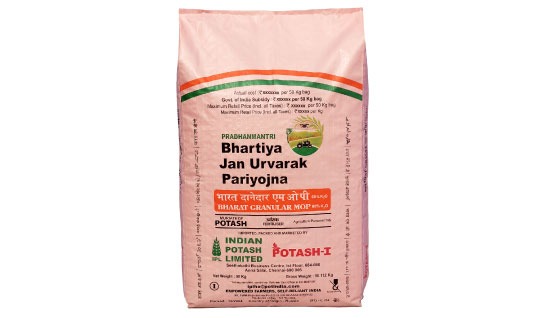
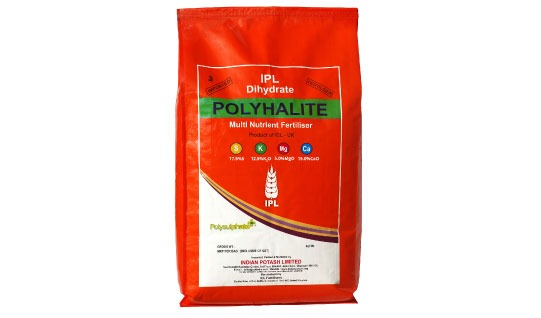
BRICS countries are major producers as well as importers of fertilizers. China, Russia and India form the core of BRICS’ fertilizer production base, collectively accounting for nearly 90% of the bloc’s total output. China alone contributes more than 40%, followed by Russia with around 25% and India with approximately 20%.
However, some countries are heavily dependent on imports to meet domestic agricultural demand. Brazil, India and China are among the world’s largest fertilizer buyers. Russia accounts for around 32% of Brazil’s fertilizer imports, while China contributes approximately 26%.
Grain markets and the possibility of a new pricing architecture
The concentration of grain production and exports within BRICS has also generated discussion about developing an independent agricultural pricing mechanism. The proposed BRICS Grain Exchange could potentially strengthen price discovery, improve market transparency and facilitate trade among major producers and consumers. It could also reduce excessive price volatility and dependence on existing international commodity-market structures.
First proposed by Russia's Union of Grain Exporters and Producers in 2023, the initiative gained political backing at the Kazan Summit and further structural refinement during trade ministerial meetings. The platform is still in the developmental and discussion phase regarding its technical architecture, governance, and rules. Such an exchange would require agreement on currencies, clearing and payment systems, liquidity, contract standards and risk management.
Livestock strengthens the food-security base
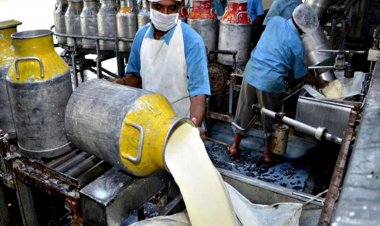
BRICS' contribution to global food security extends beyond crops. Between 2009 and 2023, BRICS countries accounted for approximately 45% of global meat production, including poultry, around 60% of egg production and 35% of milk production. China makes the largest contribution to global meat and egg production, while India is the leading contributor to milk production.
Agricultural trade and the Global South
BRICS countries have also become major participants in global agricultural exports. The combined value of their agricultural exports reached approximately $397 billion in 2023, representing about 21% of global agricultural exports in value terms.
Brazil plays a particularly prominent role. FAO data for 2023 show that the largest bilateral agricultural trade flow in the world was between Brazil and China, valued at $53.6 billion. Indonesia was also among Brazil's three largest trading partners within the broader BRICS framework, with agricultural trade worth around $1.9 billion.
However, combined agricultural exports declined to approximately $387 billion in 2024. The decline highlights the vulnerability of agricultural trade to geopolitical tensions, disruptions in logistics and increasingly fragmented global supply chains. Such disruptions can affect both exporting economies that depend on agricultural trade and importing countries that rely on international markets for food supplies.
Food security amid geopolitical and climate pressures
The growing importance of BRICS agriculture comes at a critical moment for the global food system. Population growth, climate change, extreme weather, economic instability and geopolitical conflicts are increasing pressure on agricultural production and food distribution. Export restrictions, sanctions, trade barriers and disruptions to shipping and fertiliser supplies have further exposed weaknesses in global food-supply chains.
BRICS countries, with their substantial agricultural land, water resources, food reserves, production capacity and export potential, are consequently becoming increasingly important to global food stability. The grouping's expanded membership has further strengthened this position, bringing together major agricultural producers and consumers across different regions. Its agricultural strength gives BRICS the ability to contribute not only to its own food security but also to the availability and affordability of food in vulnerable markets.
From production strength to food-security cooperation
The next challenge is to translate this production capacity into stronger and more resilient food systems. The Indore Declaration, adopted at the 16th BRICS Agriculture Ministers' Meeting in June 2026, placed food security, farmer welfare, agricultural trade, climate-resilient agriculture and digital technologies at the centre of cooperation.
The meeting also advanced four initiatives: a BRICS Network of Centres of Excellence on Agro-Ecology and Regenerative Agriculture, a BRICS Network on Digital Agriculture, a Global Forum on Farmers' Rights in Seed Systems and BRICS AgriN covering agricultural inputs, genetic resources and information. These initiatives point towards a broader model of cooperation involving agricultural research, climate resilience, digital technologies, input security, market access and farmer welfare.
For BRICS, the central issue is no longer simply how much food its members produce. It is how effectively that production can be connected through resilient supply chains, predictable trade, efficient logistics and mechanisms that protect both farmers and consumers from global shocks.
The future role of BRICS will therefore depend on its ability to convert its enormous agricultural resources into stable supplies, resilient markets, sustainable production and stronger cooperation across the Global South. If that transition succeeds, BRICS could evolve from being simply a major producer and trader of food into one of the world's most important institutional pillars for ensuring global food security.