
Delayed Fertiliser Subsidy Decisions Keep Global DAP Prices High, Sulphur Shortage Persists
Delays in announcing nutrient-based subsidy rates for the 2026-27 rabi season are creating uncertainty for DAP importers as global prices remain around $900 per tonne. Industry sources are calling for annual subsidy announcements amid sulphur shortages, production constraints and concerns over balanced fertiliser use.

 Join the RuralVoice whatsapp group

India’s policy of announcing nutrient-based subsidy (NBS) rates separately for the kharif and rabi seasons is contributing to persistently high global prices of di-ammonium phosphate (DAP), according to fertiliser industry sources. The government has yet to announce NBS rates for the ongoing rabi season, which runs from October 2026 to March 2027, even as the peak period for DAP consumption is approaching.
Most DAP consumption takes place by November 15, while sowing of major rabi crops, including wheat, potato and mustard, is largely completed by the end of November. The delay in announcing subsidy rates has created uncertainty for importers and affected their purchasing decisions, industry sources said.
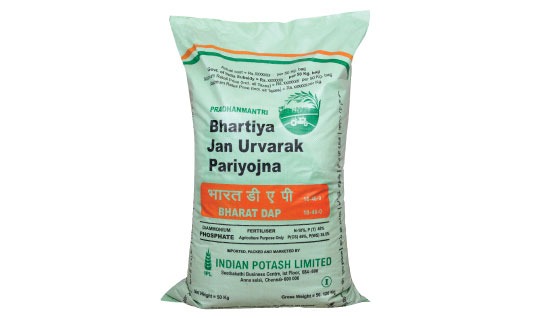
The government has kept the maximum retail price (MRP) of DAP unchanged at Rs. 1,350 per 50-kg bag for the past four years. Fertiliser importers are consequently relying on the expectation that the government will compensate them for the full cost of supplying the fertiliser. Industry sources said the practice of announcing NBS rates on a half-yearly rather than an annual basis was also allowing exporters to maintain high prices in the international market.
Global DAP prices have remained around $900 per tonne for several months.
Industry Seeks Annual Subsidy Rates
Fertiliser industry sources said delays in announcing subsidy rates had made business decisions difficult for companies, which had sometimes incurred losses because of uncertainty over the extent of government support.
They argued that announcing NBS rates once a year would provide greater certainty to fertiliser importers, help them plan procurement in advance and potentially improve India's bargaining position in the global market.
India consumes around 10 million tonnes of DAP annually and remains heavily dependent on imports to meet its requirements. Around 40% of domestic demand is met through production within the country, but domestic manufacturers also rely on imported raw materials. The remaining requirement is met through direct imports of finished DAP.
The delay in announcing subsidy rates has also discouraged private companies from importing DAP for the current rabi season, which accounts for approximately 5.5 million tonnes of consumption.
According to industry sources, most imports have so far been undertaken by public sector companies, including National Fertilizers Limited (NFL) and Hindustan Urvarak & Rasayan Limited (HURL), along with cooperative fertiliser organisations.
Sulphur Shortage Disrupts Fertiliser Production
Alongside uncertainty over subsidies, shortages of sulphur, a key raw material used in the production of DAP and complex fertilisers, are constraining domestic manufacturing.
Sulphur prices have eased slightly to below $900 per tonne, but supply constraints remain. As a result, several DAP and complex fertiliser manufacturing units are unable to operate at full capacity, with some reportedly running at only 60% of their installed capacity.
Industry sources attributed the sulphur shortage to disruptions linked to the Iran-US and Russia-Ukraine wars.
Around 28% of global sulphur supplies have traditionally come from petroleum refineries in Gulf countries, including Qatar and Saudi Arabia, as well as other countries in the region. Iranian attacks have disrupted operations at several refineries, and industry sources said it could take up to four years for some facilities to return to normal operations.
Meanwhile, Ukrainian attacks on Russian refineries have also disrupted production, reducing sulphur supplies from Russia. These disruptions have added to the difficulties faced by fertiliser manufacturers dependent on imported raw materials.
Pressure to Ensure DAP Supplies in Uttar Pradesh and Punjab
With assembly elections approaching in major states, including Uttar Pradesh and Punjab, fertiliser importers are under pressure to ensure adequate DAP supplies for farmers in these key agricultural markets.
In addition to shipments through ports on India's western coast, DAP consignments are also being transported by rail from Kakinada port on the eastern coast to improve availability in the two states.
However, weak monsoon conditions and dry spells across large parts of the country have reduced fertiliser consumption by around 15% this year, according to industry sources. The decline covers DAP, urea and complex fertilisers, helping keep overall DAP availability at normal levels for now.
Despite this, the online systems introduced by state governments to regulate fertiliser sales are creating difficulties for farmers, industry sources said. Delays in obtaining fertilisers when required could further reduce consumption and potentially affect agricultural production.
DAP Price Cap Affects NPK Fertiliser Sales
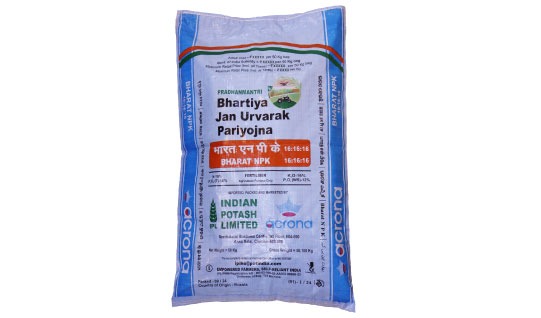
The continued availability of DAP at an MRP of Rs. 1,350 per 50-kg bag is also affecting sales of other NPK complex fertilisers, whose prices have risen to Rs. 2,400-2,450 per bag for several variants.
Industry representatives said the substantial price difference between DAP and other complex fertilisers was contributing to an imbalance in fertiliser use.