
Farmers’ Role in Agroforestry Vital for Climate, Economy: Experts Call for Scaling Efforts
At a national consultation in New Delhi, experts emphasized the need to scale agroforestry in India, highlighting its role in climate mitigation, rural livelihoods, and timber supply. With only 8–10% of cultivable land under agroforestry, they called for policy reforms, institutional convergence, and financial support to empower small and marginal farmers to adopt sustainable practices.

 Join the RuralVoice whatsapp group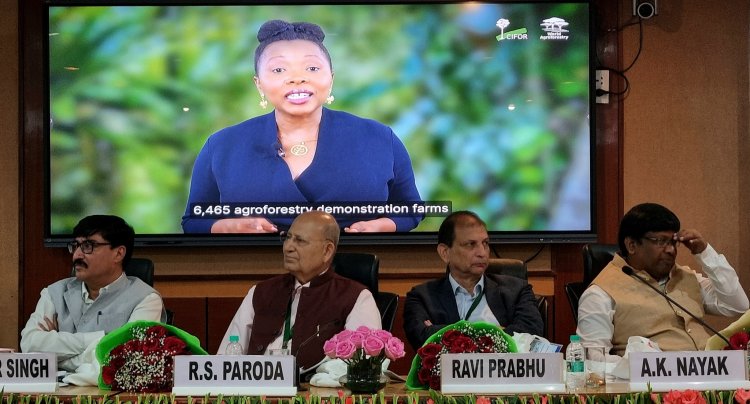
Agroforestry is emerging as a cornerstone of climate resilience, ecological restoration, and rural livelihood enhancement, but experts stress that its full potential in India remains untapped. Speaking at the National Consultation on Scaling Agroforestry held at the NASC Complex, New Delhi, on September 18, agricultural scientists, policymakers, and global leaders urged for stronger institutional, financial, and policy frameworks to promote its adoption.
“Farmers adopting agroforestry are providing a vital environmental service and must be appropriately rewarded for their contribution,” said Dr. R. S. Paroda, Chairman, Trust for Advancement of Agricultural Sciences (TAAS), in his inaugural address.
Highlighting the challenges, Dr. Rajbir Singh, Deputy Director General (Agricultural Extension), ICAR, noted that while 86% of Indian farmers are small and marginal, only 8–10% of the 28 million hectares of cultivable land is under agroforestry. He emphasized the urgent need to strengthen capacity building, develop region-specific technology models, and ensure institutional convergence to unlock growth.
The consultation, jointly organized by TAAS, the Indian Council of Agricultural Research (ICAR), the ICAR–Central Agroforestry Research Institute, Jhansi, and the World Agroforestry Centre (ICRAF) India Office, brought together national and international experts. Eminent participants included Dr. A. K. Nayak, DDG (Natural Resource Management), ICAR; Dr. Bhag Mal, Secretary, TAAS; Dr. Ravi Prabhu, Former DDG, ICRAF; and Dr. Manoj Dabas, Country Director, CIFOR-ICRAF, India Office. Dr. Eliane Ubalijoro, CEO, CIFOR-ICRAF and Director General, ICRAF, Nairobi, also addressed the event virtually. The two-day consultation concluded on September 19.
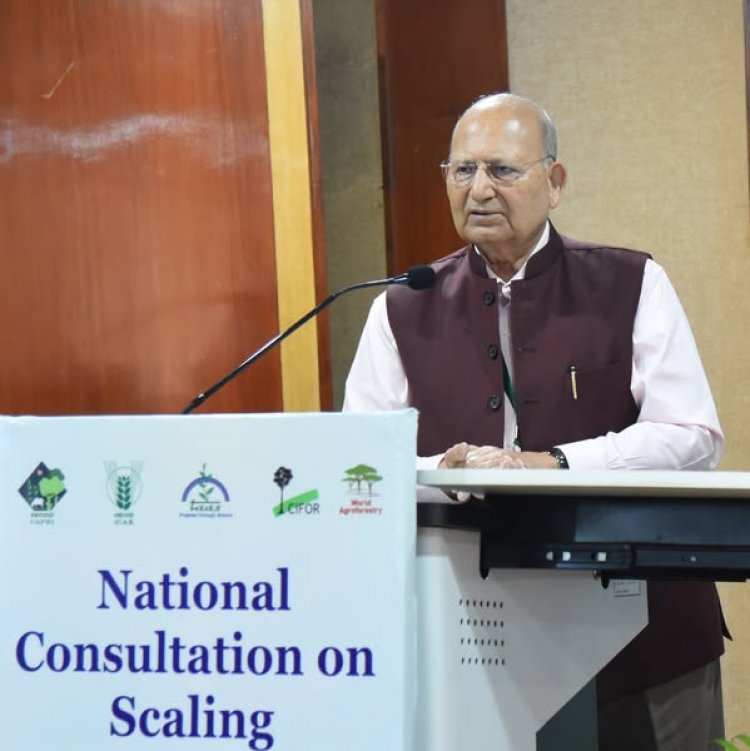
Dr. R. S. Paroda, Chairman, Trust for Advancement of Agricultural Sciences (TAAS)
Agroforestry’s Expanding Relevance
Agroforestry, which integrates trees into farming systems and landscapes, is increasingly recognized as a global solution for climate change adaptation and mitigation. With natural forests under pressure, it offers a viable path to expand green cover, rehabilitate degraded lands, and provide food, fodder, fuelwood, timber, and biodiversity benefits.
Globally, around 1.2 billion people practice agroforestry across one billion hectares, accounting for 10% of total agricultural land. In India, agroforestry has been instrumental in boosting industrial timber supply, meeting nearly 90% of industrial timber demand, while government forests contribute less than 4%. Between 2015–2019, tree cover outside forests grew by 1.8%, of which 86% was attributed to agroforestry.
Policy Support and Investment
The National Agroforestry Policy (NAP) under the Ministry of Agriculture and Farmers Welfare has provided significant impetus, including a USD 146.3 million allocation under the Sub-Mission on Agroforestry. This policy removed bottlenecks on cultivating, felling, and transporting 650 agroforestry species across 25 states and Union Territories. Corporate Social Responsibility (CSR) investments worth USD 3.5 billion have also supported large-scale tree planting initiatives.
In 2023, the Government of India introduced an agroforestry component under the Rashtriya Krishi Vikas Yojana (RKVY) with a proposed USD 54 million budget, focusing on quality planting material (QPM) production in partnership with states.
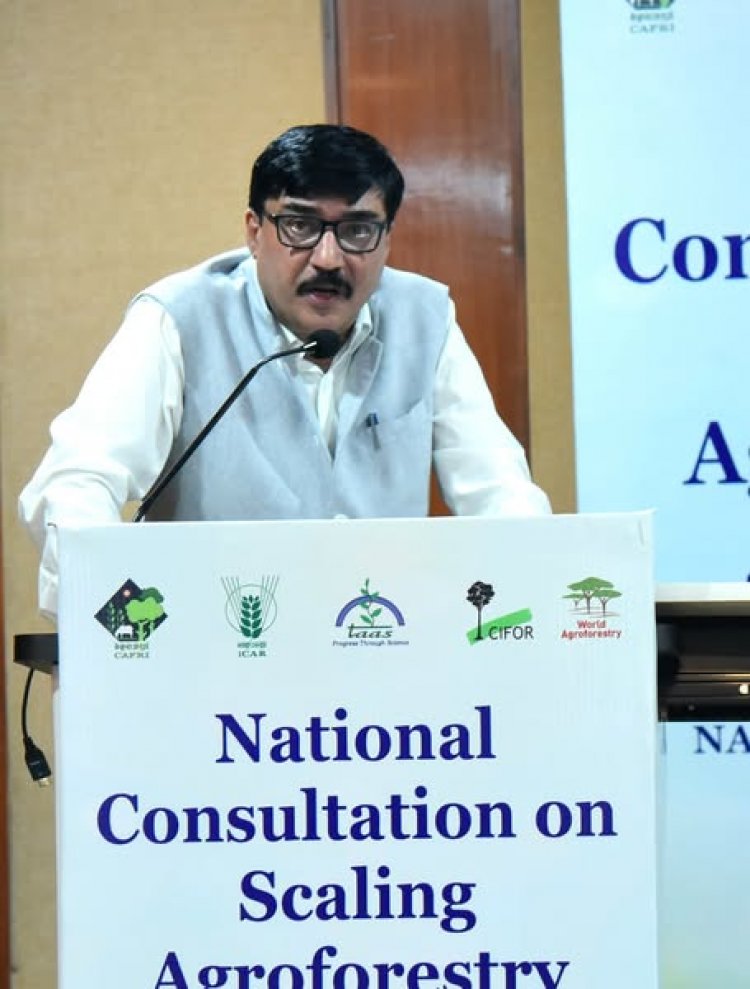
Dr. Rajbir Singh, Deputy Director General (Agricultural Extension), ICAR
Challenges Hindering Wider Adoption
Despite policy progress, several barriers remain. Regulatory restrictions on harvesting and transporting agroforestry species in certain states discourage farmers. The fragmented governance structure, involving multiple ministries and state departments, often creates inconsistencies.
Moreover, small and marginal farmers, who form the backbone of India’s agriculture, struggle to adopt agroforestry due to limited financial capacity, lack of price information, and weak market infrastructure. While profitable in the long run, risks from market fluctuations and inadequate institutional support remain pressing concerns.
Opportunities for Scaling
Experts underscored that agroforestry holds immense potential for India’s climate and development goals. It contributes to carbon sequestration, supports biodiversity, and enhances soil health. With its ability to provide diverse livelihood options, from food and fodder to timber and non-timber forest products, agroforestry can significantly strengthen rural incomes.
India also has a strong base of traditional agroforestry systems, such as agri-silviculture and silvo-pastoralism, which can be revived and modernized. Research into elite germplasm, varietal development, and region-specific agroforestry models could further enhance productivity.
The Way Forward
The consultation concluded with a call for strengthening research, ensuring inter-ministerial coordination, and scaling farmer-friendly policies. Experts urged for the creation of supportive markets, improved access to finance, and incentives for farmers delivering ecosystem services.
With agroforestry already proving its worth in meeting India’s industrial timber needs and contributing to climate action, scaling its adoption could transform not just the environment but also the economic resilience of millions of farmers.