
Home-Cooked Thali Costs Rise in June on Higher Vegetable, Edible Oil and LPG Prices: Crisil
In June, the cost of home-cooked veg and non-veg thalis rose by 5 per cent and 6 per cent year-on-year, respectively, according to a Crisil Intelligence report.
 Join the RuralVoice whatsapp group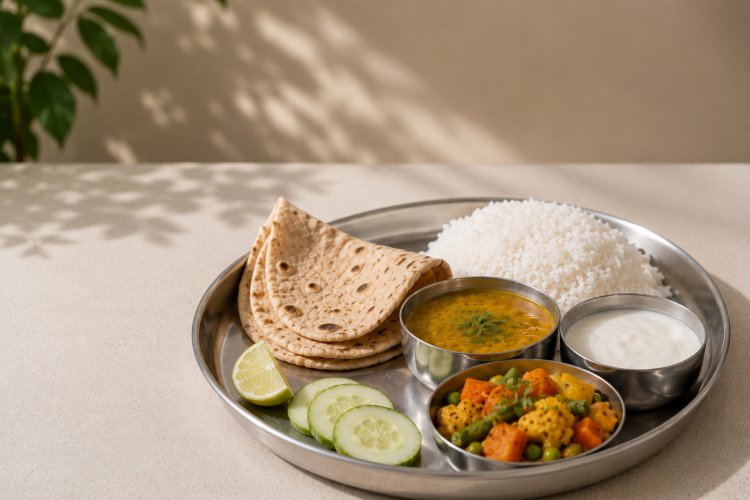
The cost of preparing a home-cooked meal increased in June, with vegetarian and non-vegetarian thalis becoming costlier by 5 per cent and 6 per cent year-on-year, respectively, as higher prices of tomatoes, onions, vegetable oil and cooking gas outweighed the benefit of cheaper potatoes, according to Crisil Intelligence's latest Roti Rice Rate (RRR) report.
The report said the average cost of a vegetarian thali rose to Rs 28.4 in June from Rs 27.1 a year earlier, while the cost of a non-vegetarian thali increased to Rs 58.2 from Rs 54.8 during the same period. On a monthly basis, vegetarian and non-vegetarian thali costs rose 4 per cent and 3 per cent, respectively.
Tomato prices rose 31 per cent year-on-year to Rs 42 per kg in June 2026 from Rs 32 per kg in June 2025, driven by delayed and lower summer crop planting caused by high temperatures in February and March. Onion prices increased 2 per cent year-on-year as higher-priced stored rabi stocks entered the market.
Vegetable oil and LPG cylinder prices rose 10 per cent year-on-year each due to supply disruptions caused by the West Asia conflict. However, the increase in thali costs was partly offset by a 14 per cent year-on-year decline in potato prices following fresh rabi arrivals.
The cost of a non-vegetarian thali also increased due to an estimated 7 per cent year-on-year rise in broiler prices, which account for around 50 per cent of the meal's cost. Broiler prices remained firm because extreme summer heat increased bird mortality, reduced weight gain and discouraged fresh chick placements, resulting in tighter supplies.
Monsoon Deficit Remains a Key Risk
According to Pushan Sharma, Director, Crisil Intelligence, the progress of the southwest monsoon remains a critical factor influencing food inflation. Cumulative rainfall between June 1 and July 7 was around 17 per cent below the long-period average.
Although monsoon activity has strengthened over the past week and is expected to cover the entire country within the next two to three days, rainfall distribution during the remainder of the season will be crucial in determining crop prospects.
"A prolonged rainfall deficit during critical crop growth stages could impact kharif paddy yields, particularly during flowering, tightening supplies from major producing states such as Bihar, West Bengal, Odisha, Chhattisgarh and Maharashtra, and supporting higher market prices," Sharma said.
Pulses, Onion and Tomato Prices Likely to Stay Firm
The report expects prices of urad and moong to remain firm because of lower opening stocks and weather-induced yield losses in Karnataka, Madhya Pradesh and Maharashtra.
Onion prices are also expected to remain firm over the medium term due to lower rabi stocks and delayed kharif arrivals. Any adverse impact of below-normal rainfall on the kharif crop could further tighten supplies.
Tomato prices are expected to remain firm through July and August because of delayed kharif planting and seasonally lean supplies. However, staggered arrivals of the summer crop, particularly from southern states where farmers replanted following heat stress, may help moderate the seasonal price spike.
Potato prices, meanwhile, are expected to edge higher as stocks held in cold storage are gradually released into the market.
What RRR Measures
Crisil's monthly Roti Rice Rate (RRR) tracks the average cost of preparing a meal at home using prevailing input prices across north, south, east and west India. A vegetarian thali includes roti, rice, dal, vegetables (onion, tomato and potato), curd and salad, while the non-vegetarian version replaces dal with broiler chicken. The index reflects changes in household food expenditure by tracking the prices of cereals, pulses, vegetables, broilers, edible oil, spices and cooking gas.
Data Highlights
-
Vegetarian thali cost: Rs 28.4 in June 2026, up 5 per cent year-on-year and 4 per cent month-on-month.
-
Non-vegetarian thali cost: Rs 58.2, up 6 per cent year-on-year and 3 per cent month-on-month.
-
Tomato prices: Up 31 per cent year-on-year.
-
Vegetable oil and LPG prices: Up 10 per cent each year-on-year.
-
Potato prices: Down 14 per cent year-on-year.
-
Broiler prices: Estimated to have risen 7 per cent year-on-year.