
India-EU FTA: Know What Tariff Rates Will Apply to Key Agri Products
The India-EU FTA provides tariff concessions on selected agricultural products through TRQs and price-based conditions. Wines, apples, kiwifruit, pears, peaches and pork will receive lower duties within specified limits. Imports exceeding quotas or falling below prescribed price thresholds will generally continue to face existing tariffs, protecting sensitive domestic markets.

 Join the RuralVoice whatsapp group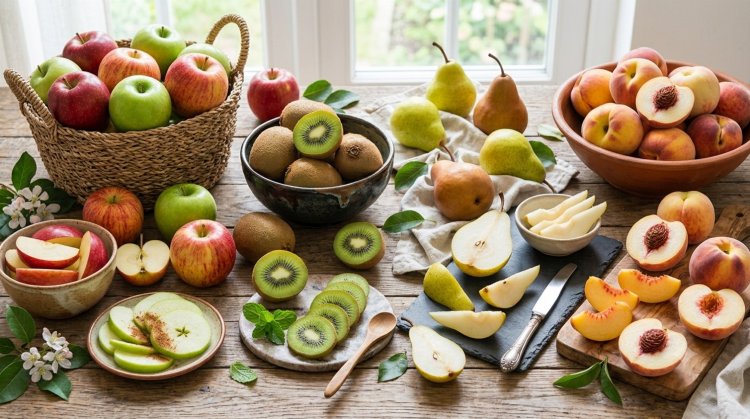
India’s free-trade agreement with the European Union will open limited but significant market access for several European agricultural products through tariff-rate quotas (TRQs) and price-linked concessions. Rather than providing unrestricted tariff cuts, India has retained higher duties beyond specified quantity or price thresholds for sensitive products. The agreement covers EU wines, other alcoholic products, apples, kiwifruit, pears, peaches and pork, with concessions varying by product, import price, quota and implementation year. While some products will see substantial duty reductions, imports outside the prescribed limits will continue to attract existing or higher tariffs. Here is what the agreement means for key agri-product imports. An analysis by think tank Global Trade Research Initiative (GTRI)...
Tariff on premium wines reduced from 150% to 20%
India has offered substantial tariff concessions on wines imported from the European Union. The duty treatment will depend on the CIF value per 750 millilitres, whether the wine is imported in bottles or in bulk.
Wines valued below €2.50 will receive no concession and will continue to face the base customs duty of 150%. For wines valued between €2.50 and €10, the duty will fall to 75% in Year 1 and then decline annually to 30% from Year 8 onward.
EU wines valued at €10 or more per 750 millilitres will receive deeper concessions. Their duty will fall from the current 150% to 75% in Year 1, 67% in Year 2 and progressively to 20% from Year 8 onward. The concessions cover sparkling wine, wine in containers and in bulk, grape must, vermouth and other flavoured wines classified under HS 2204 and 2205.
Alcoholic products other than wine
India has also offered concessions on certain fermented beverages and high-strength alcoholic products other than wine. Products valued below €5 per 750 millilitres will receive no concession and will continue to face the 150% base duty. For products valued at €5 or more, the duty will fall to 100% in Year 1 and then decline by five percentage points each year, reaching 50% from Year 11 onward.
The covered products include cider, perry, mead, sake, wine coolers and similar fermented beverages under HS 22060000. They also include high-strength alcoholic concentrates used to make or flavour beverages under HS 22071011; beverage-grade rectified spirit and extra-neutral alcohol under HS 22071019; and other undenatured ethyl alcohol with an alcoholic strength of at least 80% under HS 22071090.
These TRQ provisions do not directly cover finished whisky, which is generally classified under HS 2208. They primarily cover wine, fermented beverages and high-strength alcohol used as an input in producing spirits and other alcoholic drinks.
Apples: India will provide a growing quota for EU apples with a CIF price of at least ₹80 per kilogram. The quota will start at 50,000 metric tonnes in Year 1 and increase by 5,000 tonnes annually, reaching 100,000 tonnes from Year 11 onward. Imports within the quota will face a 20% duty. Apples priced below ₹80 per kilogram will continue to face a 50% duty, while imports exceeding the quota will receive no tariff concession.
Kiwifruit: India will allow 12,000 metric tonnes of EU kiwifruit at concessional tariffs in Year 1. The quota will increase by 300 tonnes annually, reaching 15,000 tonnes from Year 11 onward. The in-quota duty will fall from 16.5% in Year 1 to 10% in Year 6 and remain at that level. Imports beyond the quota will receive no preferential tariff.
Pears: India will provide the EU with a fixed annual quota of 2,250 metric tonnes of pears under HS 08083000. The in-quota duty will decline from 29.17% in Year 1 to 25.33% in Year 2, 21.5% in Year 3, 17.67% in Year 4 and 13.83% in Year 5. It will fall to 10% from Year 6 onward. Imports exceeding the quota will receive no tariff concession.
Peaches: India has offered the EU a small annual quota of just 20 metric tonnes of peaches. Imports within the quota will face a duty of 26.4% from the date the agreement enters into force. Any imports exceeding the quota will receive no preferential tariff treatment.
Pork: India will allow 2,000 metric tonnes of EU pork to enter each year at concessional tariffs. The in-quota duty will fall gradually from 31.82% in Year 1 to 20% from Year 11 onward. Imports beyond the quota will receive no tariff concession.
Automobiles: India Cuts EU Car Tariffs from 110% to 10%
India imported only 17,191 cars from the EU in 2025. Yet the trade agreement gives European automakers a first-year tariff-rate quota of 100,000 completely built-up internal-combustion and non-plug-in hybrid cars - almost six times current imports. The quota rises to 160,000 cars by Year 10 and remains at that level. This means that, subject to price categories and origin rules, most EU cars currently imported into India could enter at the lower in-quota tariffs.
The concession applies only to cars priced above €15,000. For cars priced between €15,000 and €35,000, the in-quota duty falls from MFN tariff of 110% to 35% in Year 1 to 10% in Year 5. For cars priced above €35,000, it declines from MFN tariff of 66% to 30% in the first year to 10% over the same period. The quota is divided among three price bands, with 43,000 units reserved for cars priced above €50,000 from Year 5 onward. Cars priced below €15,000 receive no concession.
India will also reduce tariffs on EU cars imported beyond the quota. Depending on whether the current tariff is 110% or 66%, the out-of-quota duty on cars priced between €15,000 and €50,000 will gradually fall to 35% by Year 10. For cars priced above €50,000, it will fall to 30%.
Also read: EU Moves India FTA to Council
India has separately offered a quota for completely knocked-down internal-combustion and hybrid cars. This quota is 75,000 units annually for the first five years and then declines gradually to 50,000 units from Year 10. The in-quota duty on these vehicles falls from 13.75% in Year 1 to 8.25% from Year 3, compared with the current 16.5%.
Concessions for battery-electric vehicles, plug-in hybrids and cars using other technologies begin in Year 5 and apply only to vehicles priced at €20,000 or more. Their CBU quota starts at 20,000 cars in Year 5, rises to 50,000 in Year 10 and reaches 90,000 from Year 14 onward. The in-quota duty falls from 30% in Year 5 to 10% in Year 10 and remains at that level, compared with the listed base duty of 110%. Electric and other eligible cars priced below €20,000 receive no concession.
The EU becomes the second major trade partner after the United Kingdom to secure automotive tariff concessions from India under an FTA. Having established these precedents, India should soon receive similar demands for preferential market access and generous TRQs from other key trade partners such as Japan and South Korea.