
Self-Reliance in Fertilizers is a Strategic Necessity: Dr. S.P. Mohanty
HURL Managing Director Dr. S.P. Mohanty says fertilizer self-reliance has become a strategic necessity amid geopolitical uncertainties and supply-chain disruptions. He highlights the need to expand domestic production, adopt green technologies, improve balanced nutrient management, strengthen soil health, and enhance operational efficiency to ensure India's long-term fertilizer and food security.
 Join the RuralVoice whatsapp group
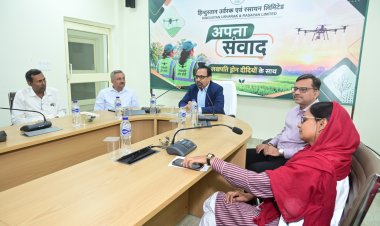
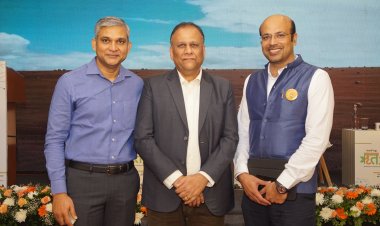
At a time when geopolitical tensions, supply-chain disruptions, and energy market volatility are reshaping the global fertilizer landscape, India's push for fertilizer self-reliance has assumed strategic importance. Dr. Siba Prasad Mohanty, Managing Director of Hindustan Urvarak & Rasayan Limited (HURL), is a visionary leader with over 37 years of distinguished experience in India's fertilizer and agri-input sector. In this exclusive interview with Harvir Singh, Editor-in-Chief, Rural World, print publication of Rural Voice, Dr. Mohanty shares his insights on fertilizer security, emerging challenges, and the future of India's fertilizer industry.
Ongoing tensions in West Asia have disrupted global energy and fertilizer supply. How do you assess its impact on India's fertilizer and agriculture sector so far?
The fertilizer industry today operates in an increasingly interconnected global environment, where geopolitical developments can have a direct bearing on energy markets, fertilizer raw materials, and overall supply chains.
Fortunately, India has demonstrated remarkable resilience. The proactive policy interventions of the Government of India, coupled with the country's diversified sourcing strategy and strengthened domestic production capacity, have helped mitigate major disruptions. Farmers have continued to receive fertilizers without significant supply interruptions.
Recent geopolitical disruptions have reinforced a critical reality: fertilizer security is national security. Self-reliance can no longer be viewed solely through an economic lens; it is a strategic necessity. Going forward, India must focus on strengthening domestic production capacities, diversifying import dependencies, and investing in transformational technologies such as Green Hydrogen, Green Ammonia, CO₂ Capture & Utilization, and Coal Gasification. These innovations will not only reduce external vulnerabilities but also position India at the forefront of sustainable and future-ready fertilizer manufacturing.
What contingency plans has HURL put in place to ensure uninterrupted fertilizer production if geopolitical tensions persist or escalate further?
Business continuity and supply security remain key priorities for HURL. We continuously monitor developments in global energy markets, raw material availability, and logistics networks, while maintaining close coordination with the Government of India, industry stakeholders, and our supply partners.
One of HURL's key strengths is its robust gas sourcing framework. We have established arrangements with multiple gas suppliers and work closely with leading energy companies such as GAIL and IOCL to ensure reliable gas availability for our plants.
Our approach also focuses on prudent inventory management, diversification of procurement channels wherever feasible, strengthening supply-chain visibility, improving operational efficiency, and maximizing plant reliability through preventive maintenance and operational excellence.
Are you witnessing an increase in input costs due to higher natural gas prices, raw material costs, or freights?
Energy costs, particularly natural gas prices, remain one of the most significant determinants of urea production economics. Similarly, fluctuations in freight rates and global raw material prices directly influence the overall cost structure of the fertilizer industry.
The recent geopolitical uncertainties have undoubtedly exerted upward pressure on costs. However, India's fertilizer sector operates within a policy framework designed to protect farmers from excessive price volatility. As a result, while producers face economic pressures, the impact on farmers is largely cushioned through government support mechanisms.
What is the current operational status of HURL's plants at Gorakhpur, Sindri, and Barauni?
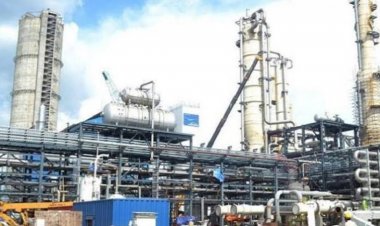
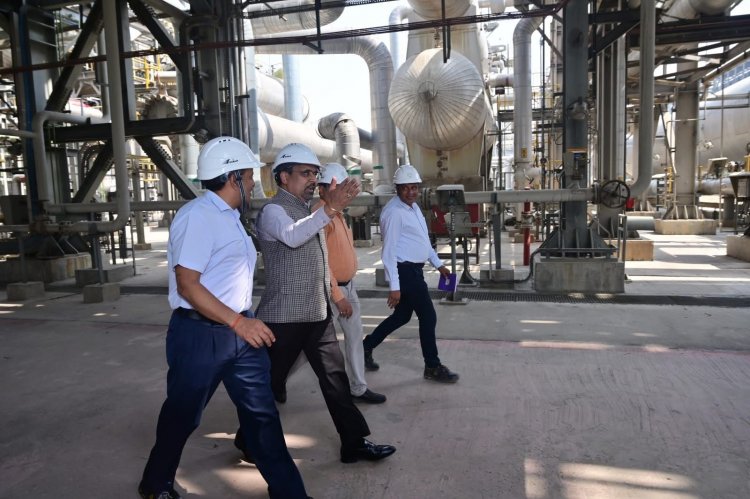
In FY 2025-26, HURL achieved its highest-ever urea production of approximately 39 Lakh Metric Tonnes (LMT), exceeding the annual target and achieving around 102% capacity utilization, reflecting the operational maturity, reliability, and efficiency of all three units.
Established to strengthen India's domestic urea production capacity, these state-of-the-art plants have become important pillars of the country's fertilizer security framework. Their consistent performance has significantly contributed to enhancing fertilizer availability for Indian farmers and reducing dependence on imports.
Our focus remains on maximizing operational reliability, energy efficiency, and capacity utilization while maintaining the highest standards of safety, environmental compliance, and sustainability. Through continuous process optimization, adoption of best operational practices, and the unwavering commitment of our workforce, HURL has emerged as a key contributor to India's journey towards fertilizer self-reliance.
Recently, the Prime Minister appealed to farmers to reduce the use of chemical fertilizers. How can this objective be achieved without compromising farm productivity?
The objective should not be to reduce fertilizer use indiscriminately, but to promote balanced and efficient nutrient management. Chemical fertilizers have played a crucial role in ensuring India's food security and will continue to remain indispensable for sustaining agricultural productivity. However, their application must be guided by scientific principles and environmental considerations. As emphasized by the Hon'ble Prime Minister, the need of the hour is to move towards balanced fertilizer use and sustainable farming practices that protect soil health while ensuring long-term agricultural prosperity.
A major challenge in India has been the excessive use of nitrogenous fertilizers, particularly urea, at the cost of balanced application of NPK (Nitrogen, Phosphorus, and Potassium) nutrients. Correcting this imbalance through soil-test-based fertilizer recommendations and greater awareness among farmers is essential for improving nutrient-use efficiency and maintaining soil fertility.
The solution lies in Integrated Nutrient Management (INM), which combines chemical fertilizers with organic manures, biofertilizers, crop residue management, and soil-specific nutrient application. Technologies such as Soil Health Cards, precision agriculture, nano-fertilizers, nano urea, nano DAP, and drone-based nutrient application can significantly improve nutrient-use efficiency, reduce wastage, and lower environmental impacts.
Green Ammonia is increasingly being discussed globally. What is its significance for the future?
The future of the global fertiliser and energy sector will increasingly be driven by sustainable and low-carbon solutions, and Green Ammonia is emerging as one of the most important among them. Produced using green hydrogen generated through electrolysis powered by renewable energy, Green Ammonia offers a cleaner alternative to conventional ammonia production by significantly reducing carbon emissions and dependence on fossil fuels.
In the present geo-political and energy security scenario, green hydrogen and Green Ammonia are expected to play a crucial role in ensuring long-term sustainability and self-reliance. As the world transitions towards cleaner energy and environmentally responsible manufacturing, future-ready projects can gradually integrate green technologies and sustainable energy solutions in phases, aligned with India’s climate commitments.
Rising nutrient imbalances and declining organic carbon and micronutrient levels in the soil are serious challenges. What corrective measures are needed?
Soil health is the foundation of agricultural productivity. The gradual decline in soil organic carbon and micronutrient levels poses a significant threat to long-term sustainability.
Addressing this challenge requires a comprehensive approach. Greater adoption of organic manures, biofertilizers, crop residue incorporation, green manuring, and conservation agriculture practices is essential. Simultaneously, soil testing must become more widespread so that nutrient applications can be tailored to actual crop requirements.
Farmers should be encouraged to move from input-intensive agriculture to knowledge-intensive agriculture. The objective must be to restore soil vitality while maintaining productivity and profitability.