
World Bank Group Calls Food Processing Key to South Asia’s Economic Growth
The World Bank Group has said that transforming South Asia’s food systems beyond farm production can generate millions of jobs, reduce food losses, attract billions in investments, and boost economic growth. Speaking at a regional policy dialogue in Ahmedabad, stakeholders stressed food processing, logistics, and value addition as key growth drivers.

 Join the RuralVoice whatsapp group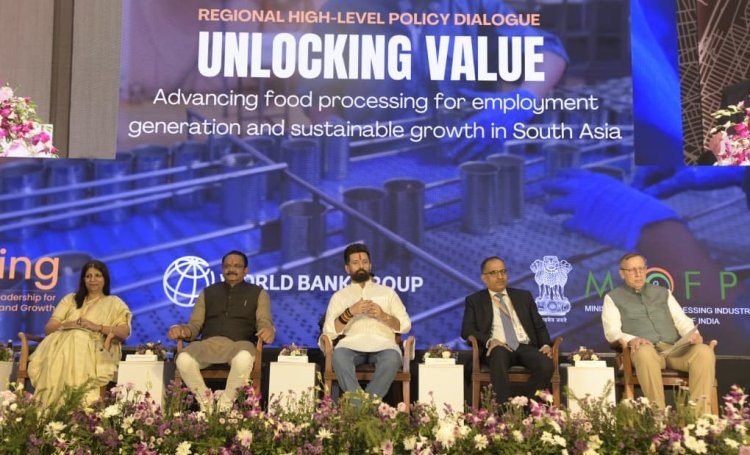
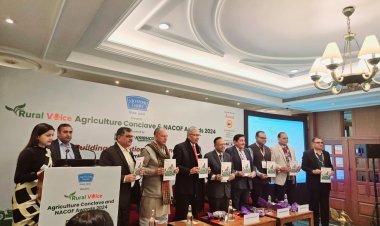
The World Bank Group has emphasized that transforming South Asia’s food systems beyond farm production could unlock millions of jobs, attract billions of dollars in investments, reduce poverty, and accelerate economic growth across the region. The message was delivered during the Regional High-Level Policy Dialogue, “Unlocking Value: Advancing Food Processing for Employment Generation and Sustainable Growth in South Asia,” organized by the Ministry of Food Processing Industries (MoFPI) in collaboration with the World Bank Group-led SAPLING initiative in Ahmedabad, Gujarat.
The two-day event was inaugurated by Union Minister for Food Processing Industries Chirag Paswan, who highlighted India’s growing emergence as a global food processing hub. Addressing nearly 200 participants, including policymakers, industry leaders, investors, researchers, startups, and development partners from South Asian countries, Paswan stressed that food processing serves as a critical link between agriculture and prosperity. He said value addition, technological innovation, and regional cooperation would be central to transforming South Asia’s food economy. According to him, the sector has significant potential to generate employment, reduce post-harvest losses, improve farmers’ incomes, and strengthen food security.
The World Bank Group noted that South Asia stands at a crucial stage in its development journey as millions of young people enter the workforce each year. Creating productive and sustainable employment opportunities has become one of the region’s most pressing challenges. Experts at the dialogue argued that the next phase of agricultural transformation must move beyond increasing crop production and focus on strengthening food processing, storage, logistics, marketing, and value addition.
South Asia’s agriculture sector is valued at more than $700 billion annually and employs nearly 43 percent of the workforce. However, despite its scale, agriculture contributes only around 16 percent of the region’s gross domestic product. At the same time, more than 30 percent of food produced in the region is lost or wasted every year—an amount sufficient to feed nearly 300 million people.
According to the World Bank Group, addressing these inefficiencies through investments in food processing and supply chains can generate substantial economic benefits. Expanding storage facilities, cold chains, logistics networks, and market linkages can help reduce food losses while creating employment opportunities and increasing returns for farmers.
India’s experience was highlighted as an example of how targeted policy interventions can strengthen agricultural value chains. The country’s food grain production has risen dramatically from 51 million tonnes in 1950-51 to over 370 million tonnes today. Processed food exports have also more than doubled during the past decade, increasing from about $4.9 billion to over $10 billion.
The food processing sector currently contributes around 9 percent of India’s manufacturing value addition and nearly 13 percent of the country’s exports. Government initiatives such as the Pradhan Mantri Kisan Sampada Yojana, the Pradhan Mantri Formalization of Micro Food Processing Enterprises (PMFME) Scheme, and the Production Linked Incentive (PLI) Scheme for Food Processing Industries have helped improve infrastructure, modernize enterprises, attract investments, and enhance competitiveness.
Despite these gains, experts observed that a large share of agricultural produce in India and South Asia remains unprocessed, indicating substantial untapped potential. Rapid urbanization, rising incomes, expanding middle-class consumption, and increasing demand for safe and high-quality processed foods are creating new opportunities for investment and innovation throughout the region.
To support this transformation, the World Bank Group is promoting a combined strategy through its AgriConnect and SAPLING initiatives. AgriConnect aims to connect 300 million farmers to markets by 2030 through infrastructure investments, policy reforms, and mobilization of private capital. The initiative is already supporting projects and reforms in countries including India, Bangladesh, and Sri Lanka.
Meanwhile, SAPLING serves as a regional platform bringing together governments, investors, development agencies, and innovators to encourage policy reforms, develop investment pipelines, and scale successful food system solutions across South Asia.
Participants at the dialogue called for coordinated action among governments, businesses, investors, and international financial institutions. Recommendations included greater investment in cold chains, warehousing, logistics hubs, agro-industrial parks, and food processing clusters, along with stronger public-private partnerships and simplified regulatory systems.
The dialogue concluded that transforming food systems from farm to market could become a major engine of employment generation, export growth, improved nutrition, and inclusive economic development across South Asia in the decades ahead.