
Farmers are Bearing the Brunt of Consumer-Centric Policies, with Prices of Most Crops Below MSP
Farmers are forced to sell their crops below the Minimum Support Price (MSP) for cotton, maize, soybeans, millet, pulses, and, in many cases, paddy. While the government's consumer-focused policies have led to increased imports of edible oils, pulses, and cotton, improved production due to a consistently good monsoon has significantly increased food grain stocks in the central pool. Food inflation is recording record lows, driven by falling prices for most agricultural products.

 Join the RuralVoice whatsapp group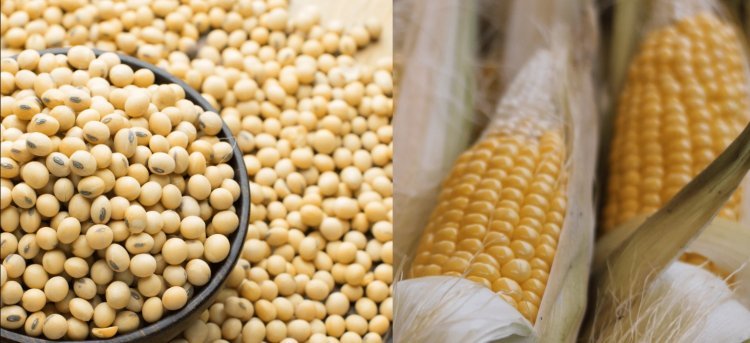
The reports of a bumper Diwali celebration across the country, thanks to the government's GST rate cut, are not true for farmers. In many parts of the country, Diwali is proving to be a dull one for farmers, as they are forced to sell their crops below the Minimum Support Price (MSP) for cotton, maize, soybeans, millet, pulses, and, in many cases, paddy. While the government's consumer-focused policies have led to increased imports of edible oils, pulses, and cotton, improved production due to a consistently good monsoon has significantly increased food grain stocks in the central pool. Food inflation is recording record lows, driven by falling prices for most agricultural products. However, this situation is not very good for farmers, nor for the government, as the government cannot ignore the low prices farmers are facing for long. This situation could pose a new challenge for the Modi government at the Centre.
As a result of measures taken to improve production and control prices, wheat stocks in the central pool stood at 32.03 million tonnes on October 1, 2025, a four-year high, exceeding the buffer norms by one and a half times. Significantly, despite the government's claim of record wheat production, it has imposed stock limits on wheat, and its export has been banned since 2022. The situation with rice is even better. On October 1, 2025, the central pool stock stood at 44.93 million tonnes, 4.4 times the buffer norms. This is expected to increase significantly due to the bumper paddy harvest in the Kharif season, as the new government procurement season is underway. Government procurement of paddy is strong in Punjab, Haryana, Chhattisgarh, and Telangana. The Chhattisgarh government and Odisha are also offering bonuses on paddy. Therefore, where there is a lack of proper government procurement, farmers are facing difficulties in receiving the MSP for paddy, with Uttar Pradesh experiencing a high incidence of this.
However, the situation with cotton is different from that of paddy. In most parts of the country, cotton farmers are forced to sell their crop at prices ranging from ₹1,000 to ₹1,500 per quintal below the MSP. For the current marketing season, the government has set an MSP of ₹7,710 per quintal for medium-staple varieties and ₹8,110 per quintal for long-staple varieties, while farmers are receiving only ₹6,500 to ₹7,100 per quintal in the market. This is largely due to the government's continued permission for duty-free cotton imports even during the harvest season, and approximately 5 million bales of cotton are expected to be imported into the country by the end of December. Combining domestic production and imports, cotton availability in the country is estimated to exceed consumption by approximately 3 million bales. Clearly, obtaining the MSP for cotton will be a challenge for farmers.
The case of soybean is quite interesting. Last year, the country imported edible oil worth approximately $17 billion, and we import more than 60 percent of our edible oil needs. Despite this, farmers of soybean, the main oilseed crop in the Kharif season, are not only unable to receive the current season's MSP, but are also forced to sell their produce at prices lower than last year's MSP. Despite a production decline of more than 16 percent compared to last year due to weather and crop diseases, soybean farmers are forced to sell their produce at prices ranging from Rs. 4,100 to Rs. 4,200 per quintal. The MSP for soybean for the current Kharif marketing season is Rs. 5,328 per quintal.
Meanwhile, in the last two or three years, maize farmers have received better prices, and maize has sold above the MSP due to the increased use of maize for ethanol production and a significant increase in demand from grain-based distilleries. In the last supply year, maize-derived ethanol accounted for the largest share of ethanol supplied for blending in petrol. But now the situation appears to be changing, as the ethanol supply tenders issued by state-owned oil marketing companies for the new year have received far more offers than needed, leading to a reduction in the supply of grain-based ethanol. Meanwhile, to increase maize production, farmers have increased the acreage by approximately 1 million hectares to 9.5 million hectares. However, far from receiving the MSP of ₹2,400 per quintal for maize, these farmers are receiving only ₹2,000 to ₹2,100 per quintal in states like Haryana and Karnataka, while prices in Madhya Pradesh are below ₹1,500 per quintal.
The issue doesn't stop at these crops. Despite our import dependence on pulses, prices for most pulses, such as arhar, mung, and urad, are hovering below the MSP. However, the government recently launched the Pulse Self-Reliance Mission and has set ambitious targets for increasing pulse production and productivity over the next five years. But unless farmers get a fair price for their produce, doubts will remain about the success of such a mission. Pulses and oilseeds missions were started in the country in the 1990s as well, but our import dependence on these two crops has increased significantly.
The government is running a mission to achieve self-sufficiency in edible oils, but the way imports of cheap edible oils have been resorted to to control prices by reducing duty rates is proving to be detrimental for farmers.