
RBI Holds Repo Rate at 5.25%, Revises FY27 Growth Outlook to 6.7% While Lowering Inflation Forecast
The RBI kept the repo rate unchanged at 5.25% and maintained its neutral stance while marginally upgrading its FY2026-27 GDP growth forecast to 6.7% from 6.6% and lowering its CPI inflation projection to 5% from 5.1%. It flagged food and fuel prices, an uneven monsoon, El Niño and geopolitical tensions as key risks.

 Join the RuralVoice whatsapp group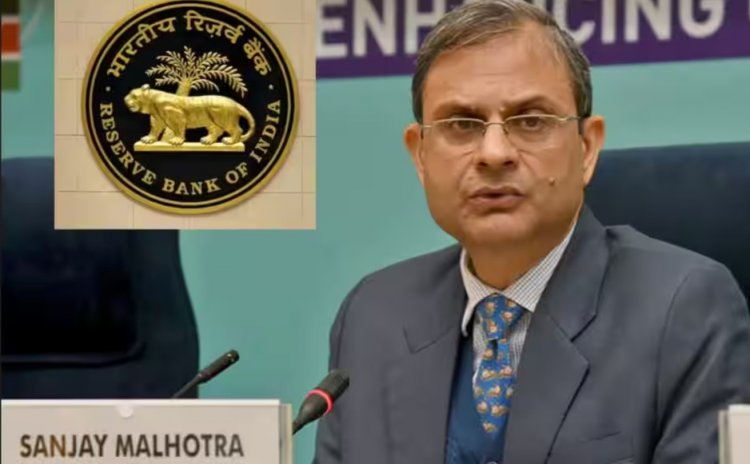
The Reserve Bank of India (RBI) on Wednesday kept the policy repo rate unchanged at 5.25% for the third consecutive bi-monthly monetary policy review of FY2026-27, while raising its real GDP growth forecast for the current financial year to 6.7% from 6.6% projected in the June policy review. At the same time, the central bank revised its consumer price inflation (CPI) forecast downward to 5% from 5.1%, even as it warned that food and fuel prices, an uneven monsoon and global geopolitical tensions continue to pose upside risks. The Monetary Policy Committee (MPC) also unanimously decided to maintain its 'neutral' policy stance, indicating that future decisions will depend on evolving inflation and growth dynamics.
Announcing the decisions after the MPC meeting held from August 3 to 5, RBI Governor Sanjay Malhotra said the central bank needs greater clarity on the trajectory of inflation before taking any policy action. He emphasized that while headline inflation is expected to rise in the coming months, the increase is largely being driven by supply-side shocks rather than broad-based demand pressures.
The six-member MPC unanimously voted to keep the repo rate under the Liquidity Adjustment Facility (LAF) at 5.25%. Consequently, the Standing Deposit Facility (SDF) rate remains at 5%, while the Marginal Standing Facility (MSF) rate and the Bank Rate continue at 5.5%.
The RBI said the Indian economy continues to display resilience despite an increasingly uncertain global environment. High-frequency indicators point to steady domestic demand in the first quarter of FY2026-27, supported by robust private consumption, resilient investment, healthy bank credit, expanding manufacturing and services activity, and a rebound in merchandise exports alongside sustained growth in services exports.
However, the central bank cautioned that renewed conflict in West Asia, volatile crude oil prices, shifting global trade policies and persistent inflationary pressures across advanced economies continue to cloud the external environment. The RBI also flagged concerns over the deficient and uneven southwest monsoon under El Niño conditions, which could weigh on agricultural output and rural demand.
Reflecting confidence in the domestic economy, the RBI revised upward its real GDP growth projection for FY2026-27 to 6.7% from 6.6% projected in June. Quarterly growth is projected at 7% in Q1, 6.4% in Q2, 6.5% in Q3 and 6.8% in Q4, while growth for the first quarter of FY2027-28 is estimated at 7.3%. The central bank assessed the risks to growth as broadly balanced.
On inflation, the RBI noted that headline CPI inflation increased to 4.4% in June 2026, rising above the 4% target after remaining below it for 16 consecutive months. However, the reading was still 30 basis points lower than the RBI's earlier projection for the quarter. The increase was primarily driven by food and fuel prices, while core inflation excluding food and fuel remained stable at 3.9%. Core inflation excluding precious metals remained even lower at 2.3-2.5%, indicating that underlying demand-side inflationary pressures are still contained.
For the full financial year, the RBI now expects CPI inflation to average 5% compared with its earlier projection of 5.1%. Inflation is projected at 4.7% in Q2, 5.9% in Q3 and 5.5% in Q4, before moderating thereafter. Inflation for the first quarter of FY2027-28 is projected at 5.3%, while core inflation for FY2026-27 is estimated at 4.3%.
Governor Malhotra said the MPC remains committed to bringing inflation in line with the target while supporting growth. He stressed that any future adjustment in policy rates would depend on how inflation evolves, particularly whether higher food and fuel costs spill over into broader price pressures. Until greater clarity emerges, the RBI believes maintaining the current policy rate and neutral stance remains the most appropriate course.
Commenting on the policy, Sanjay Chaturvedi, Chief Treasury Officer, Namdev Finvest, said the RBI had retained the repo rate at 5.25% and maintained its neutral stance while marginally improving the macroeconomic outlook. "Real GDP growth is now projected at 6.7%, against 6.6% previously, while inflation is estimated at 5.0%, slightly lower than the earlier 5.1% forecast," he said.
According to Chaturvedi, the revisions indicate the RBI's confidence that domestic demand and financial conditions can absorb external pressures without requiring an immediate policy response. He said India's economy remains resilient despite geopolitical tensions, volatile energy prices, supply-chain disruptions and El Niño-related uncertainty, with strong private consumption, sustained investment momentum and robust services activity supporting growth, although higher input and logistics costs could weigh on some sectors.