VNR VJIET, IIMR Develop Patented Automated Millet Roti Maker to Make Healthy Eating Easier
VNR VJIET and ICAR-IIMR researchers have secured an industrial design patent for an automated millet roti-making machine. Backed by Rs 3 lakh from IIMR’s NUTRI-Hub, the innovation aims to reduce labour and preparation time, with a target cost of around Rs 40,000.

 Join the RuralVoice whatsapp group
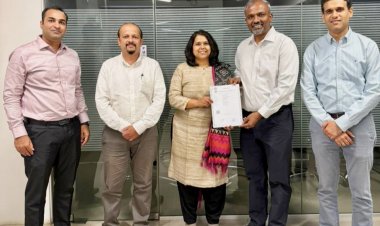
Researchers from VNR Vignana Jyothi Institute of Engineering & Technology (VNR VJIET), Hyderabad, in collaboration with the Indian Institute of Millets Research (IIMR), have secured an industrial design patent for an indigenous automated machine designed specifically for making millet-based rotis.
The innovation aims to address one of the key practical barriers to wider millet consumption—the time and physical effort required to prepare millet dough and rotis. With growing consumer interest in healthier diets, the researchers believe the machine could make millet-based foods more convenient and accessible for Indian households.
The project received Rs 3 lakh in support from NUTRI-Hub, the incubation hub of IIMR, for prototype and design development. The collaboration combines VNR VJIET’s engineering and technology expertise with IIMR’s specialised knowledge of millets and food research.
The research has resulted in three patent applications, of which two have already been granted, including the latest industrial design patent in 2026. Led by Pranavanand Satyamurthy, Head of the Department of Electronics and Instrumentation Engineering at VNR VJIET, the research team is developing a system capable of automating key stages of millet dough preparation and roti making.
Target cost of Rs 40,000
One of the major objectives of the project is to develop a more affordable alternative to existing automated roti-making machines. The researchers are targeting a final cost of around Rs 40,000, which would be nearly 60% lower than the approximately Rs 1.5 lakh price of comparable machines currently available in the market.
The need for such a machine arises from the distinct characteristics of millet dough. Unlike wheat dough, millet dough can be more difficult to handle and requires greater pressure and repeated tapping to achieve the desired consistency and texture. According to the researchers, the process can require around 50 repetitions for each piece, making it labour-intensive and physically demanding.
The proposed automated system is intended to reduce this manual effort while maintaining the nutritional benefits associated with millet-based rotis. The prototype is being designed to automate dough preparation and roti making, with an emphasis on consistency, convenience and ease of use.
Satyamurthy said the collaboration with IIMR is aimed at converting the challenges associated with millet dough into an engineering solution. He described the technology as an enabling tool that could help accelerate the incorporation of millets into everyday diets.
From research to commercialisation
VNR VJIET has provided dedicated infrastructure for experimentation, design development, testing and refinement of the technology. The project highlights the role of collaboration between academic institutions, research organisations and incubation platforms in developing practical solutions for India’s food and nutrition sector.
The development comes as government and research institutions continue to promote ‘Shri Anna’ (millets) as nutritious alternatives to conventional cereals. Researchers believe that reducing the difficulty of preparing millet-based foods at home could support their wider adoption, particularly among consumers seeking healthier and more convenient dietary choices.
With patents secured and prototype development underway, the project is now moving towards further refinement and potential commercialisation of the indigenous millet roti-making technology.